Generic
Acoustic Neuroma
By Team Hearzap | Dec. 11, 2025
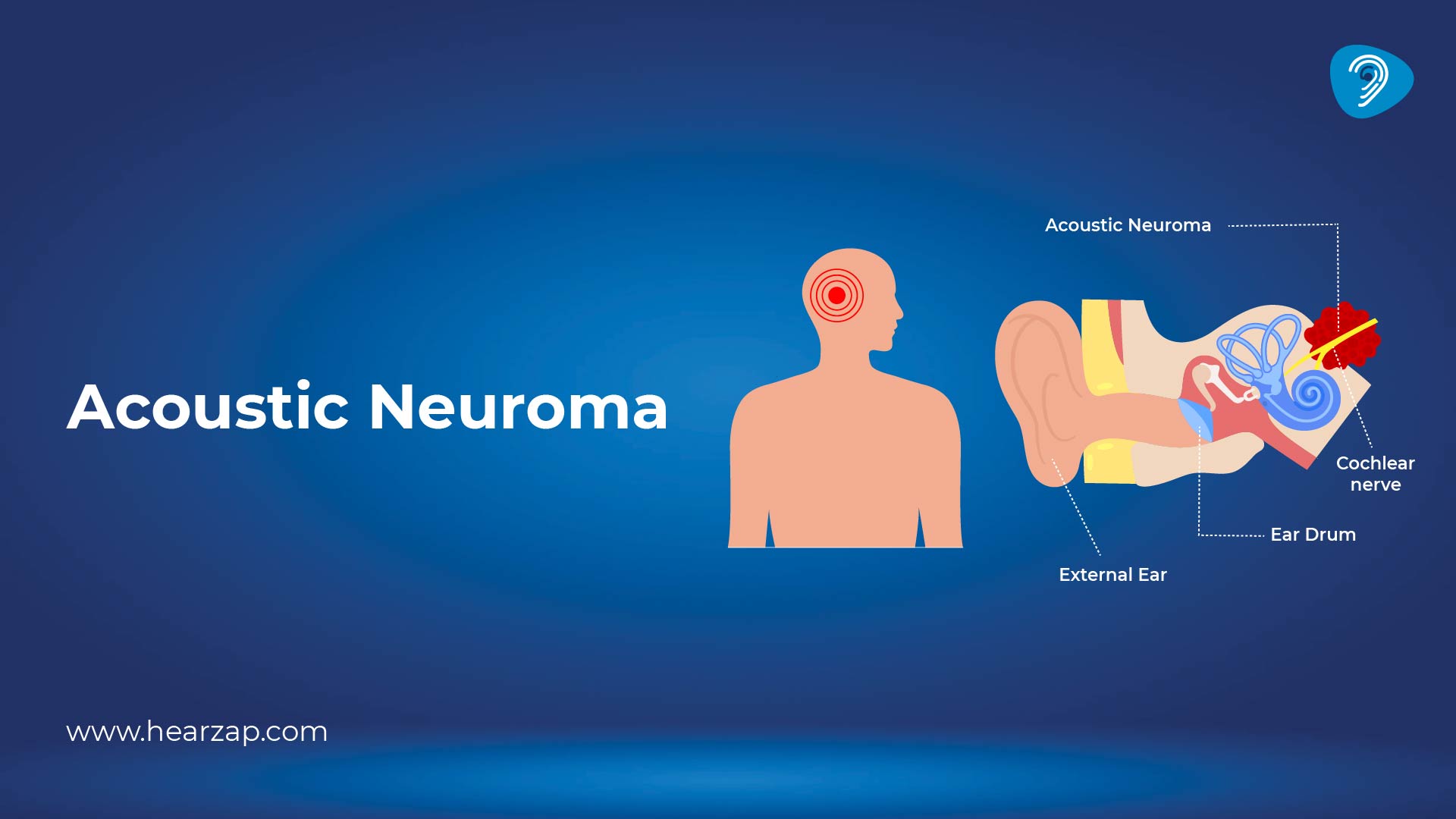
Acoustic Neuroma: The Silent Growth That Affects Hearing and Balance
Sometimes, hearing fades in one ear without much warning. There’s a faint ringing sound, and conversations begin to sound slightly uneven. Over time, balance feels off — not dramatically, but just enough to notice.
Many people think it’s earwax, an old injury, or just age. But in a few cases, these early signs point to something called an acoustic neuroma, also known as a vestibular schwannoma — a slow-growing, non-cancerous tumor that develops on the hearing and balance nerve.
It’s not life-threatening, but it does need attention, because of where it grows and what it can affect if ignored.
What Exactly Is an Acoustic Neuroma?
An acoustic neuroma is a benign (non-cancerous) growth that forms on the vestibulocochlear nerve, which connects your inner ear to your brain. This nerve is responsible for both hearing and balance.
The tumor grows from Schwann cells — the cells that wrap around nerves to protect them — which is why it’s also called an acoustic schwannoma.
As it grows, it can press against the hearing nerve, the balance nerve, and sometimes even the facial nerve nearby. That’s why symptoms build slowly and often go unnoticed in the early stages.
What Causes Acoustic Neuroma?
The cause of an acoustic neuroma is still uncertain in most cases, and it tends to happen spontaneously, without any known factors having an influence.
Very occasionally, it is associated with a hereditary disorder named Neurofibromatosis Type 2 (NF2) that results in tumor growth on both sides of the head. But that’s extremely uncommon.
The condition tends to appear in adults between 30 and 60 years of age. Noise exposure, ageing, and small genetic changes in nerve cells may play a role, but for most, it happens without warning.
Acoustic Neuroma Symptoms: What to Look For
Acoustic neuroma symptoms often take years to appear because the tumor grows very slowly. You might not feel sick at all — just notice small changes that don’t seem connected at first.
Common signs include:
- A gradual loss of hearing in one ear is the most common sign. In such cases, a person’s hearing has degenerated due to a hearing nerve weakness, not because of blockages of any kind, such as wax.
- Ringing sound or buzzing sound: A faint and lasting ring in an ear.
- Fullness/pressure: Some complain that their ears are blocked when they actually aren’t.
- Unsteadiness: You feel unsteady on the feet and dizzy, especially at night and with swift turning.
- Mild dizziness: Rarely spinning vertigo, but more of a vague imbalance.
Larger tumors may press on nearby nerves, leading to facial numbness, tingling, or weakness. These symptoms don’t appear in every case, but when they do, it means the tumor has likely grown enough to affect other structures.
Vestibular Schwannoma Symptoms: How They Differ from Other Ear Problems
Because an acoustic neuroma grows on the hearing and balance nerve, vestibular schwannoma symptoms can mimic other ear disorders — making it tricky to diagnose early.
For instance, an ear infections would cause quite a sudden onset of hearing loss or pain, with gradual yet effective improvement after treatment. Slow, unilateral, painless sensorineural hearing loss typifies acoustic schwannomas.
One particular cardinal clue might be that sound amplification on one side appears to be a bit more than on the other side, or that it becomes increasingly difficult to follow speech with background noise. Some people also find they lose balance more easily, especially in the dark or on uneven surfaces.
The key difference is the slow, persistent nature of these changes — that’s what doctors pay attention to.
When Should You See a Doctor?
Getting a check-up is a good idea in these situations:
- If your hearing on one side has been lost and won’t come back
- If the ringing in your ears or buzzing in your ears are incessant
- If you often feel dizzy or have balance troubles
- If you discover a lack of sensation around your ear or face
These signs do not necessarily imply that an acoustic neuroma is present, but they surely justify a thorough evaluation of the ear as well as the nerve. Diagnosis at an early stage plays a crucial role in safeguarding hearing and nerve function.
How Acoustic Neuroma Is Diagnosed
Your doctor will start with a hearing test to check how well sound travels through your ear and nerve. If the pattern shows hearing loss due to nerve weakness, it points toward a deeper cause rather than middle ear issues.
The next step is usually an MRI scan — the most accurate way to confirm an acoustic schwannoma. It shows where the tumor is, how big it is, and whether it’s pressing on nearby structures.
Small tumors are often discovered this way — during tests for mild, unexplained hearing loss.
Treatment Options for Acoustic Neuroma
Treatment depends on the tumor’s size, growth rate, and how much it’s affecting your hearing or balance.
1. Observation (Watchful Waiting)
For small, slow-growing tumors, doctors may choose to monitor them with regular MRI scans every 6–12 months. Many never grow large enough to cause major problems.
2. Radiation Therapy
A focused radiation technique (called stereotactic radiosurgery) can stop the tumor from growing while preserving surrounding nerves. It’s often used when surgery isn’t ideal or when hearing is still fairly good.
3. Surgical Removal
Larger tumors or those pressing on other nerves may need surgery. Surgeons aim to remove as much of the tumor as possible while protecting facial and hearing nerves.
After treatment, follow-ups and imaging help ensure the tumor doesn’t return.
Living with Acoustic Neuroma
Adapting to life with an acoustic neuroma can be a challenge, particularly if the hearing loss turns out to be irreversible. Hearing aids, cochlear implants, or single-sided hearing devices are available to provide help.
In most cases, the balance function gets better with time as the brain gets used to the new situation, and vestibular therapy can make the process faster.
After the procedure, many individuals continue to live active, normal lives. The diagnosis and treatment of the condition, however, should be always done early and followed up regularly — both make the recovery process easier and the risk of complications smaller.
Prognosis and Rehabilitation
The majority of cases of acoustic neuroma are controllable. Due to the slow growth of these tumors and their benign nature, patients have excellent treatment outcomes.
The hearing loss or mild balance disorders are usually the main long-term effects, but with proper treatment, serious complications have become very rare.
When the problem is detected in its early stages, the doctors can preserve the function of the nerve and the hearing wherever possible; hence, it is always worth getting tested for even small, persistent symptoms.
Final Thoughts
An acoustic neuroma, or vestibular schwannoma, may sound frightening, but it’s treatable and rarely life-threatening. The symptoms — like gradual hearing loss, ringing, or unsteadiness — often build slowly, which is why paying attention to them matters.
If something feels off, don’t ignore it. Subtle vestibular schwannoma symptoms like hearing loss due to nerve weakness are often the first clues.
With today’s advanced imaging and treatment, doctors can manage these tumors safely and effectively. Most people recover well, regain balance, and continue living normally.
In the end, awareness is the best protection — because the earlier an acoustic neuroma is found, the easier it is to treat and the better the outcome for your hearing and quality of life.
FAQs
What are the symptoms of nerve damage in the ear?
You might notice sounds fading in one ear, a constant ringing, or a feeling that you’re off balance — it usually builds up slowly rather than all at once.
What is acoustic neuroma?
It produces few symptoms in many instances, but where the tumor is big, it may affect your ability to hear and cause problems with your balance.
What is acoustic neuroma surgery?
A rescue method in which the tumor is either completely removed or averagely reduced, with the intent to leave hearing and facial functioning undisturbed.
Can acoustic neuroma cause headaches?
Yes, it can sometimes cause dull headaches or a feeling of pressure, especially if the growth becomes larger.
Is acoustic neuroma dangerous?
Not usually — it’s not cancer, but if left untreated, it can affect hearing or balance, so catching it early helps keep things under control.
Related Blogs
Pendred Syndrome: A Genetic Condition That Affects Hearing and the Thyroid

What Is the Acoustic Reflex?

Microtia: Understanding a Condition That Affects the Ear from Birth
Short Increment Sensitivity Index (SISI) Test: How It Works
Ototoxicity: How Certain Drugs Can Affect Your Hearing and Balance

Eustachian Tube Dysfunction

Otomycosis: The Fungal Ear Infection You Shouldn’t Ignore
Rinnes Test
Contact us
We are here for all your hearing needs, from hearing tests to hearing aids. Fill out the form below, and we will give you a call soon.
Recent Blogs
By None | March 23, 2026
By None | March 18, 2026
By None | March 16, 2026
By None | March 13, 2026
By None | March 12, 2026