Generic
What is Airplane Ear? Causes, Symptoms & Relief
By Team Hearzap | April 3, 2026
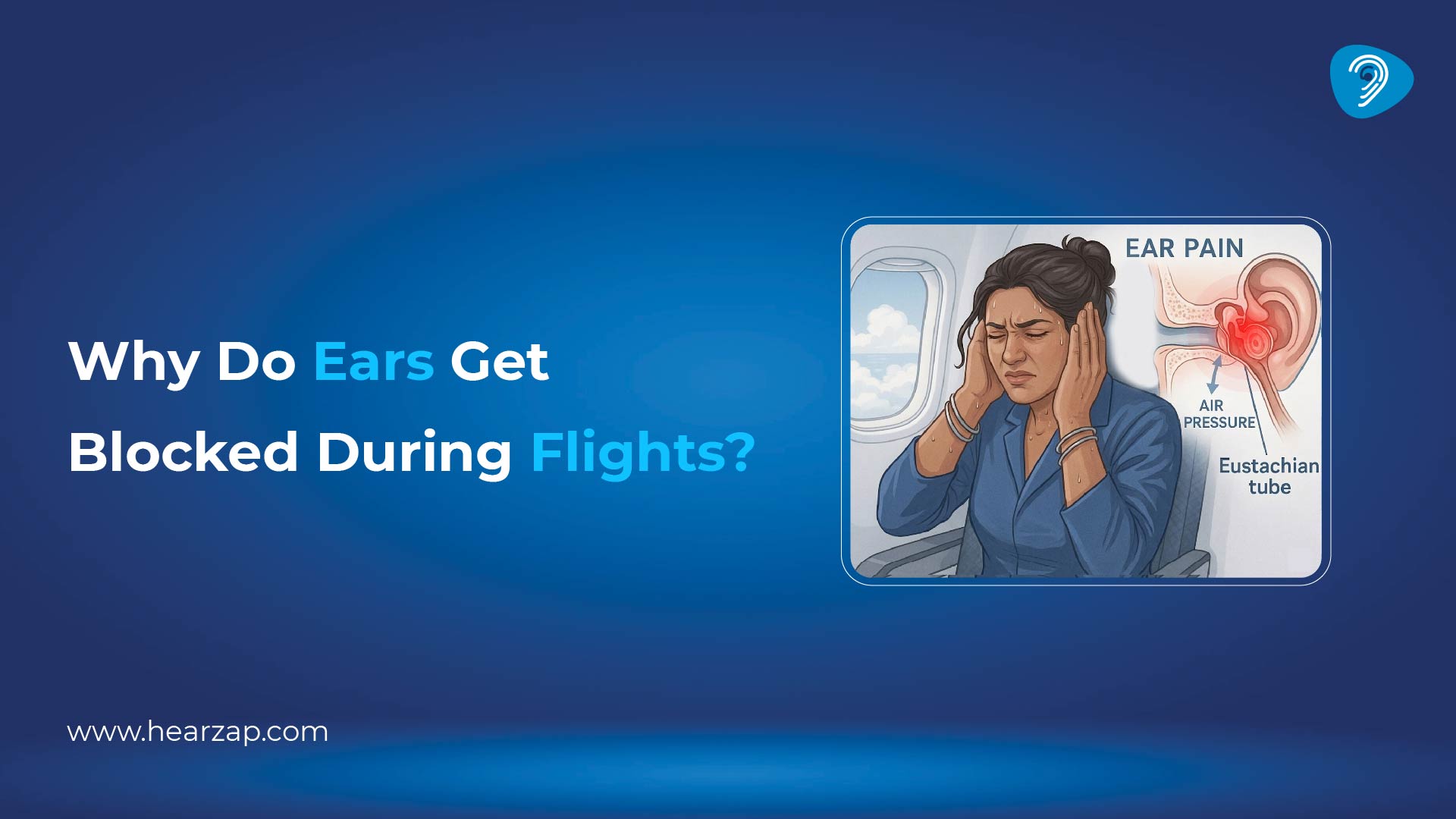
If you have ever stepped off a flight with ears that feel blocked, sore, or slow to “open up,” you have likely experienced airplane ear. It is a common travel-related ear problem caused by rapid changes in air pressure, especially during takeoff and landing.
For many people, it feels like airplane ear pain, pressure, or a blocked sensation with muffled hearing. For others, the discomfort is mild but annoying, like a stubborn fullness that keeps returning. And in some cases, you might even notice an ear clogged for a week after a flight if the pressure does not equalise well or congestion is already present.
When ear discomfort persists, it is sensible to speak with a hearing or ENT specialist. Hearzap is an expert consultation and hearing tests to assess persistent ear problems and rule out complications.
What is Airplane Ear (Ear Barotrauma)?
Airplane ear is a pressure-related condition that affects the middle ear, the small air-filled space behind your eardrum. In medical terms, it is often called ear barotrauma.
Here’s why your ears hurt mid-flight:
- Cabin pressure shifts fast, but your middle ear needs time.
- When outside pressure changes first, the eardrum bends inward or outward.
- That stretch triggers the tight, tugging feeling you notice during descent.
- Pain and pressure are accompanied by brief muffled hearing until balance returns.
- Swallowing helps the pressure tube open, giving your ear time to adjust.
The key player here is the Eustachian tube. It connects the middle ear to the back of the nose and throat. When you swallow, yawn, or chew, the tube opens briefly, allowing air to move in or out to balance pressure. If it is blocked or inflamed, equalising becomes harder, and symptoms flare up at the exact moments you least want them to.
Common Symptoms of Airplane Ear
Most symptoms occur during descent, though some people also feel them during takeoff. The intensity can vary from mild fullness to sharp, distracting pain.
You may notice:
- A blocked or full feeling in one or both ears
- Muffled hearing or temporary hearing difficulty
- Pressure that feels “stuck”
- Popping, clicking, or crackling sounds
- Mild dizziness in some cases
- Ringing in the ear for some people
Airplane Ear Pain and Pressure
Airplane ear pain usually occurs when the aircraft is descending, because that is when pressure shifts quickly, and the middle ear needs to catch up. Pain can range from a dull ache to a sharper pinch.
Typical symptoms include:
- Ear pain or discomfort
- Feelings of blocked ears
- Temporary hearing difficulty
- Popping sensation in the ear
- Dizziness in some cases
Some travellers report their ears being clogged for a week after a flight, especially when allergies, sinus congestion, or a cold keep the Eustachian tube from opening normally. If you already have ongoing hearing trouble beyond the flight, get a proper hearing test before you decide to buy hearing aids online.
Causes of Airplane Ear
Airplane ear is not just about flying. It is about how well your ears adjust to sudden changes in pressure.
Common causes include:
- Rapid altitude and cabin pressure changes during flights
- Cold, sinus infection, or allergies that narrow the nasal passages
- A blocked Eustachian tube that cannot ventilate the middle ear properly
- Travelling with an existing ear infection or significant ear inflammation
A simple way to think about it is this: if your nose and sinuses are already irritated, your ears often struggle more during takeoff and landing.
Airplane Ear Pressure Relief Tips
Relief usually comes from helping the Eustachian tube open at the right time. The goal is to encourage gentle, repeated pressure equalisation rather than forcing the ear to “pop” once.
Try these airplane ear pressure relief methods:
- Swallow often: Sip water, suck a lozenge, or simply swallow repeatedly during descent
- Yawn gently: Yawning can trigger the muscles that open the Eustachian tube.
- Chew gum during takeoff and landing: Chewing increases swallowing, which helps pressure balance.
- Try the Valsalva manoeuvre carefully: Pinch your nose, close your mouth, and blow out very gently for a moment, then stop. A light pop may follow.
- Stay hydrated: Dry cabin air can irritate the throat and nasal lining, which may worsen the “blocked” feeling.
Two extra hearing protection tips that matter for many travellers:
- If you are flying during allergy season or you already have sinus heaviness, start your equalising actions early, before the discomfort peaks.
- If you are travelling with a baby or toddler, feeding, sipping, or using a pacifier during descent often helps because swallowing is built in.
Airplane Ear Treatment
Most cases improve with time, but airplane ear treatment can be useful when pain is severe, congestion is obvious, or symptoms linger.
Common treatment options include:
- Decongestant nasal sprays for short-term swelling reduction in the nose and around the Eustachian tube
- Pain relievers to ease discomfort, used as per label guidance or clinician advice
- Pressure-equalising earplugs to slow the pressure change reaching the eardrum.
- Medical consultation if symptoms persist beyond a few days, worsen, or affect hearing.
If you are dealing with persistent symptoms like an ear clogged for a week after a flight, it deserves evaluation. Ongoing blockage can be linked to Eustachian tube dysfunction, fluid behind the eardrum, or infection, and these are easier to manage when addressed early.
Using Earplugs for Airplane Travel
Earplugs for airplane travel can be a smart addition, especially if you fly often or tend to get discomfort during descent. The most helpful type for pressure issues is a filtered, pressure-regulating earplug. These earplugs work by slowing the rate at which pressure changes reach your eardrum. That extra time can reduce the sudden tugging sensation and make equalising easier.
For best results:
- Insert them before the aircraft starts descending, not after pain begins
- Combine them with swallowing and gentle yawning
- Keep them in until the cabin doors open and pressure stabilises
They will not treat congestion, but they often reduce the sharpness of airplane ear pain and pressure for many travellers.
When Should You See a Hearing Specialist?
Most cases resolve quickly, but some situations should not be brushed off. Listening to your symptoms is part of protecting your hearing.
Consider seeing a hearing specialist or ENT doctor if you have:
- Persistent ear blockage that does not improve after landing
- Severe ear pain
- Hearing loss after a flight, even if it feels “slight”
- Symptoms lasting more than a week, including an ear clogged for a week after the flight
- Any discharge from the ear or significant dizziness
How Hearzap Can Help
If your ears stay blocked after landing, airplane ear pain keeps returning every time you fly, or you have an ear clogged for a week after a flight, it is worth getting your hearing and middle-ear function checked rather than guessing.
Hearzap supports you with:
- Hearing tests: A structured hearing evaluation to understand whether the muffled hearing is purely pressure-related or linked to an underlying ear concern.
- Expert consultation: A specialist-led review of your symptoms, travel history, and triggers like colds, sinus issues, or allergies, with clear guidance on what to do next.
- Hearing care solutions: Personalised recommendations to help you manage recurring ear barotrauma, including travel tips, safe relief methods, and when a medical referral is needed.
Book an appointment with Hearzap if your symptoms keep returning, last beyond a few days, or you notice muffled hearing, ear pain, or persistent blockage after flights, so you can get the right tests and expert guidance early.
Conclusion
Airplane ear is common, and in most cases it improves with simple measures that help your ears equalise pressure naturally. Swallowing, yawning, chewing gum during takeoff and landing, and using earplugs on flights can make flights noticeably more comfortable. Still, persistent symptoms should be taken seriously. If you have severe airplane ear pain, hearing that remains muffled after travel, or an ear that stays clogged for a week after a flight, consider speaking with a qualified hearing or ENT professional.
Frequently Asked Questions
1. What is airplane ear?
Airplane ear is ear discomfort caused by a pressure mismatch between the cabin environment and the middle ear. It is also known as barotrauma of the ear.
2. What causes airplane ear pain?
Airplane ear pain is typically caused by rapid pressure changes during takeoff and landing, especially if the Eustachian tubes do not open well to equalise pressure.
3. Why do my ears feel clogged after a flight?
Your ears may feel clogged after a flight if pressure didn't equalise fully, or if congestion from a cold, sinus trouble, or allergies blocked the Eustachian tube.
4. Can airplane ear last for a week?
Yes, it can last longer when congestion or inflammation prevents the Eustachian tube from properly ventilating the middle ear. If symptoms persist, medical advice is recommended.
5. How can I prevent airplane ear?
Use airplane ear pressure-relief techniques during ascent and descent, such as swallowing, yawning, and chewing gum, and consider pressure-regulating earplugs if you are prone to symptoms.
6. What is the best airplane ear treatment?
There is no single best option for everyone. Many cases resolve with self-care, while persistent or severe symptoms may require medication or a clinical review to address congestion or other causes.

Contact us
We are here for all your hearing needs, from hearing tests to hearing aids. Fill out the form below, and we will give you a call soon.
Recent Blogs
By None | April 2, 2026
By None | April 1, 2026
By Team Hearzap | March 31, 2026
By None | March 30, 2026
By Team Hearzap | March 28, 2026