Generic
Auditory Brainstem Response (ABR) Audiometry
By Team Hearzap | Dec. 16, 2025
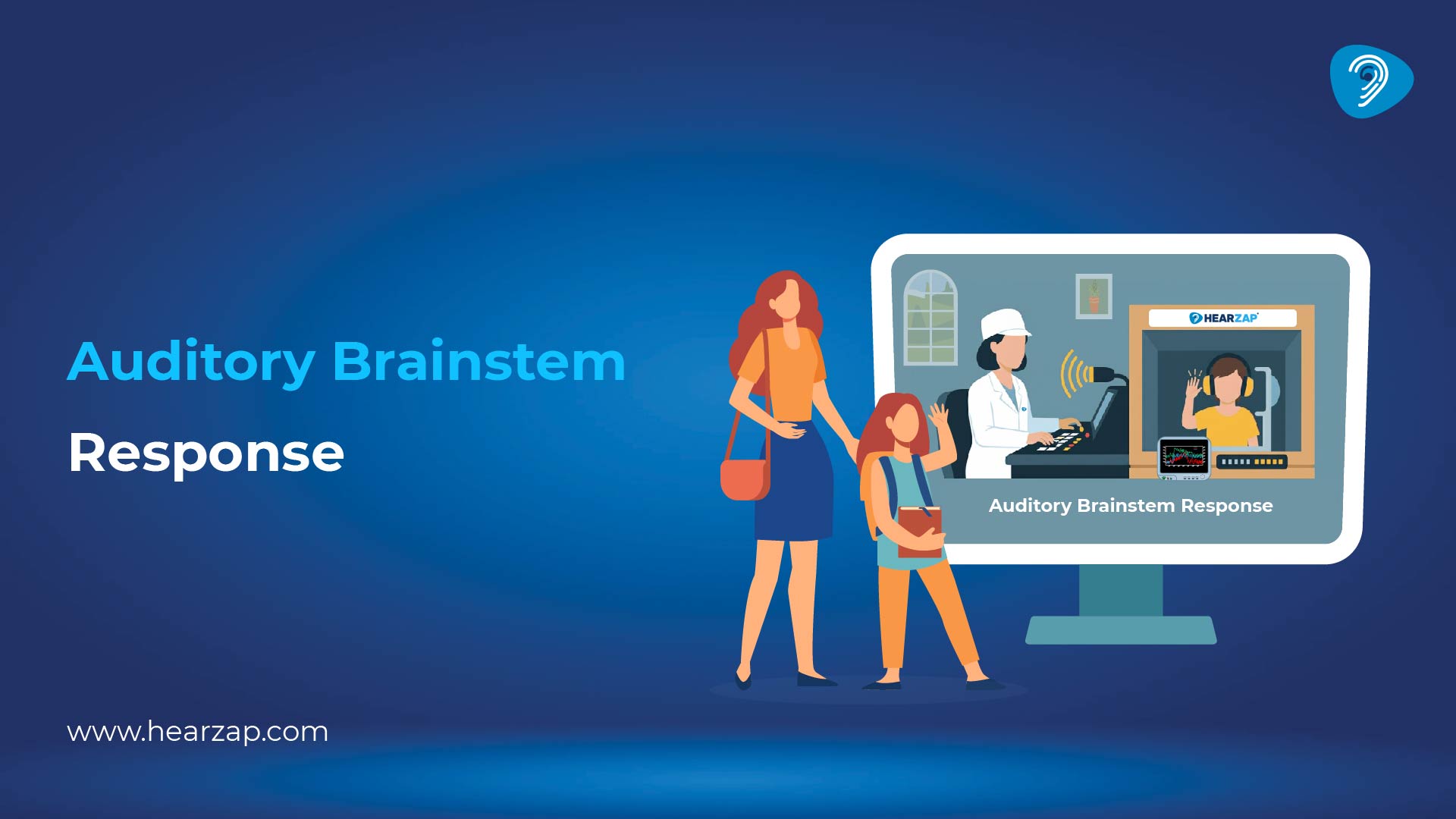
Auditory Brainstem Response (ABR) Audiometry: Procedure and Significance
When someone cannot respond reliably during a routine check, doctors still need a way to see how sound travels from the ear to the brain. If you or a family member lives with hearing loss, this guide explains what the test is, how it works, and what the results mean.
What Is Auditory Brainstem Response?
The auditory brainstem response is the tiny electrical activity produced by the hearing nerve and lower brain centres when sound enters the ear. Audiologists measure this activity to estimate hearing sensitivity and to check whether signals travel at the expected speed. Because it does not depend on a person’s reaction, ABR is useful for children, people with additional needs, and anyone who finds behavioural tests tiring.
What Is an Auditory Brainstem Response Test?
An auditory brainstem response test records the electrical activity while the person rests quietly. During the auditory brainstem response (ABR) test, small sensors are placed on the head and near each ear. Earphones play clicks or tone bursts. A computer averages the tiny responses to reveal clear wave patterns. In some reports, you may see brainstem auditory evoked response used for the same recording; both terms describe identical physiology.
How the Auditory Brainstem Response (ABR) Test Works
Brief sounds stimulate the ear and the hearing nerve. The sensors pick up microvolt signals that occur at set times after the sound. Each major peak – Waves I to V – arises from a different relay within the pathway. The auditory brainstem response (ABR) gives two kinds of information: an estimate of hearing thresholds and a check on neural timing, which can hint at nerve problems even when other tests look normal.
ABR Waves and Their Significance
- Wave I comes from the auditory nerve near the cochlea.
- Wave III reflects activity within lower brainstem relays.
- Wave V is the most reliable peak for estimating thresholds at soft levels.
- Inter-peak intervals – I-III, III-V, and I-V – show conduction speed; prolonged times or ear-to-ear differences may require further investigation.
These features can also inform tinnitus care by showing whether neural timing is within expected limits, shaping advice on how tinnitus affects daily listening.
Auditory Brainstem Response Electrode Placement
Clean, steady signals depend on correct sensor placement. The active sensor sits on the high forehead or vertex, the references on the mastoids, and the ground on the low forehead or shoulder. The skin is cleaned, and a small amount of conductive gel is used. Quiet surroundings and relaxed muscles reduce electrical noise and improve accuracy during the auditory brainstem response procedure.
Auditory Brainstem Response Procedure: Step by Step
- Pre-assessment: A brief history covers ear infections, noise exposure, medicines, and neurological symptoms. Otoscopy and tympanometry may follow.
- Preparation: The skin is prepped, and sensors are placed. The earphones are fitted snugly. Babies are ideally tested during natural sleep after a feed.
- Sound presentation: Clicks provide an overview of high-frequency hearing. Tone bursts at 500–4,000 Hz refine ear-specific thresholds.
- Averaging and artifact control: Hundreds of responses are recorded and averaged while blinks and muscle activity are filtered out.
- Threshold search: Sound level is reduced stepwise until Wave V is no longer visible. Corrections convert response levels to estimated thresholds for each ear.
- Review and counselling: Results are explained clearly, with next steps such as more behavioural tests, medical review, or early intervention.
Types of ABR: Standard vs. Automated ABR (AABR)
Standard ABR is a detailed study run by an audiologist. Settings are adjusted for age and ear condition, and waveforms are interpreted to estimate ear-specific thresholds. This approach helps identify auditory neuropathy spectrum disorder and guides technology selection, including hearing aids.
Automated ABR (AABR) is designed for screening. The device runs a preset protocol and gives a simple pass or refer output. The phrase automated auditory brainstem response is common in nursery units and community drives. A “refer” simply means a full assessment is needed with standard ABR and otoacoustic emissions.
Who Should Take an Auditory Brainstem Response (ABR) Test?
ABR is recommended when:
- Behavioural testing is unreliable or not possible (newborns, infants, people with additional needs).
- There is suspicion of neural delay or marked asymmetry between ears.
- Symptoms suggest auditory neuropathy, a sudden drop in hearing, or unexplained poor speech clarity.
- Tinnitus has changed suddenly; ABR can clarify neural timing before exploring remedies for tinnitus with an ENT specialist.
ABR for Adults: What to Expect
Adults do not need to fast or change medicines unless advised by their doctor. Wear comfortable clothing, remove heavy jewellery, and keep the forehead free of oils for better contact. Most people relax or nap; sedation is seldom required. Tell your provider about recent fever, skin rash, or swollen lymph nodes so sensor sites can be placed safely. After the recording, normal activities can resume.
Interpreting ABR Results
Reports usually comment on:
- Presence of Wave V at different levels, converted to estimated thresholds.
- Latency values compared with age-matched norms.
- Inter-aural differences that may indicate retrocochlear involvement.
Abnormal patterns mean different things. Elevated thresholds with normal timing suggest cochlear loss. Poor or absent waves with present otoacoustic emissions suggest auditory neuropathy spectrum disorder. Marked delays or asymmetry warrant imaging or neurological review. ABR is one part of a rounded evaluation that also includes otoscopy, tympanometry, otoacoustic emissions, and speech testing.
ABR vs Other Hearing Tests
Behavioural audiometry relies on responses to beeps or speech and remains the gold standard when reliable. Otoacoustic emissions check outer hair cell function, while tympanometry assesses middle ear movement. ABR complements these by measuring neural timing and estimating thresholds without active participation. For people who cannot provide consistent responses, ABR is the quickest route to answers after an initial hearing test.
Benefits and Limitations of Auditory Brainstem Response Testing
Benefits
- Objective and non-invasive; ideal for babies and hard-to-test populations.
- Detects neural pathway delays and supports early diagnosis of auditory neuropathy.
- Provides ear-specific estimates that help programme amplification.
- Confirms sudden losses or asymmetries that need urgent care.
Limitations
- Estimates rather than directly measure behavioural thresholds.
- Middle ear problems can mask inner ear status by reducing the stimulus reaching the cochlea.
- Requires quiet conditions and stillness; sedation may be needed in a few adult cases.
- Does not replace speech-in-noise testing or central auditory evaluations.
Risks and Safety of the ABR Test
ABR is safe. Sensors rest on the skin, and the sounds stay within accepted exposure limits. Mild redness may appear at sensor sites and fade quickly. People with sensitive skin can request hypoallergenic gel and gentle tape. Rarely, a child may need mild sedation after a paediatrician’s clearance; standard monitoring keeps the risk low.
Cost and Availability of ABR Testing
ABR services are offered by hospitals, screening programmes, and specialised hearing care providers. Waiting times vary by city and by whether the study is part of a public drive or an individual referral. Ask about report turnaround, whether tone-burst testing is included, and whether the team can coordinate same-day ear moulds and counselling if amplification is recommended.
When to Visit an Audiologist
Book an appointment if you notice:
- Speech delay, not startling to loud sounds, or inconsistent responses in a baby.
- Sudden drop in hearing or persistent ringing.
- Difficulty following conversations, even with normal pure-tone results.
- One ear seems far better than the other after infections or a head injury.
If travel is difficult, consider an online hearing test for a quick screen, but follow it with a full face-to-face assessment. Early identification leads to timely therapy, better listening at school or work, and fewer delays in care.
Conclusion
ABR audiometry offers a dependable window into the function of the hearing nerve and brainstem. From newborn screening to adult diagnostics, it helps practitioners estimate hearing, detect neural delays, and plan tailored care. Used alongside case history and complementary tests, ABR moves families from uncertainty to action. With a clear idea of the purpose, steps, and meaning of results, you can approach the appointment with confidence and make informed choices about treatment and follow-up.
FAQs
Is the ABR painful or noisy?
No. The sounds are brief and moderate in level. Babies often sleep through the recording, and adults often nap.
How long does the test take?
A straightforward screening may finish in 15–20 minutes, while detailed threshold searches can take 60–90 minutes per ear, depending on sleep, background noise, and middle ear status.
Will ABR give the exact hearing number?
It estimates thresholds reliably, but behavioural tests confirm exact levels and guide rehabilitation.
Can ABR diagnose auditory neuropathy?
It strongly suggests the condition when waves are absent or poorly synchronised, even though otoacoustic emissions are present, but the final diagnosis combines multiple tests.
Do I still need other tests after ABR?
Usually yes. ABR works best alongside otoscopy, tympanometry, otoacoustic emissions, and speech testing, ensuring a rounded picture of hearing health.

Contact us
We are here for all your hearing needs, from hearing tests to hearing aids. Fill out the form below, and we will give you a call soon.
Recent Blogs
By None | March 18, 2026
By None | March 16, 2026
By None | March 13, 2026
By None | March 12, 2026
By None | March 11, 2026