Generic
Goldenhar Syndrome
By Team Hearzap | Dec. 9, 2025
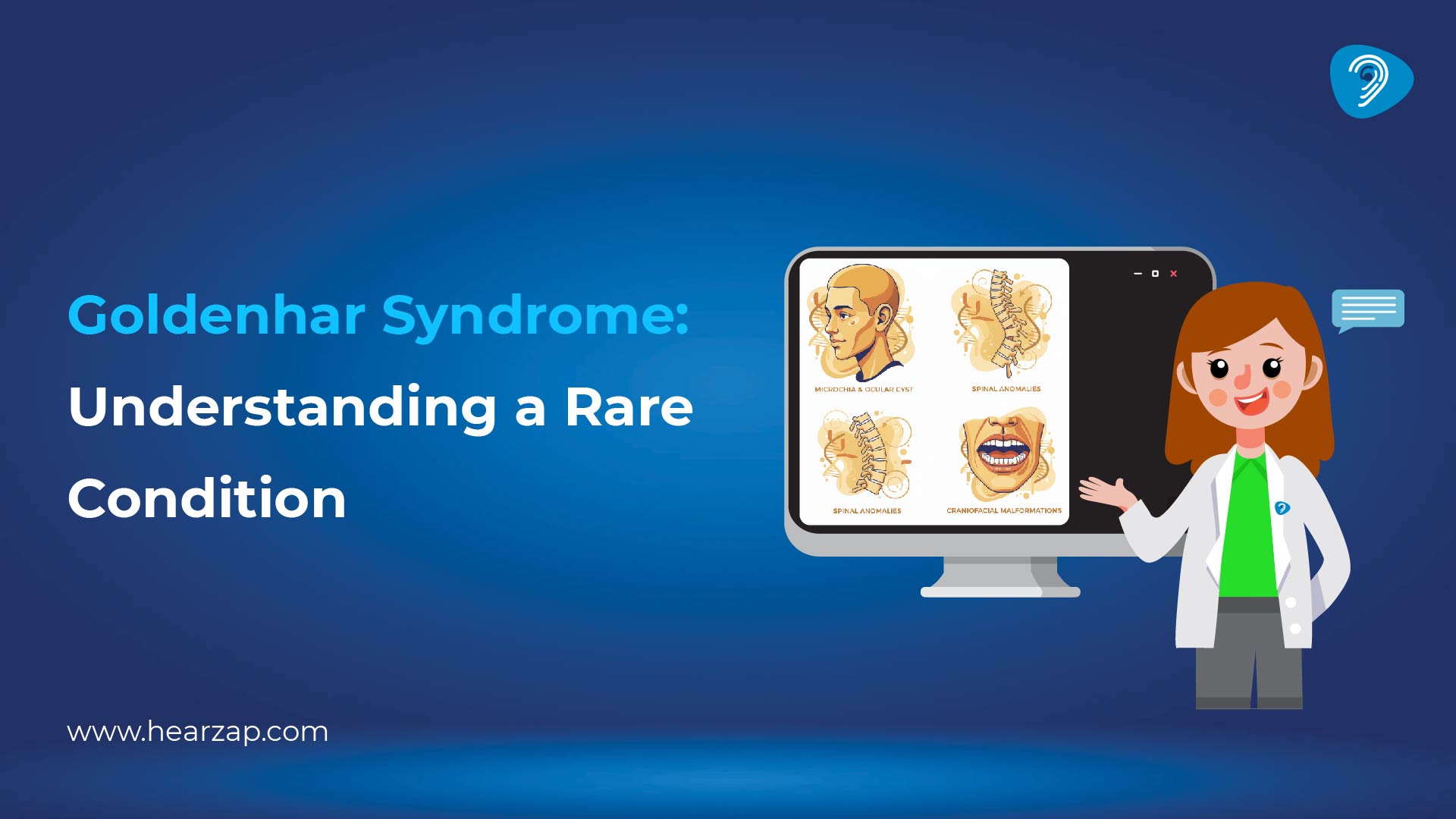
Goldenhar Syndrome: Understanding a Rare Condition That Shapes the Face and Ears
Any little specification of a newborn — their grin, their gaze, their hearing — seems like a miracle. Yet, at times, nature portrays that miracle in a different manner.
Goldenhar Syndrome, or Golden Har syndrome, is another such case. It is an exceptional medical condition that affects the development of certain facial and auricle parts prior to birth. The name may sound scary, but what is the most important thing to know is that, with proper medical attention and backing, the children suffering from Goldenhar could grow up to be healthy, satisfied, and self-assured adults.
Goldenhar Syndrome is a congenital defect — that is, it exists from the moment of birth. It interferes with the normal development of not only the face, but also the ears and, in some cases, the spine during the initial stages of pregnancy.
It might happen that a child is born with one side of the face smaller or differently shaped as compared to the other side and this condition is referred to as hemifacial microsomia. Others may have small changes in the ears or eyes. The range is broad, and no two children are exactly alike.
The term “Golden Har” comes from Dr. Maurice Goldenhar, who first identified the condition in 1952. Doctors now understand that it happens when the tissues that form the face — known as the branchial arches — don’t develop fully in the womb. Why this happens isn’t always clear; it can be linked to small changes in blood flow, environmental factors, or sometimes genetics, though in most cases it happens randomly.
Goldenhar Syndrome Features
The Goldenhar Syndrome features can range from subtle to noticeable, but all are unique to each child. Some of the most common include:
- One side of the face is smaller or underdeveloped (hemifacial microsomia)
- A small or missing ear (microtia)
- Hearing loss due to ear canal or middle ear changes
- Small skin tags or growths near the ear or eye
- Cysts or soft lumps on the white of the eye
- A difference in jaw shape or size
- Occasionally, spinal differences like mild scoliosis
It’s important to remember — these features don’t define the child’s potential. Many children with Golden Har are bright, expressive, and full of personality. With the right medical guidance, most lead active, healthy lives.
Goldenhar Syndrome Triad
Doctors often talk about the Goldenhar Syndrome triad — the three classic signs that help them recognise the condition early:
- Ear differences – such as small or absent ears, or a closed ear canal.
- Eye dermoids – small, benign growths on or near the eye.
- Spinal anomalies – such as missing vertebrae or curvature (scoliosis).
Not every child shows all three, but the triad helps doctors spot the pattern and plan early care.
Microsomia Meaning
One of the most common words linked to this condition is microsomia.
Microsomia meaning: it denotes the underdevelopment of certain body parts, specifically the face in this instance. When it involves only one side, it is referred to as hemifacial microsomia. This is one of the main characteristics of Goldenhar Syndrome and it is the reason why the face may appear somewhat lopsided or smaller on one side.
Why Does Goldenhar Syndrome Happen?
Generally, Goldenhar Syndrome is not a hereditary condition; it is a randomness, and the cause is not anyone's fault. It occurs at the beginning of the composting, when the tissues of the face and ears grow unevenly.
Researchers think it could be associated with:
- Disruption of blood supply to the growing face in the very early stages of development.
- Uncommon mutations or chromosomal abnormalities.
- Maternal exposures to environmental toxins during pregnancy, but this is the least common cause.
- Boys are slightly more likely to have Goldenhar Syndrome, and the right side of the face is often affected more than the left.
Diagnosing Goldenhar Syndrome
Most cases of Goldenhar Syndrome are recognised shortly after birth, when doctors notice visible facial differences. From there, a full evaluation helps understand how it affects hearing, vision, or other parts of the body.
Typical assessments include:
- Hearing tests to check for any loss or structural issues in the ear.
- Eye exams to look for dermoids or vision problems.
- Spinal X-rays or MRI scans to detect any curvature or bone differences.
- Heart and kidney checks, since other organs can occasionally be involved.
So, earlier the diagnosis, better, because this assists enormously for hearing and speech development with early interventions.
Treatment and Care
Goldenhar Syndrome does not have a single cure because of the different expressions of the same disease: one treatment term may have differing outcomes for two children, and therefore strategies should also differ; nevertheless, with the help of a great team, and for a few that are the best, we are in a position to make a whole lot of difference.
Here’s how it’s typically managed:
- Hearing care: Many children use hearing aids or undergo ear reconstruction to improve hearing and comfort.
- Facial Reconstruction: Plastic and craniofacial surgeons could perform a series of less-invasive corrective surgeries as the child grows up.
- Responding to Glaucoma or capable of removing eye polyps when vision or comfort are affected, eye care is also provided.
- Speech Therapy: Aiding in developing intelligible communication skills for children afflicting jaw or mouth problems.
- Spine care: Physiotherapy or bracing procedures can likewise be implemented to manage posture and alignment, when scoliosis is present.
A rarely speedy course, the very course of treatment runs through several stages, each determined by the way that a child grows and develops. Indeed, with the proper assistance, you will have much success.
Living With Goldenhar Syndrome
Goldenhar Syndrome is a condition that can be accompanied by various challenges, such as physical, emotional, and social ones. However, the families often characterise their kids as powerful, happy, and exceptionally strong.
The confidence of a child is mostly impacted by the parents' actions. The combination of early hearing treatment, therapy, and open discussions with parents enable the child to get used to the situation and even shine. Support groups and communities, whether in-person or online, can likewise offer encouragement and a sense of understanding.
A significant number of adults suffering from Goldenhar syndrome lead a normal life, characterized by independence, full-time jobs, romantic relationships, and hobbies similar to those of their peers. Besides, medical breakthroughs and raising awareness among the public have turned life with Goldenhar into a less burdensome journey, full of hope, more than ever.
Final Thoughts
Goldenhar Syndrome may be rare, but it’s far from limiting. With love, patience, and the right medical care, children born with this condition can do everything other children can — just on their own timeline.
Recognising the Goldenhar Syndrome features and understanding the Goldenhar Syndrome triad helps families and doctors act early, improving both health and confidence. And learning the microsomia meaning behind it reminds us that these differences are just part of the beautiful variety of human life.
Every face tells a story — and those touched by Golden Har tell one of courage, hope, and the power of care to shape a brighter future.
FAQs
What are the symptoms of Goldenhar syndrome?
Children with Goldenhar Syndrome may have small differences in their face or ears — like a smaller jaw, one ear formed differently, or tiny growths near the eyes — and sometimes mild hearing or spine-related issues.
What is the triad of Goldenhar syndrome?
The Goldenhar syndrome triad comprises of three clinical manifestations that doctors are looking for - ear malformation, dermoids in the eyes, and scoliosis of the spine.
What is the life expectancy of someone with Goldenhar syndrome?
Most people with Golden Har syndrome live completely normal, healthy lives. With good medical care and early support, they can grow up to do everything other children do.
Is Goldenhar syndrome curable?
There isn’t a single cure, but the condition can be managed beautifully. With early treatment, surgery when needed, and hearing or speech support, most children with Goldenhar Syndrome thrive and lead happy, independent lives.


Contact us
We are here for all your hearing needs, from hearing tests to hearing aids. Fill out the form below, and we will give you a call soon.
Recent Blogs
By None | March 18, 2026
By None | March 16, 2026
By None | March 13, 2026
By None | March 12, 2026
By None | March 11, 2026