Generic
What Is Nerve Deafness? Causes, Symptoms, and Treatment Options
By Team Hearzap | Jan. 29, 2026
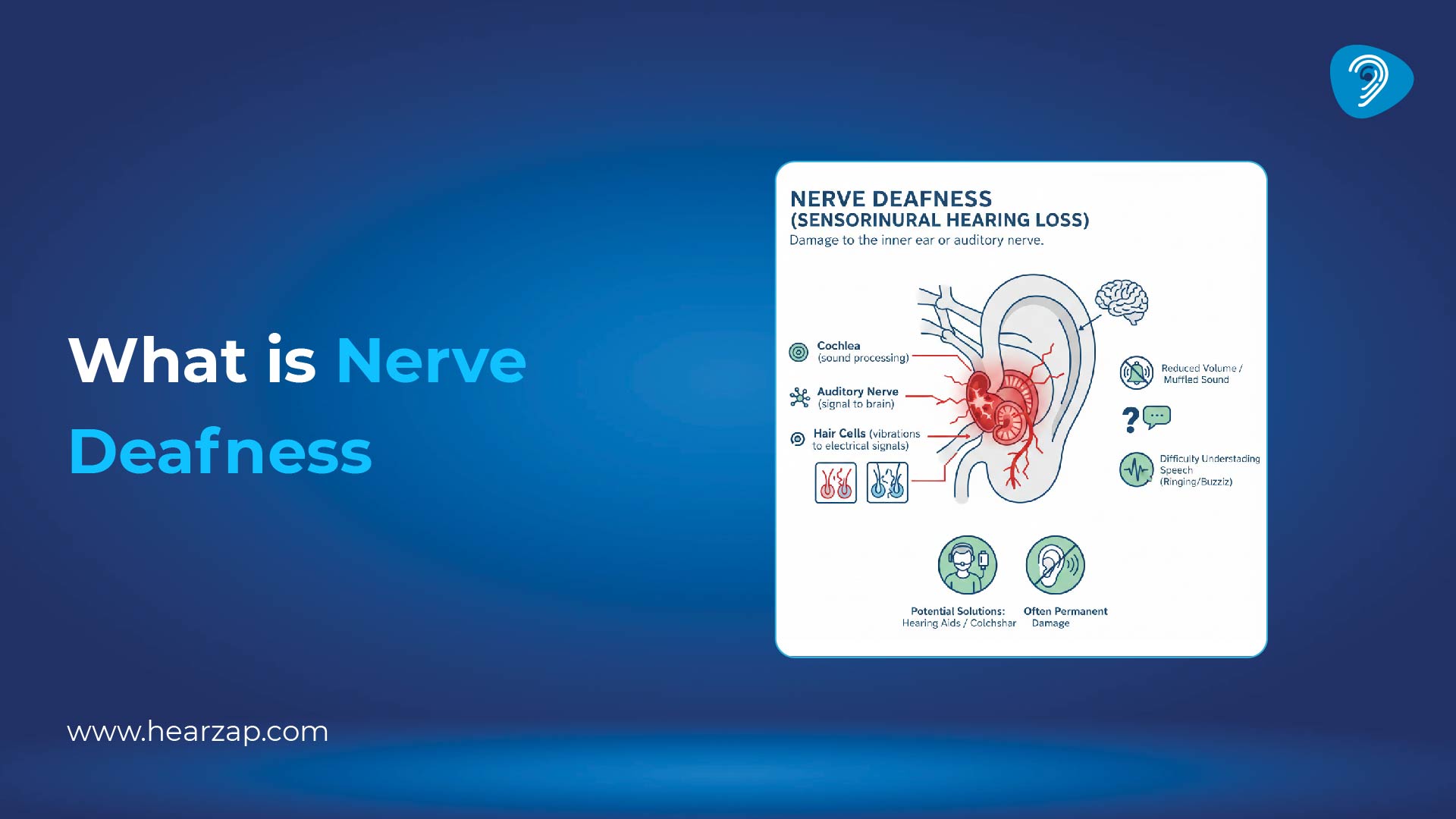
If conversations feel muffled, the TV volume keeps creeping up, or you can “hear” people but not follow their words, it may be more than a temporary blockage. Nerve deafness is a common term for sensorineural reduced hearing, when the inner ear (cochlea) or the hearing nerve pathway is affected. Clarity becomes the main issue, especially in noise.
A quick screen, such as an online hearing test, can be a starting point, but a full evaluation confirms the type and degree of change and guides treatment. In many cases, changes in habits protect future hearing.
What Is Nerve Deafness?
In simple terms, sound enters the ear, but the inner ear or the nerve connections do not convert and deliver the signal cleanly to the brain. Speech may feel soft, unclear, or “garbled”, and background sounds can overpower what you want to hear.
Unlike temporary problems such as wax or middle-ear fluid, sensorineural problems often develop gradually, though a sudden onset can happen and needs urgent attention.
Nerve Deafness Meaning
The nerve deafness meaning is reduced hearing due to inner-ear or auditory-nerve damage rather than a blockage in the ear canal or middle ear. Doctors often describe this as sensorineural hearing loss. Because fine sound details are affected, simply increasing volume does not always restore understanding.
Types of Nerve Deafness
Doctors classify this kind of reduced hearing by when it starts and how it progresses. This helps set expectations and choose the best management plan.
Congenital Nerve Deafness
Congenital nerve deafness is present at birth or appears in early infancy. It can occur due to inherited genetic factors, inner-ear malformations, pregnancy-related infections, prematurity, or severe newborn jaundice. In India, newborn hearing screening is expanding, but some children are still identified later when speech milestones are delayed. Early support improves language and learning outcomes.
Nerve Deafness Occurring With Ageing
Age-related decline (presbycusis) is a common sensorineural pattern occurring with ageing. It often affects both ears and starts with difficulty hearing high-frequency sounds, like certain consonants in speech. Contributing factors can include:
- Years of loud noise exposure (traffic, factories, weddings, firecrackers)
- Smoking
- Long-standing diabetes or high blood pressure that affects blood flow to the inner ear
Nerve Deafness Causes
Most causes involve damage to cochlear hair cells, the auditory nerve, or both. Common causes include:
- Long-term loud noise (machines, generators, earbuds at high volume)
- Medicines that may affect hearing (some antibiotics, chemotherapy drugs, high-dose diuretics)
- Viral or bacterial infections (mumps, measles, meningitis)
- Head injury or sudden pressure changes
- Autoimmune inner-ear disease
- Tumours affecting the hearing nerve, such as an acoustic neuroma
- Genetic conditions and early-life factors
Deafness Due to Nerve Damage
When the inner ear or nerve pathway is injured, it may be described as nerve damage deafness. Noise damage is a classic example: repeated exposure slowly reduces the ear’s ability to pick out speech details. Sudden sensorineural change can also occur, sometimes after a viral illness or due to reduced blood supply to the cochlea.
Seek urgent care if hearing drops over hours to a couple of days, especially with tinnitus, a blocked sensation without wax, or imbalance. Early treatment may improve recovery in some cases.
Deafness Is Lesion of Which Nerve?
If you are wondering, “deafness is lesion of which nerve?”, the key nerve is the vestibulocochlear nerve (cranial nerve VIII). The cochlear part carries hearing signals, while the vestibular part carries balance signals. When this pathway is affected, hearing changes can sometimes come with balance symptoms.
Symptoms of Nerve Deafness
Symptoms can be subtle at first and are often noticed by family members. Common signs include:
- Speech sounds unclear, especially in noise or on phone calls
- Needing repetition, or turning one ear towards the speaker
- Difficulty hearing high-pitched sounds
- Ringing or buzzing (tinnitus)
- Sensitivity to loud sounds
- Imbalance or vertigo in some inner-ear disorders
How Is Nerve Deafness Diagnosed?
Diagnosis starts with a detailed history: sudden or gradual onset, one ear or both, noise exposure, medicines, recent infections, and associated symptoms. An ear examination helps rule out wax and infection, but a normal-looking ear does not rule out sensorineural problems.
Your doctor may recommend pure-tone audiometry, speech testing, and tympanometry. An additional hearing test may be advised if the pattern suggests a nerve-related problem, if only one ear is affected, or if balance symptoms are prominent. If one ear is worse, your doctor may advise an MRI to exclude rare nerve tumours.
Nerve Deafness Audiogram Explained
A nerve deafness audiogram typically shows higher (worse) thresholds, often more in the high frequencies. There is usually no significant air–bone gap because the problem is not mainly in the outer or middle ear. Speech discrimination may be reduced, matching the real-life complaint of poor clarity.
Sometimes, objective measures such as the acoustic reflex are used as part of a broader assessment of middle-ear function and auditory pathways.
Conductive Deafness vs Nerve Deafness
Conductive (conduction) deafness is caused by outer- or middle-ear issues that block or dampen sound transmission – wax, fluid behind the eardrum, ossicle problems, or a perforation. Sensorineural problems come from the cochlea or nerve pathway.
Treatment Options for Nerve Deafness
Treatment depends on the cause, severity, and how much usable hearing remains. The goals are to treat reversible triggers, protect remaining hearing, and improve everyday communication.
Can Nerve Deafness Be Corrected or Cured?
People often ask, “can nerve deafness be cured?” or “can nerve deafness be corrected?” Sometimes hearing improves if a reversible cause is treated early, such as sudden inflammation, autoimmune flare-ups, or certain infections. However, once cochlear hair cells are permanently damaged, the focus shifts to rehabilitation and preventing further decline.
That does not mean “nothing can be done”. With the right plan, many people regain confidence in conversations and reduce listening fatigue.
Nerve Deafness Treatment Options
Nerve deafness treatment is usually a mix of medical care, rehabilitation, and lifestyle steps. Depending on the case, your doctor may advise:
- Managing diabetes and hypertension
- Reviewing medicines that may affect hearing
- Using ear protection at work and safer earbud volume
- Treating sudden sensorineural change urgently when it occurs
Ear Nerve Deafness Treatment
This plan is individualised and may include medical therapy for sudden loss (as advised by a specialist), counselling on hearing conservation, and rehabilitation. If balance is affected, targeted exercises may be recommended to help the brain adapt.
Hearing Aid for Nerve Deafness
Modern devices amplify and shape sound based on your audiogram. They do not repair damaged hair cells, but they can make speech cues more accessible, especially with features such as directional microphones and background noise management. Consistent use of a hearing aid matters; the brain often needs a few weeks to adjust to clearer sound.
Do Cochlear Implants Work for Nerve Deafness?
Many people ask, “Do cochlear implants work for nerve deafness?” Cochlear implants can help when amplification devices no longer provide enough understanding. The implant bypasses damaged hair cells and stimulates the hearing nerve with electrical signals. Candidacy depends on hearing thresholds, speech understanding, duration of loss, and overall health. In suitable candidates, outcomes can improve markedly, especially when combined with training and regular follow-ups.
Is Nerve Deafness Permanent?
Whether nerve deafness is permanent depends on the cause and timing. Age- and noise-related sensorineural change is usually long-term, but progression can often be slowed with hearing protection and control of health conditions. Sudden sensorineural change may partially recover, particularly when treated early. Even when the change is permanent, rehabilitation can prevent withdrawal and communication breakdown.
When Should You See a Doctor?
Seek prompt medical attention if hearing changes are sudden, one-sided, or linked with severe dizziness, facial weakness, discharge, or intense pain. Also consult a doctor if tinnitus is new and persistent, if you have regular loud-noise exposure, or if a child is not responding to sound or is delayed in speech.
Key Takeaways on Nerve Deafness
Nerve deafness most often reflects sensorineural damage in the inner ear or along the auditory nerve pathway. It commonly shows up as reduced clarity, difficulty with noise, tinnitus, and sometimes balance symptoms. The best outcomes come from early diagnosis, protecting the ears from further injury, and choosing the right rehabilitation option.
FAQs
Nerve Deafness Is Associated With Which Conditions?
Nerve deafness is associated with presbycusis, chronic noise exposure, diabetes, certain viral infections, autoimmune inner-ear disease, and tumours involving the hearing nerve.
What Is the Difference Between Nerve Deafness and Conductive Deafness?
Conductive deafness arises from outer- or middle-ear problems that block sound transmission, while sensorineural problems arise from inner-ear or nerve pathway damage.
Can it happen suddenly?
Yes. Sudden sensorineural change can occur over hours to days and needs urgent evaluation because early treatment may improve recovery in some people.
Are ear drops useful?
Usually not. Drops help when the issue is in the ear canal (infection or wax). They do not treat inner-ear or nerve pathway problems.
Can children born with it develop speech?
Often yes, especially when identified early and supported with timely rehabilitation and structured speech and auditory training.

Contact us
We are here for all your hearing needs, from hearing tests to hearing aids. Fill out the form below, and we will give you a call soon.
Recent Blogs
By None | March 23, 2026
By None | March 18, 2026
By None | March 16, 2026
By None | March 13, 2026
By None | March 12, 2026