Generic
Understanding Otoconia in the Ear: Causes, Symptoms, and Treatment
By Team Hearzap | Dec. 20, 2025
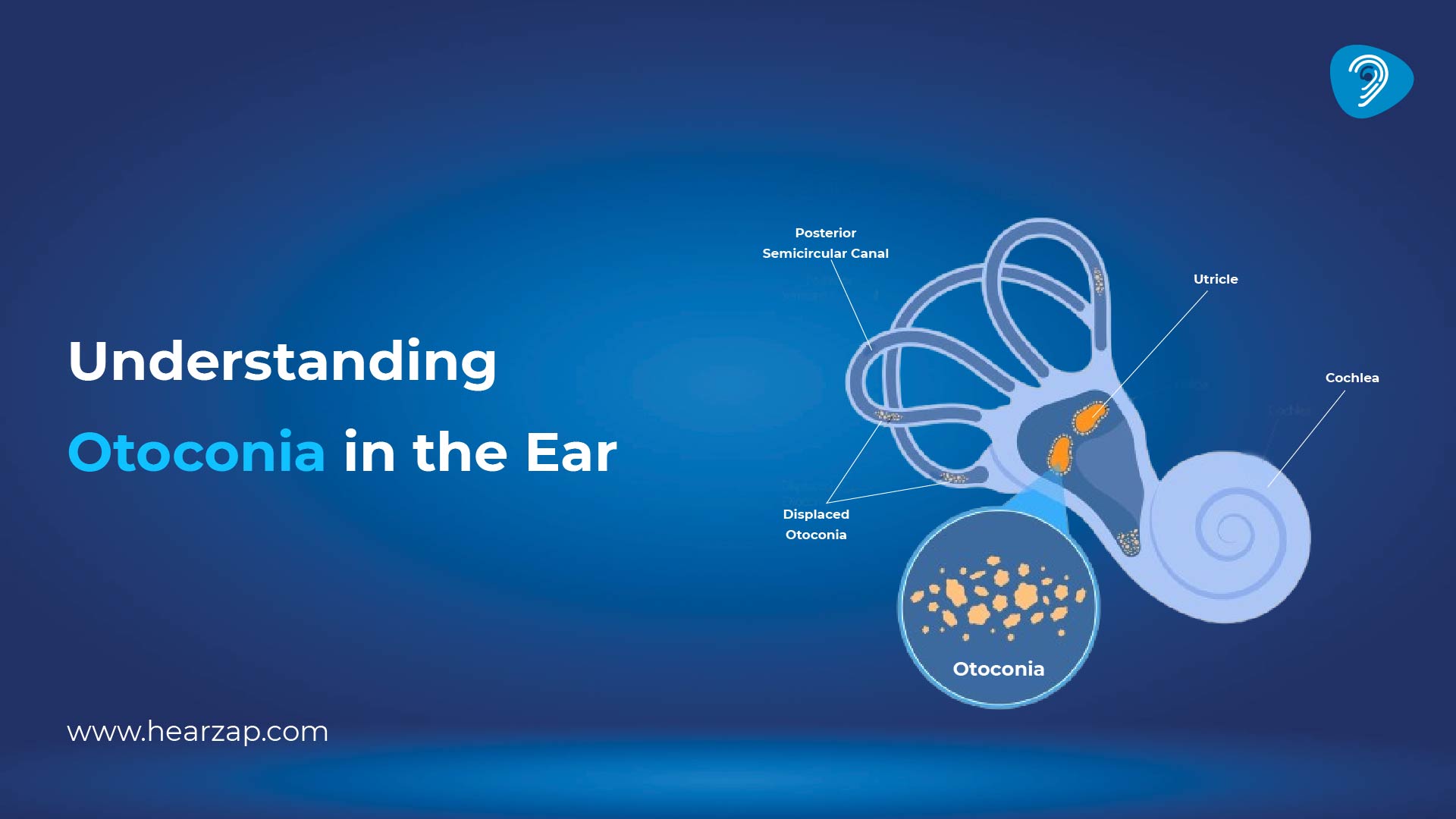
Feeling steady on your feet depends on a finely tuned system inside your inner ear. At the heart of this system are tiny particles called otoconia. When they sit where they belong, you barely notice them. When they shift out of place, the world can seem to spin. This guide explains what otoconia are, where they live, why they sometimes go wandering, and how the problem is treated. Along the way, you will also find practical hearing care tips and a clear picture of hearing health and its effect on balance, so you can look after yourself and seek timely help.
What Are Otoconia in the Ear?
Otoconia are microscopic crystals made mostly of calcium carbonate. You may hear them called ear crystals, otoconia crystals, or otoconia ear crystals:
- They sit in a gel layer above sensory hair cells inside the utricle and saccule, two inner ear organs within the vestibular system.
- The vestibular system works with your eyes and muscles to keep you balanced and aware of movement.
- When you move in a straight line or tilt your head, gravity and acceleration act on the crystals inside ear gel, shifting them slightly.
- This shift bends the hair cells beneath, sending signals to the brain about direction and speed. Otoconia in ear are, in effect, motion detectors for linear movement and head tilt.
- They do not create hearing themselves, but the inner ear houses both the cochlea (for hearing) and vestibular organs (for balance), which is why people often link hearing health and balance.
- Because the crystals are heavier than the surrounding fluid, they provide the extra pull needed for the system to sense small changes.
- In a healthy ear their position is stable and their signals are accurate; problems begin when some crystals break free and drift into places where they should not be.
Otoconia Location in the Ear
Understanding otoconia location helps explain the symptoms people feel when things go wrong. The inner ear is a tiny maze carved in bone. Two parts matter most here:
- Utricle and saccule: These are the otolith organs which are inner ear structures that detect linear movements and help maintain balance and spatial orientation, and contain the gel layer and the crystals. They sense linear acceleration, such as when a lift starts to move, a car speeds up, or you lean forward to tie your laces.
- Semicircular canals: These three curved tubes are filled with fluid and detect rotation. They should not contain loose crystals. Each canal sits in a different plane, a clever design that captures head turns in any direction.
In everyday life, you can think of the utricle and saccule as your spirit level and the semicircular canals as your gyroscope. The crystals belong with the spirit level. If they stray into a canal, the gyroscope gives the wrong reading when you turn your head. That mismatch between what your inner ear senses and what your eyes see is what creates a spinning feeling.
What Happens When Otoconia Get Displaced?
Displaced otoconia are the most common cause of a condition called benign paroxysmal positional vertigo, or BPPV. In this situation, some free-floating crystals move from the utricle into one of the semicircular canals, most often the posterior canal. When you tilt or turn your head, these particles shift with gravity and stir the fluid in the canal. The canal then sends a louder or longer signal than it should. Your brain receives mixed messages about movement, and you feel a short burst of vertigo.
The spinning can last seconds to a minute, usually triggered by actions such as rolling in bed, looking up to a high shelf, bending down, or turning quickly. Some people describe it as if the room whirls to one side. Others feel pulled downward. The spells can repeat for days or weeks until the crystals are moved back to where they belong. This is why ear crystals treatment focuses on guiding the loose particles out of the canal and into the utricle again.
Common Symptoms of Displaced Otoconia
- Sudden, brief vertigo that appears with head movement. The classic symptom is dizziness when turning in bed or when tipping the head back in the shower.
- A sense of imbalance after a spin. Once the burst of vertigo fades, many people still feel unsteady for a few minutes.
- Nausea or queasiness, sometimes with vomiting, during severe spells.
- Abnormal eye movements known as nystagmus. A clinician can see this during an examination. It helps confirm which canal is involved.
- Anxiety and fear of falling which can lead to reduced activity and loss of confidence if the condition is not treated.
It is worth noting that BPPV does not usually cause hearing loss, ear pain, or ringing. If you have any of these, or if vertigo lasts for hours rather than seconds, you should seek medical advice to rule out other conditions. There are many types of ear infections and inner ear disorders that can cause dizziness or imbalance, so a proper assessment matters.
Causes of Otoconia Displacement
Why do crystals break free in the first place? Several factors increase the risk of displaced otoconia:
- Ageing: As we age, the link between the crystals and the gel layer can weaken, making it easier for particles to detach. The inner ear also endures normal wear, so the system becomes more vulnerable. This is one reason BPPV is more common in older adults.
- Head injury: A knock to the head can jolt the inner ear and dislodge crystals. Even a minor bump or whiplash can be enough. People with sports injuries or a recent fall may notice symptoms soon after.
- Inner ear disorders: Inflammation of the inner ear, migraine-related vestibular issues, or other balance disorders can disturb the utricle. While BPPV often appears on its own, it can also follow a bout of labyrinthitis or vestibular neuritis. This is why timely care for types of ear infections and inner ear inflammation is part of good balance health.
- Prolonged bed rest or long periods with the head in one position: Spending days on bed rest after surgery, or keeping the head tilted for dental or salon procedures, may allow crystals to drift into a canal.
- Metabolic and bone health factors: Some studies link low vitamin D, osteoporosis, and other metabolic issues with BPPV. The idea is that crystal turnover may be affected. A clinician can guide you on whether to test and correct such problems.
- Previous ear surgery: On rare occasions, operations near the inner ear can change fluid dynamics and make crystal displacement more likely.
Whatever the trigger, the outcome is the same: crystals reaching a canal and sending the wrong motion messages. The good news is that targeted ear crystal treatment usually works quickly.
Treatment for Otoconia or Ear Crystals
The cornerstone of treatment is simple and mechanical. The aim is to escort the crystals inside ear canals back to the utricle. Medication has a limited role. Here is what to expect.
1) Canalith repositioning manoeuvres
These positional procedures guide loose particles through the canal and out into the utricle by using a planned series of head and body moves. The most common are:
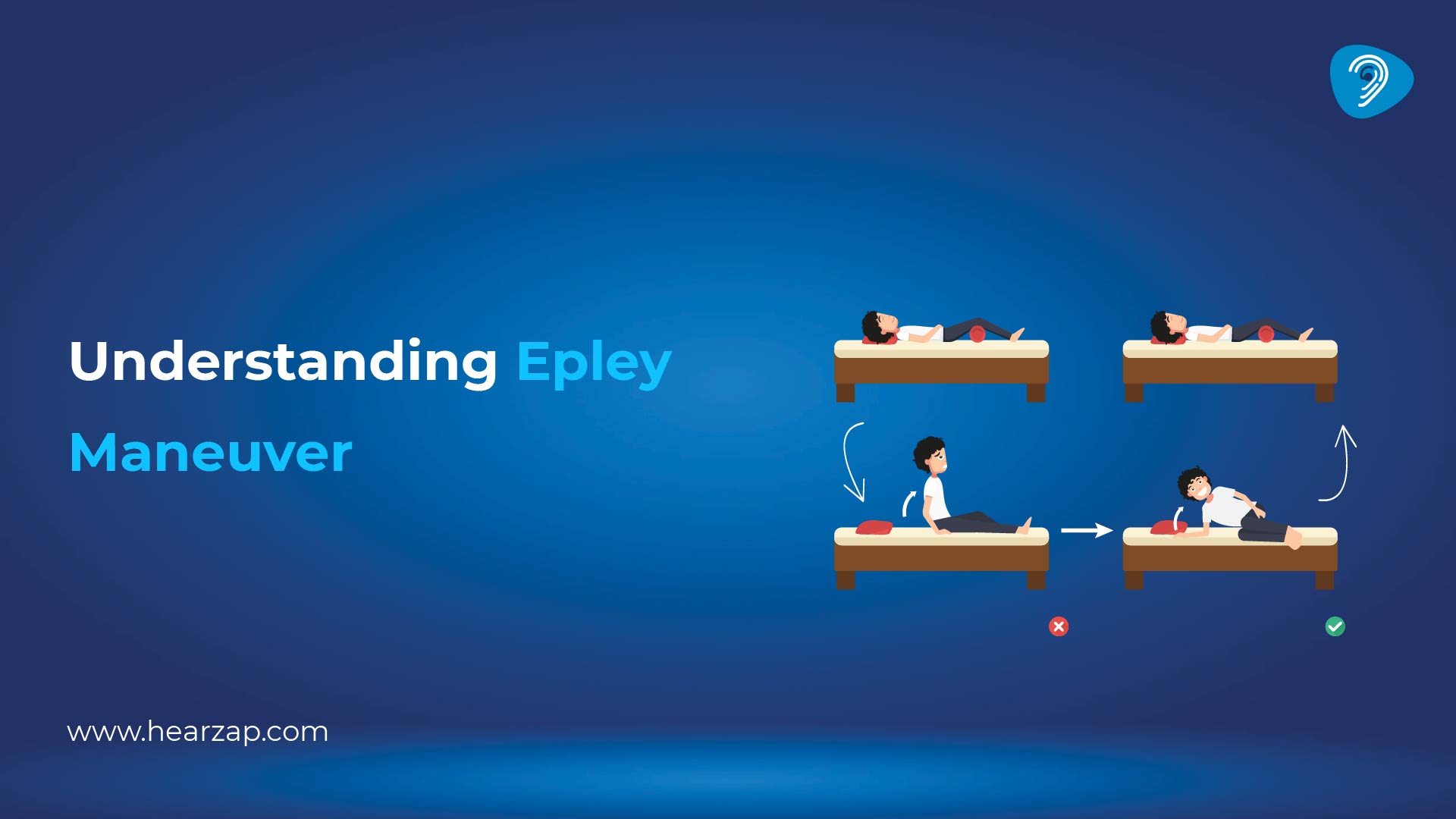
- Epley manoeuvre: This is the first-line approach for posterior canal BPPV, the typical pattern. Your clinician turns your head and body in a few steps, pausing at each stage to let gravity carry the particles along the canal. Many people feel an immediate reduction in vertigo. For many, one session is enough; others may need two or three visits.
- Semont manoeuvre: Another set of quick movements useful for some cases, especially when the Epley is not suitable.
- Barbecue roll (Lempert) manoeuvre: This is designed for horizontal canal BPPV, where you roll in stages like a log to move the crystals out of the affected canal.
These methods form the core of otoconia crystal management. They are safe when performed by trained clinicians such as ear, nose and throat specialists or physiotherapists trained in vestibular care. Many providers will also teach you how to practice home-based positional drills if symptoms recur.
2) Brandt–Daroff exercises
If manoeuvres are not possible right away, these repeated side-to-side movements can help the brain adapt and may gradually move the crystals. They are often used as part of a home programme between clinic visits.
3) Vestibular rehabilitation therapy
After the spinning settles, some people still feel unsteady. A tailored programme of balance tasks, eye-head coordination drills, and gentle conditioning helps restore confidence. It also reduces the risk of falls. This is a key part of ear crystals treatment for older adults or anyone who is less active due to fear of triggering attacks.
4) Medicines
Tablets do not move crystals. However, a short course of anti-sickness medicine can ease nausea during acute episodes. Long-term use of vestibular suppressants is not advised because they can slow down the brain’s natural compensation. The priority remains to guide the particles back to the utricle.
5) Rare surgical options
In very stubborn cases that do not respond to repeated manoeuvres, there are surgical procedures such as posterior canal occlusion or singular neurectomy. These are uncommon and reserved for select patients after careful evaluation.
Practical advice during recovery
- Sleep slightly raised for a night or two after a procedure if your clinician suggests it.
- Move gently but do not avoid normal activities for long. Keeping still can delay recovery.
- If a position triggers strong spinning, sit for a moment and let it settle before standing.
- Keep a diary of triggers and bring it to your next appointment.
This approach keeps treatment focused on repositioning the particles, not masking symptoms. When done correctly, otoconia in ear problems usually improve quickly, and many people return to normal within days.
Preventing Otoconia-Related Issues
You cannot stop every case of BPPV, but you can reduce risk and protect your overall balance. These measures blend hearing care tips with simple lifestyle steps that support the vestibular system.
- Stay active: Daily movement keeps the inner ear and balance pathways responsive. Walk, practise gentle yoga, or do tai chi for steadiness. Short bursts throughout the day are better than long stretches of sitting.
- Train balance: Simple exercises like standing on one leg near a counter, heel-to-toe walking, and controlled head turns while focusing on a target help maintain stability. A clinician or physiotherapist can give you a safe plan.
- Mind your bone and vitamin health: Adequate calcium and vitamin D support crystal turnover in the inner ear. Ask a clinician whether you should check levels, especially if you have osteoporosis or minimal sunlight exposure.
- Protect your head: Wear appropriate safety gear for sport or cycling and make your home friendly for walking by removing loose rugs and improving lighting. Preventing head injury lowers the chance of displaced otoconia later.
- Manage long periods in one position: After surgery or during long drives or flights, change head position from time to time. Gentle neck range movements, when safe, can help keep crystals from drifting.
- Treat ear conditions promptly: While BPPV does not cause hearing loss, infections and other ear conditions can. See a clinician if you have ear pain, discharge, fever, or sudden changes in hearing. Early care for types of ear infections protects both comfort and balance.
- Adopt everyday hearing care tips: Keep water and shampoo out of the ear canal by rinsing carefully. Avoid inserting cotton buds, hairpins, or other objects into the ear. Use hearing protection in loud settings such as concerts or workshops. Schedule periodic hearing checks if you are over fifty, work in noisy places, or already use hearing devices. Looking after hearing health and its effect on balance becomes clear when you notice that better hearing reduces the mental load of staying steady while moving and talking.
- Know your triggers: If you have had BPPV before, be mindful when rolling in bed, looking up, or bending quickly. If a familiar spin returns, seek ear crystals treatment early rather than waiting weeks.
- Build a safe home routine: Keep a sturdy chair nearby when doing head-tilting chores, and use a non-slip mat in the bathroom. If you feel unsteady, pause and hold a stable surface until the feeling passes.
These steps will not remove every risk, yet they make daily life easier and create a foundation for quick recovery if symptoms recur.
Conclusion
Otoconia are small but mighty. Sitting in a gel layer within the utricle and saccule, these crystals inside ear signal tilt and straight-line movement to keep you upright. When a few crystals slide into a semicircular canal, they give the wrong message and set off brief spinning spells. That is the story of displaced otoconia, the usual cause of BPPV.
Medicines play only a minor role, while vestibular rehabilitation helps those left with lingering imbalance. Most people recover quickly and return to normal activities. If symptoms do return, treatment can be repeated with the same good results.
Contact us
We are here for all your hearing needs, from hearing tests to hearing aids. Fill out the form below, and we will give you a call soon.
Recent Blogs
By Team Hearzap | March 31, 2026
By None | March 30, 2026
By Team Hearzap | March 28, 2026
By Team Hearzap | March 27, 2026
By None | March 26, 2026