Generic
Positional Vertigo: Why Dizziness Happens When You Change Positions
By Team Hearzap | Feb. 5, 2026
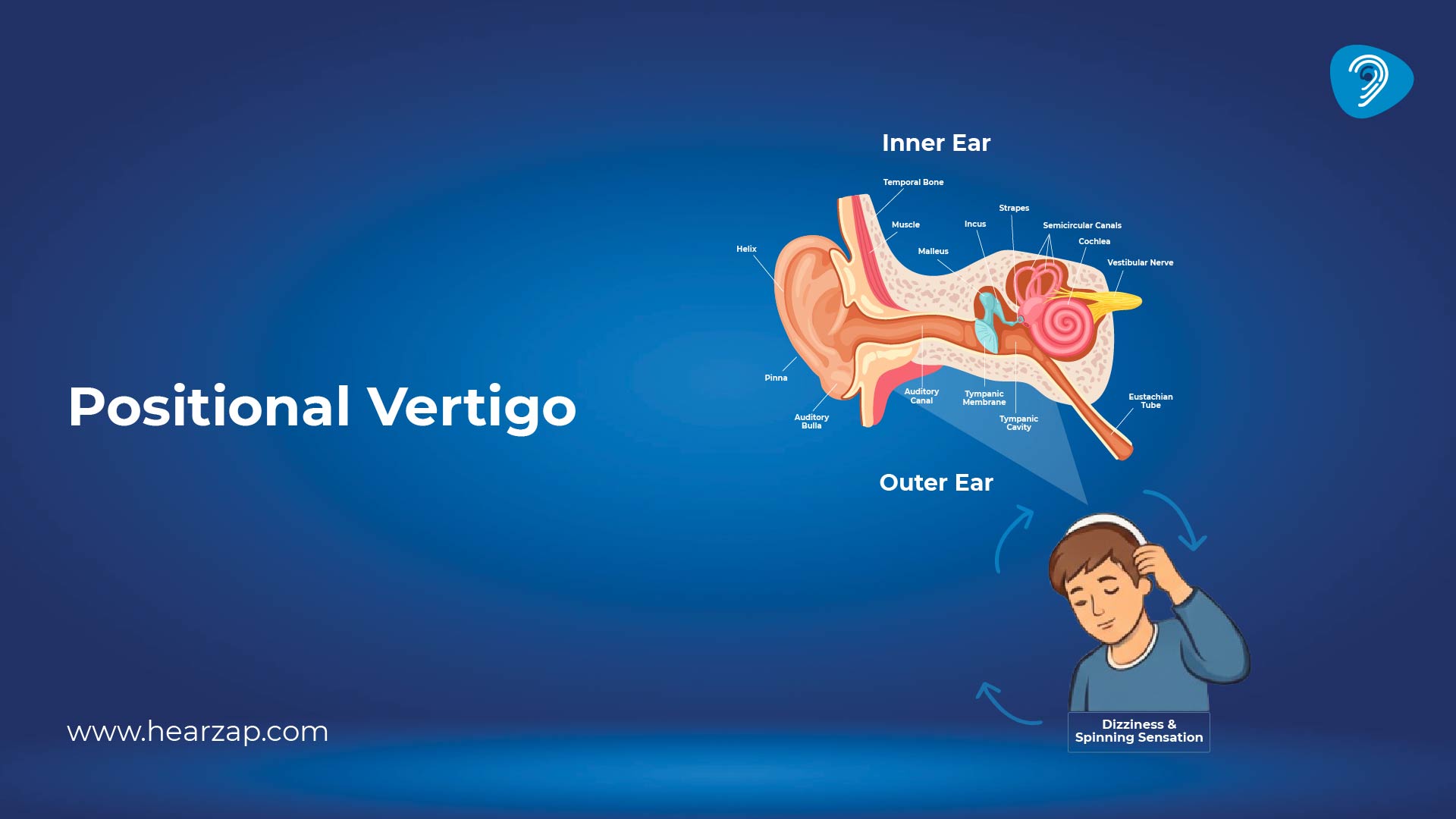
Dizziness that strikes when you roll in bed, bend to pick something up, or look up at a high shelf can feel sudden and scary. In many people, this pattern points to positional vertigo – brief spinning triggered by a change in head position. The inner ear helps your brain judge motion and balance. When its signals temporarily go off-track, you may feel unsteady.
Hearzap supports people with dizziness concerns through expert evaluation and clear guidance, so you can return to daily life with confidence. If episodes are recurring, avoid driving or climbing heights until assessed. Simple changes, such as moving slowly and keeping a support nearby, can help prevent falls while you seek care.
What Is Positional Vertigo?
If you’ve been wondering, what is positional vertigo, it is dizziness that starts with specific head movements and often settles within seconds to a few minutes. The most frequent cause is benign paroxysmal positional vertigo (BPPV).
In BPPV, tiny calcium crystals (otoconia) that normally sit in one area of the inner ear slip into a semicircular canal. When you move your head, those crystals shift and stimulate the canal incorrectly. Your brain and eyes respond as if you are moving more than you are, which creates the spinning sensation.
How Positional Vertigo Affects Daily Life
Even short episodes can disrupt routines and confidence. Many people begin avoiding movements, which can lead to poor sleep and fear of falling. Common challenges include:
- Spinning when turning in bed or getting up quickly
- A lingering balance problem on uneven roads or when you walk in low light
With the right assessment and treatment, most people regain normal movement.
Causes of Positional Vertigo
Doctors often summarise positional vertigo causes as “crystal displacement,” with a few common triggers. BPPV can occur without a clear reason, but it is also linked to:
- Minor head injury (a fall, sports impact, or sudden braking in traffic)
- Inner ear inflammation after a viral illness
- Migraine-related sensitivity of the balance system
- Prolonged bed rest after surgery or illness
Because other conditions can mimic BPPV, it is important not to self-diagnose.
Positional Vertigo Symptoms
Typical positional vertigo symptoms are brief but intense and are triggered by rolling over, looking up, bending down, or sitting up from lying. People commonly report:
- A spinning feeling that peaks quickly
- Nausea, and occasionally vomiting
- Unsteadiness after the spin settles
- A jerking eye movement (nystagmus) that a doctor can observe
People often use the word vertigo for any dizziness, but positional episodes usually feel like the room is moving.
When Symptoms Require Medical Attention
BPPV is common, but not all dizziness is harmless. Seek urgent medical care if you have dizziness along with:
- New weakness, numbness, facial droop, or trouble speaking
- Severe, sudden headache unlike your usual pattern
- Double vision, fainting, or chest pain
- Continuous dizziness lasting hours without relief
- New hearing changes, ringing, or ear discharge
These signs need prompt assessment to rule out problems beyond the inner ear.
Diagnosis and Positional Vertigo Test
A good history is the starting point: what triggers the episode, how long it lasts, and whether there are hearing or neurological symptoms. The classic bedside test is the Dix–Hallpike manoeuvre. You are moved from sitting to lying with the head turned, while the doctor watches for nystagmus and asks about dizziness. For some patterns, a supine roll test is used to assess a different canal.
Your assessment may also include an ear exam and a hearing test, especially if there are concerns about ringing, fullness, or reduced hearing.
Positional Vertigo Treatment and Medicine
For BPPV, the main positional vertigo treatment is a canalith repositioning manoeuvre, most commonly the Epley manoeuvre. It guides the displaced crystals back to the correct area, so they stop triggering false signals. Many people feel marked relief within one to three sessions when the manoeuvre matches the affected canal.
After a repositioning manoeuvre, mild imbalance can linger for a day. Follow the advice given and review if symptoms return.
Medicines can be useful for short-term nausea, but they do not move the crystals. If symptoms are frequent or you feel anxious about movement, vestibular rehabilitation exercises can help your balance system reset.
Lifestyle Adjustments and Home Care Tips
Supportive habits can reduce triggers while you recover:
- Rise slowly: sit for 10–20 seconds before standing
- Turn your whole body instead of snapping your head
- Stay hydrated, especially in hot weather and on travel days
- Keep rooms well-lit at night to prevent falls
If symptoms return, avoid repeating manoeuvres at home without guidance. The technique and side matter.
How Hearzap Can Help
Dizziness and hearing concerns can appear together, and worry about both can amplify symptoms. Hearzap provides structured evaluations, clear explanations, and personalised plans for dizziness and balance disorders. If you also notice signs of hearing loss, the team can guide you on the next steps, including rehabilitation options and whether it is time to buy hearing aids. To get started, you can book a hearing test appointment and discuss results with a specialist.
FAQs
What is positional vertigo?
It is dizziness, often a spinning sensation, triggered by specific changes in head position, commonly due to BPPV.
What causes positional vertigo?
Most often, tiny calcium crystals shift into a balance canal in the inner ear and stimulate it incorrectly.
What are the common positional vertigo symptoms?
Brief spinning with head movements, nausea, unsteadiness, and sometimes visible eye jerks.
How is positional vertigo diagnosed?
Doctors match your symptom pattern with bedside manoeuvres that reproduce dizziness and eye movements.
What tests are done for positional vertigo?
The Dix–Hallpike and roll tests are commonly used; other tests may be added if symptoms are atypical.
Can positional vertigo be treated with medicine?
Medicine may ease nausea briefly, but repositioning manoeuvres and vestibular rehabilitation exercises address the main cause of BPPV.



Contact us
We are here for all your hearing needs, from hearing tests to hearing aids. Fill out the form below, and we will give you a call soon.
Recent Blogs
By None | March 30, 2026
By Team Hearzap | March 27, 2026
By None | March 26, 2026
By None | March 25, 2026
By None | March 23, 2026