Generic
Short Increment Sensitivity Index (SISI) Test: How It Works
By Team Hearzap | Dec. 19, 2025
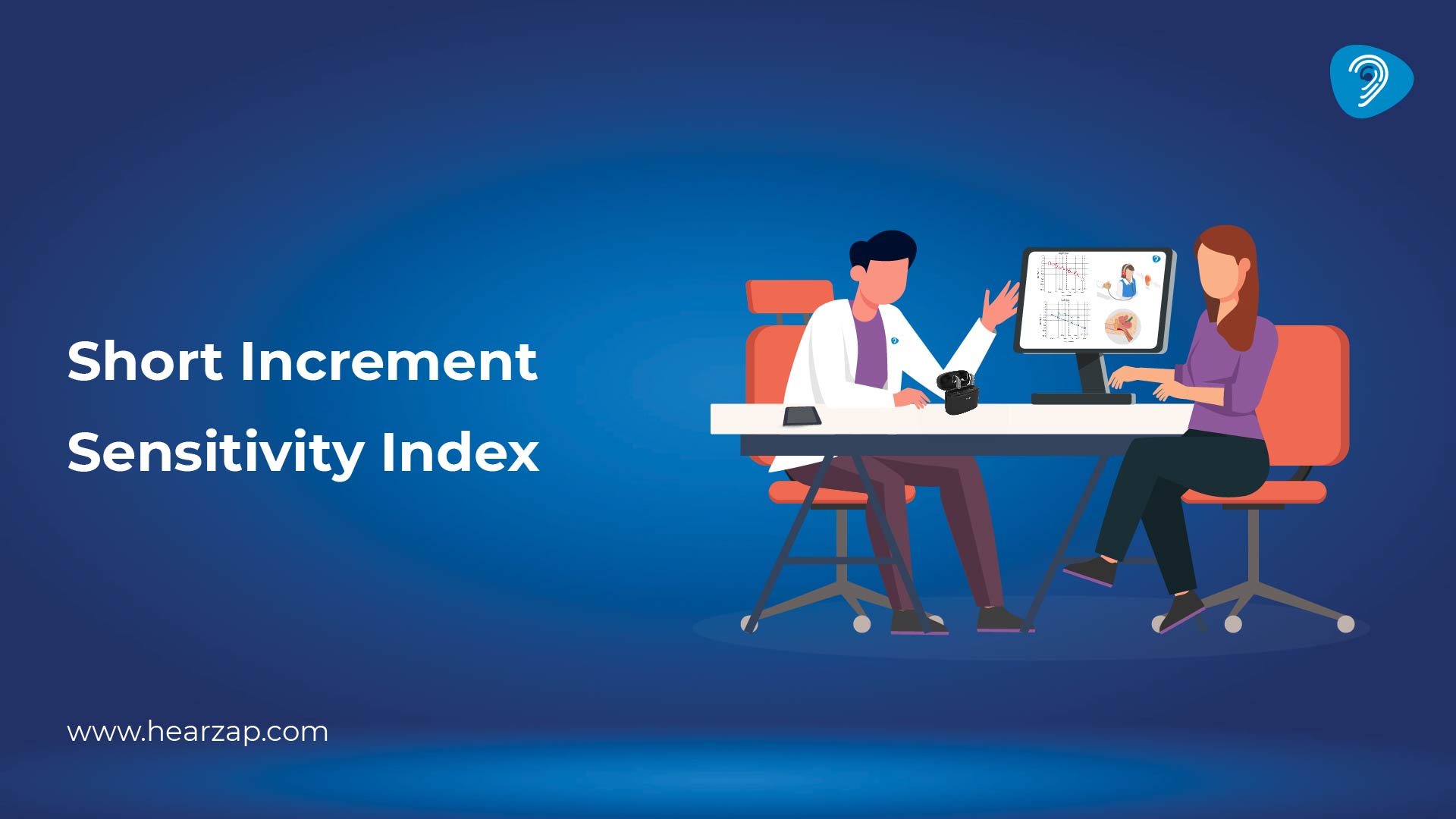
Getting the diagnosis right, early, changes day-to-day life in very real ways. The SISI hearing test helps audiologists see how the inner ear reacts to tiny changes in loudness, so they can tell whether difficulties are mainly cochlear or something beyond the cochlea. In India, where noise exposure, untreated ear infections, and diabetes are common contributors to hearing problems, a focused test like this can stop guesswork and lead to the right next step. Regular check-ups are part of hearing health, and the SISI is a small, safe assessment that adds a sharp piece to the diagnostic picture.
What Is the SISI Hearing Test?
Put simply, the SISI hearing test checks whether you can spot very small, very brief “jumps” in the loudness of a tone that you’re already hearing. First, your hearing threshold is measured—the quietest level at which you can detect a steady tone. After that, the tone is played slightly above this level, and the audiologist slips in tiny intensity increases of about 1 decibel (1 dB) for a fraction of a second. Your task is to indicate when you hear those little steps.
Why does this matter? People with certain inner-ear problems experience “recruitment,” a faster-than-usual growth in perceived loudness. That means even the smallest added bit of intensity can be noticeable. Detecting these increments reliably tends to suggest a cochlear pattern of hearing loss. In contrast, people with retrocochlear problems (for example, along the auditory nerve) usually find those 1 dB changes much harder to pick.
Technically, the short increment sensitivity index test measures your ability to detect 1 dB increments at a chosen frequency and level above threshold. It does not replace the audiogram or speech tests; it adds a very specific view of how your system handles small intensity changes. Because the method is quick, repeatable, and easy to interpret, it has remained part of clinical practice for decades.
For patients, whether they work in noisy factories, manage long-standing diabetes, or have a history of ear infections, the SISI helps separate cochlear from retrocochlear patterns. That distinction steers whether you need a medical referral, a rehabilitation plan, or both.
Why perform the SISI Test?
Clinicians order the short increment sensitivity index test to answer a practical question: Is the hearing loss likely to be cochlear, or should we consider nerve or brainstem involvement? Cochlear lesions often show recruitment, so patients can detect those tiny 1 dB steps more often than people with normal hearing or with retrocochlear issues.
How the result helps:
- Triage and referral. A low SISI score combined with red flags – very poor word scores compared with the audiogram, one-sided symptoms, or dizziness – can justify imaging or a neurology/ENT referral.
- Setting expectations. A high score, consistent with cochlear involvement, helps frame realistic outcomes for amplification and rehabilitation.
- Frequency-by-frequency insight. Because the test is run at specific frequencies, it shows which parts of the cochlea are most affected, which aids device fitting and counselling.
The test is non-invasive, safe for adults and older children who can give clear responses, and takes only a few minutes once thresholds are known. It sits neatly alongside Pure Tone Audiometry, tympanometry, and speech measures to round out the picture.
How the SISI Test Works (Procedure)
Equipment & Setup
Centres use:
- A calibrated clinical audiometer that can add 1 dB increments to a continuous tone.
- Insert earphones or standard headphones that seal well.
- A quiet test room with controlled ambient noise.
- A trained audiologist to set thresholds accurately and explain instructions clearly (often in the patient’s preferred language).
Test conditions typically include:
- Reviewing the patient’s audiometry test results to choose target frequencies (often 1 kHz and 2 kHz first).
- Setting the tone at a fixed level above threshold, commonly 20 dB sensation level.
- Introducing brief 1 dB increments at set intervals.
- Asking the patient to indicate each time a small “jump” is heard.
Before starting, the clinician checks for wax, adjusts the earphones for comfort, and gives a short practice so the task feels easy to follow.
Step-by-Step Procedure
- Measure pure-tone thresholds for the test ear at the chosen frequencies.
- Play a steady tone at a level above threshold (for example, 20 dB SL).
- Present a series of very brief 1 dB increments at regular intervals.
- The patient presses a button or says “yes” when a change is heard.
- Record the number of correct detections.
- Repeat at other frequencies, and then on the other ear if needed.
Many centres use 20 sounds so scoring is easy. Patients are asked to stay relaxed, not guess the answers, and take a short break if they feel tired. For children, having a parent with them helps them stay calm and focused.
SISI Test Results
Your SISI score is the percentage of increments correctly identified. Clinicians interpret the percentage in light of the whole case:
- 0-20%: Often called negative. With poor speech discrimination that does not match the audiogram, this can point toward retrocochlear involvement or a non-cochlear pattern.
- 25-70%: Borderline or mixed; the rest of the test battery and case history decide the next step.
- 75-100%: Commonly considered positive, which fits with cochlear (sensory) loss, particularly when the audiogram shows high-frequency loss and loudness recruitment.
What this means for care:
- High score: Strong detection of those tiny increments is typical with cochlear loss. Management usually focuses on protection from further noise, targeted counselling, and amplification. Many patients do well with carefully fitted hearing aids, plus coaching for listening in markets, trains, classrooms, and open offices.
- Low score: When paired with asymmetry, tinnitus on one side, or speech-in-noise trouble that is far worse than expected, a low percentage raises the index of suspicion for retrocochlear causes. Otoacoustic emissions, auditory brainstem response, and imaging may follow.
The SISI is not a standalone verdict. It gains power in context: the audiogram pattern, case history, otoscopy, and speech results. Consider two examples. A person with symmetrical sloping loss from years in a textile mill and a high SISI score fits a cochlear picture and usually benefits from rehabilitation. Another person with one-sided loss, very low SISI, and disproportionate word scores needs specialist review to rule out a neural cause.
Patients often ask if the SISI predicts how they will manage conversation. Not directly. What it does is guide how the professional sets gain, compression, and expectations, and whether further tests are sensible. In that way, the result supports confident, individualised care rather than a one-size-fits-all plan.
Industry-leading Audiometers
Accurate SISI testing relies on well-maintained equipment. Quality audiometers in use across India typically offer:
- Dependable 1 dB increment generation at the needed frequencies.
- Flexible control of level and presentation rate.
- Patient response buttons and reliable logging.
- Regular calibration to national and international standards.
When centres invest in good instruments and routine calibration, patients benefit through consistent results, efficient appointments, and clear reports. If you are comparing centres, ask about equipment maintenance, room acoustics, and clinician credentials. A transparent process builds trust and makes it easier to act on results. Where appropriate, providers may arrange trials before you buy hearing aid solutions, so you can judge comfort, clarity, and real-world performance before committing.
Conclusion
The SISI hearing test is a focused way to check how your ear handles tiny changes in loudness just above threshold. By counting how many 1 dB steps you detect, the clinician can judge whether the pattern points mainly to the cochlea or whether retrocochlear causes should be considered. The short increment sensitivity index test is quick, safe, and particularly useful when combined with case history, otoscopy, tympanometry, speech testing, and the results of a broader hearing test. Used in this way, it supports clear decisions, fair expectations, and a plan that actually fits your life.
FAQs
What is the Short Increment Sensitivity Index (SISI) test?
It is a behavioural test that checks whether you can detect 1 dB loudness jumps in a steady tone that is already audible. Frequent detections tend to align with cochlear patterns of hearing loss.
How is the SISI test performed?
After measuring thresholds, the audiologist plays a steady tone above threshold and introduces brief 1 dB increments. You press a button or respond verbally when you hear a change. The score is the percentage of correct detections.
What do SISI test results indicate?
High percentages often support a cochlear origin and the presence of loudness recruitment; very low percentages, especially with asymmetry or unusually poor speech scores, can suggest retrocochlear involvement and the need for further tests.
What is the difference between SISI test and a standard hearing test?
A standard test maps the quietest sounds you can hear at different pitches. The SISI focuses on your ability to notice tiny intensity changes at a level above threshold, which gives insight into loudness growth and cochlear function.
How are SISI test results used with pure tone audiometry test results?
The SISI percentage is read alongside the audiogram. For example, high SISI at frequencies with raised thresholds often supports a cochlear explanation, guiding referral decisions and device settings.
How accurate is the SISI hearing test?
With proper calibration, clear instructions, and an attentive listener, the test is reliable and repeatable. Accuracy improves when professionals interpret it with the full test battery rather than in isolation.

Contact us
We are here for all your hearing needs, from hearing tests to hearing aids. Fill out the form below, and we will give you a call soon.
Recent Blogs
By None | March 23, 2026
By None | March 18, 2026
By None | March 16, 2026
By None | March 13, 2026
By None | March 12, 2026