HEARING TEST
A Complete Guide to Tuning Fork Tests for Hearing Assessment
By Team Hearzap | Dec. 13, 2025
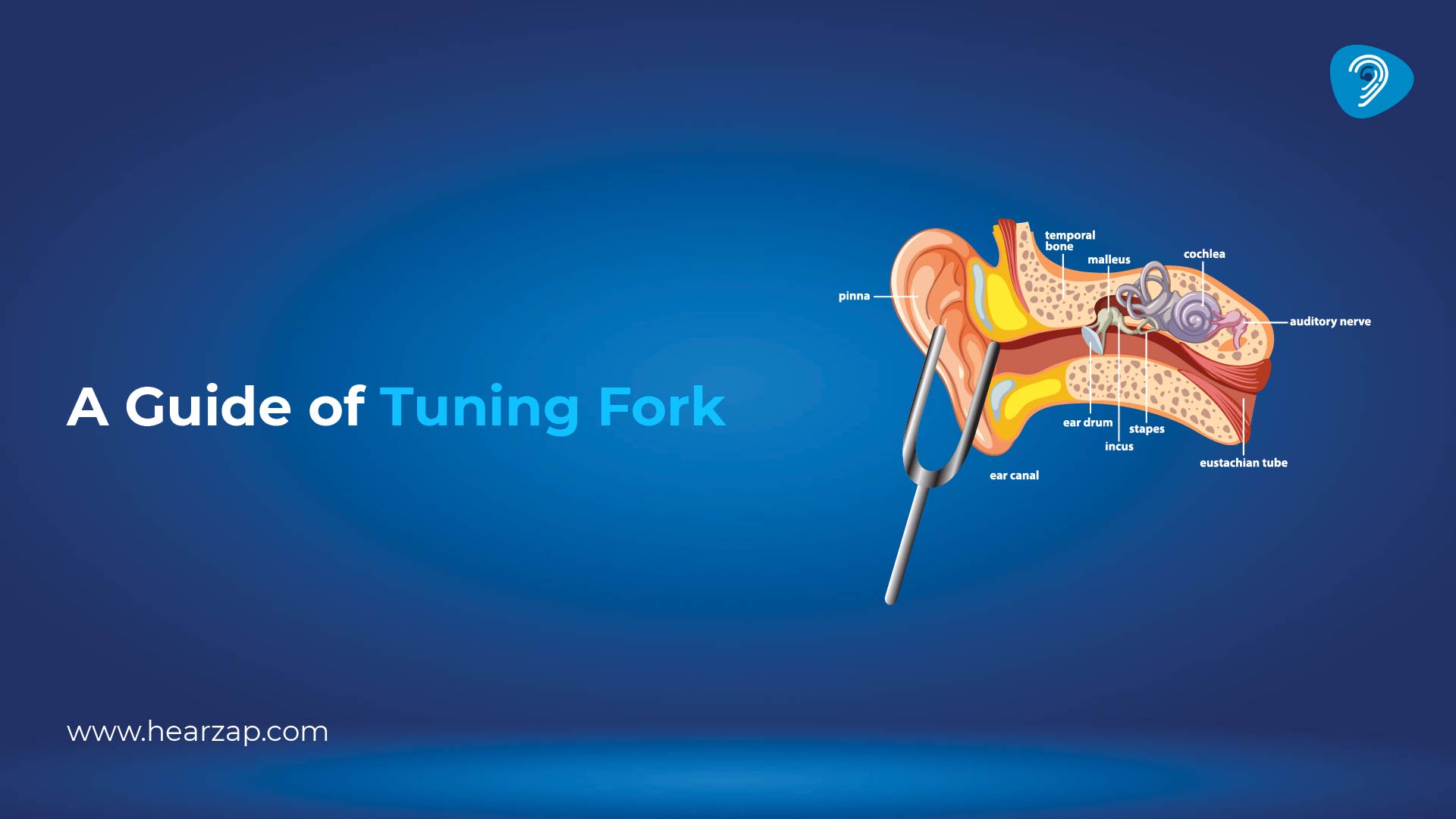
Tuning forks look simple, yet they remain useful for quick, bedside checks of hearing. This guide explains what they are, how they work, and how professionals use them to screen for different patterns of hearing loss. You will see where these tests fit alongside modern audiology, when to consider them, and what the results usually mean.
What Are Tuning Fork Tests?
Tuning fork tests are brief bedside assessments that use a vibrating metal fork to compare the sound heard through air versus the sound sent through bone. The aim is to judge bone conduction hearing in relation to air conduction, and to check how sound localises between the two ears. Because they take seconds, they are handy during emergencies, ward rounds, and basic ENT examinations in India.
Types of Tuning Fork Tests
Weber Test
In the Weber and Rinne test pair, the Weber checks sound localisation. The fork is set vibrating and placed at the midline, usually the forehead or the upper incisors. A person with symmetric hearing perceives the tone in the middle. If the tone shifts to one side, it suggests either conductive loss in the ear it moves to or a sensorineural pattern in the opposite ear. That straight rule often guides the next steps, including a formal hearing test arranged with an audiologist.
Rinne Test
The Rinne compares air conduction with the bone conduction test perception at the mastoid. Hold the base of the vibrating fork on the mastoid until the sound fades, then move the tines next to the ear canal. If the person hears it again by air, Rinne is “positive”, which is normal or indicates mild inner ear loss. If hearing is louder via bone than air, Rinne is “negative”, pointing to conductive hearing loss. Combined with the Weber, Rinne narrows the likely site of the problem.
How Tuning Fork Tests Work
A tuning fork vibrates at a set frequency, usually 512 Hz for hearing assessments, because it decays slowly, is less felt as a tickle, and sits within speech frequencies. The fork sends sound by two routes:
- Through air: the tines push air molecules into the canal, tympanic membrane, and ossicles.
- Through bone: the fork’s base on the skull sends vibrations directly to the cochlea as bone conduction hearing.
Healthy ears hear better through the air than bone because the outer and middle ear add gain. Any block in the canal, drum, or ossicles reduces that advantage. Inner ear or nerve damage reduces both paths, yet air remains stronger than bone in most cases.
Step-by-Step Procedure for Tuning Fork Tests
Preparation
Choose a 512 Hz fork in good condition. Sit the person in a quiet space. Explain that you will strike a fork and ask where the sound is heard and which is louder. Remove heavy earrings or hearing protection. If ears are vastly different, start with the better ear. This sets the stage for a reliable ear tuning fork test.
Performing the Test
For the Weber:
- Strike the fork softly against a rubber pad or your knee – never hard surfaces.
- Place the base midline on the forehead or incisors.
- Ask: “Where do you hear the sound – centre, left, or right?”
For Rinne:
- Place the base on the mastoid with the tines away from the pinna.
- When the person stops hearing it, quickly move the tines beside the ear canal.
- Ask: “Do you hear it again by air?” This sequence forms the classic tuning fork ear test.
Recording Findings
Write observations clearly:
- Weber: central, left, or right.
- Rinne: positive (AC > BC) or negative (BC ≥ AC) for each ear.
- Any asymmetry, loudness tolerance, or unusual sensations.
These notes help colleagues interpret your tuning fork auditory test and plan next actions.
Interpreting Results
Use the patterns below.
- Normal or symmetric hearing
- Weber: central.
- Rinne: positive on both sides (AC > BC).
- Conductive pattern
- Weber: lateralises to the affected ear.
- Rinne: negative on the affected side.
- Common causes: wax impaction, otitis media with effusion, tympanic membrane perforation, and ossicular fixation.
- Sensorineural pattern
- Weber: lateralises to the better ear.
- Rinne: positive on both sides, yet overall hearing is reduced.
- Common causes: age-related loss, noise exposure, viral labyrinthitis, ototoxic medication, sudden inner ear loss.
Quick tips that save time:
- If Weber goes left and Rinne is negative left, think conductive loss left.
- If Weber goes left but both Rinnes are positive, suspect inner ear loss right.
Example scenarios that you may recognise:
- A student from Bengaluru reports “blocked” hearing after a cold. The Weber moves to the blocked side, and Rinne is negative there, likely middle ear fluid.
- A factory worker in Pune notices one ear is dull after Diwali fireworks. The Weber shifts away from the affected ear, and both Rinnes stay positive – sudden inner ear loss needs urgent care.
- A young adult with gradually worsening hearing and a family history has a negative Rinne and a strong Weber pull to the same ear – otosclerosis is possible and warrants full assessment.
When results are unclear, repeat with a better technique or proceed to a full hearing test using tuning fork followed by pure-tone audiometry for confirmation.
Tuning Fork Tests vs Modern Hearing Tests
Tuning forks are screening tools, not a diagnosis on their own. They are fast, portable, and require little training. Modern methods – pure-tone audiometry, tympanometry, otoacoustic emissions, and auditory brainstem responses – quantify thresholds, assess middle ear pressure, and check neural pathways.
Advantages of forks:
- Instant guidance on the likely site of disease.
- Useful in emergencies or remote settings.
- Zero electronics; no power source.
Limitations:
- Results depend on technique and patient attention.
- Only approximate severity.
- Cannot map frequencies across the range of speech.
Where they fit together:
- Primary care and emergency teams use forks to triage and decide urgency.
- Audiologists then measure exact thresholds, match devices, and monitor progress.
- ENT specialists correlate test findings with examination, imaging when needed, and management.
- Consider devices such as bone conduction hearing aids when middle ear disease limits air conduction, but the inner ear works well. In contrast, conventional digital devices suit many inner ear losses after proper fitting.
When Should You Get a Tuning Fork Test?
Consider these situations in India:
- A sudden blocked ear after a cold or a flight.
- Unilateral ringing or hearing drop on waking.
- Persistent ear discharge with reduced hearing.
- Ear fullness with your own voice sounding loud (autophony).
- Head injury with new asymmetry.
- When you wear hearing protection daily and suspect changes.
Daily life examples include long commutes amid heavy traffic, loud wedding bands near the speakers, or extended use of in-ear headphones at high volume. In each case, a quick screen can flag early change and prompt timely care. These tests are also used during children’s assessments, pre-employment checks, and bedside reviews after ear procedures.
Prompt screening can speed decisions about wax removal, medical therapy, or urgent referral for sudden sensorineural hearing loss. If thresholds confirm benefit, many people choose to buy hearing aid after counselling and a proper fitting.
Conclusion
Tuning forks remain small but powerful tools in ear care. Used well, they direct attention to whether a problem lies in sound conduction or in the inner ear and nerve. Pair them with formal audiology to quantify the deficit and plan treatment. Seek help if you notice ear pain, discharge, or sudden imbalance. Early review often prevents complications and reduces long-term communication strain. If in doubt, arrange a timely assessment rather than waiting for symptoms to settle on their own. In many cases, early action genuinely improves comfort, communication, and safety at work and on the road.
FAQs
What is the tuning fork test for hearing?
It is a quick bedside method that compares air and bone pathways to suggest the likely site of hearing loss. The Weber checks localisation; the Rinne compares air and bone on each side.
What tuning fork to use for hearing assessment?
A 512 Hz fork is preferred because it lasts long enough to compare air and bone and is less likely to be felt as vibration rather than heard.
How to use a tuning fork for hearing tests?
Strike it gently on a soft pad, place midline for Weber, then mastoid and beside the ear for Rinne, asking the person to report where and when the tone is heard.
What’s the difference between Rinne & Weber tests?
Weber evaluates side-to-side localisation; Rinne compares air versus bone on each ear. Used together, they point towards conductive or inner ear causes.
How do you use a tuning fork step by step?
Prepare a quiet space, explain the test, use the Weber first, then Rinne on both sides, and record Weber lateralisation plus each ear’s Rinne as positive or negative, noting any asymmetry.
Related Blogs
Hearing Test at Home: Easy, Accurate & Hassle-Free with Hearzap
Contact us
We are here for all your hearing needs, from hearing tests to hearing aids. Fill out the form below, and we will give you a call soon.
Recent Blogs
By None | March 18, 2026
By None | March 16, 2026
By None | March 13, 2026
By None | March 12, 2026
By None | March 11, 2026