Generic
Tympanosclerosis: Causes, Symptoms & Treatment
By Team Hearzap | Jan. 2, 2026
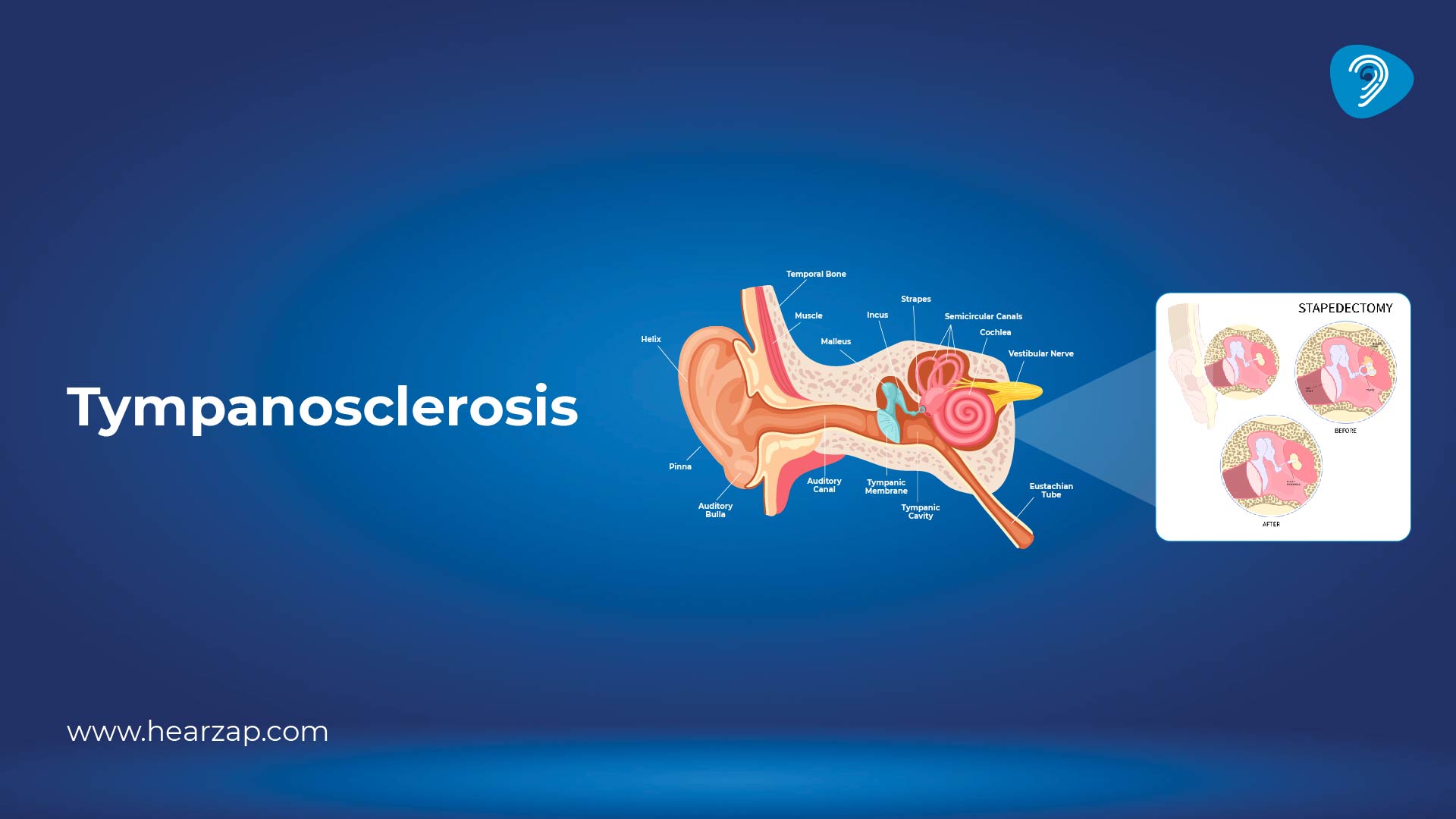
Tympanosclerosis: When the Eardrum Changes After Years of Healing
Sometimes, ear problems don’t announce themselves loudly. There’s no pain, no discharge, no sudden emergency. Just a quiet change in how sound feels — voices seem dull, certain tones don’t come through clearly, or one ear feels “different” from the other.
For many people, this is how tympanosclerosis is discovered. Often by chance. During a routine ear check. Or after years of ear infections.
Tympanosclerosis Meaning in Simple Terms
The easiest way to understand tympanosclerosis meaning is that it’s scarring inside the ear.
Over time, repeated inflammation causes parts of the eardrum or middle ear to heal by forming thicker, hardened tissue. Calcium deposits build up, and the once flexible eardrum becomes a little stiff.
The eardrum’s job is to vibrate freely. When it stiffens, sound doesn’t travel as smoothly and that’s when hearing can feel reduced or less clear.
Why Tympanosclerosis Happens
Most people with tympanosclerosis have a long history behind it. It doesn’t appear overnight.
Common reasons include:
- Repeated ear infections, especially during childhood
- Fluid trapped in the middle ear for long periods
- Past ear surgeries like grommet placement
- A healed eardrum perforation
The ear is constantly trying to repair itself. Sometimes, that healing leaves behind tougher tissue instead of soft, elastic layers.
What Doctors Actually See Inside the Ear
When an ENT looks into an ear affected by tympanosclerosis, they often see chalky white patches on the eardrum. These patches are painless and usually stable.
The scarring may be:
- Limited only to the eardrum
- Spread deeper into the middle ear
- Present in one ear or both
The location and extent of the scarring matter more than how it looks.
Tympanosclerosis Left Ear and One-Sided Hearing Changes
Being told you have tympanosclerosis left ear can explain why one side hears slightly worse than the other.
This usually happens when:
- Infections affected one ear more than the other
- Trauma occurred on one side
- Surgery was done in only one ear
In many cases, the hearing difference stays stable for years and does not continue to worsen.
Tympanosclerosis Bilateral
When scarring affects both ears, it’s called tympanosclerosis bilateral. This is more common in people who had repeated ear infections in both ears during childhood.
Bilateral involvement may lead to:
- Difficulty following conversations in noisy places
- Feeling that sounds lack sharpness
- Needing to turn up the volume more than before
Even then, many people adapt well and manage comfortably with the right support.
Tympanosclerosis Classification and Why It Matters
Doctors use tympanosclerosis classification to describe how deeply the scarring goes.
In simple terms:
- If scarring is only on the eardrum, hearing impact is often mild
- If the middle ear bones are involved, hearing loss may be more noticeable
This classification helps decide whether monitoring, hearing aids, or surgery is appropriate.
Symptoms People Often Don’t Notice at First
Tympanosclerosis is quiet. It doesn’t cause pain or active infection.
Possible symptoms include:
- Gradual hearing reduction
- Sounds feeling dull rather than distorted
- Difficulty hearing soft voices
- Needing more effort to follow speech
Many people don’t realise anything is wrong until hearing is tested properly.
How Tympanosclerosis Is Diagnosed
Diagnosis is usually straightforward and non-invasive.
An ENT may use:
- A simple ear examination to spot scarring
- Hearing tests to measure sound conduction
- Tympanometry to see how well the eardrum moves
These tests help determine whether hearing is affected and how much support is needed.
Tympanosclerosis Treatment: When Is It Needed?
Not everyone with tympanosclerosis needs treatment.
Tympanosclerosis treatment is guided by hearing, not appearance.
When No Treatment Is Required
If hearing is good, reassurance and monitoring are often enough. The scarring itself does not usually spread.
Hearing Support
When hearing loss is present, hearing aids can significantly improve clarity and comfort.
Surgical Options
In selected cases where scarring restricts the hearing bones, surgery may help improve sound transmission. This decision is always made carefully, after detailed evaluation.
The aim is always function — not cosmetic correction.
Living Normally with Tympanosclerosis
Most people with tympanosclerosis live completely normal lives. They work, travel, talk, listen to music, and enjoy conversations just like anyone else.
What helps most:
- Regular hearing check-ups
- Early use of hearing support if needed
- Protecting ears from repeated infections
Once understood, tympanosclerosis becomes something you manage — not something you worry about.
Final Thoughts
Tympanosclerosis is not a disease that progresses aggressively. It’s a sign of how the ear has healed after years of inflammation.
Understanding the tympanosclerosis meaning, knowing whether it’s tympanosclerosis bilateral or limited to one side like tympanosclerosis left ear, and recognising the role of tympanosclerosis classification helps remove fear and confusion.
With proper evaluation and the right tympanosclerosis treatment when needed, most people hear well and live comfortably.
Sometimes, the ear just carries a history and that history doesn’t have to define the future.
FAQs
What is tympanosclerosis?
Tympanosclerosis is a condition where scar tissue and calcium deposits form on the eardrum or middle ear, making it stiffer over time.
What causes tympanosclerosis?
It usually develops after repeated ear infections, long-standing ear inflammation, or healing from past ear problems.
Can trauma cause tympanosclerosis?
Yes, trauma to the ear, including surgery or injury, can sometimes trigger scarring that leads to tympanosclerosis.
How to cure tympanosclerosis?
There is no direct cure for the scarring itself, but hearing can often be improved with monitoring, hearing aids, or surgery in selected cases.

Contact us
We are here for all your hearing needs, from hearing tests to hearing aids. Fill out the form below, and we will give you a call soon.
Recent Blogs
By None | April 3, 2026
By None | April 2, 2026
By None | April 1, 2026
By Team Hearzap | March 31, 2026
By None | March 30, 2026