Generic
Is it Vertigo or Labyrinthine Disorder? How to Tell the Difference
By Team Hearzap | April 1, 2026
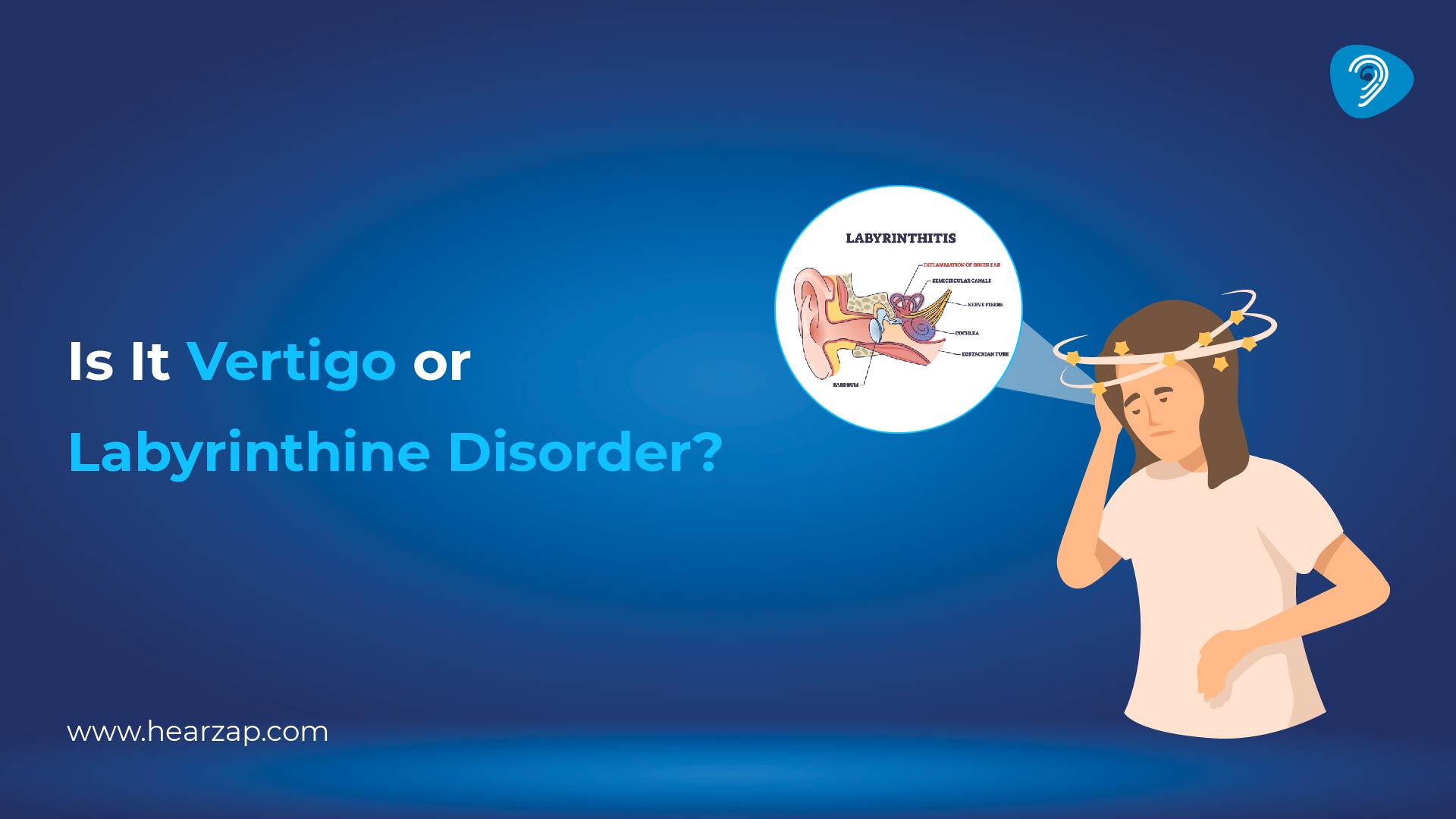
If you have ever stood up, turned your head, and suddenly felt the room “move”, you already know how unsettling dizziness can be. In everyday conversation, people often use vertigo, giddiness, and inner ear problems interchangeably, which is exactly where the confusion begins.
Vertigo is a sensation, not a diagnosis, while a labyrinthine disorder is a problem within the inner ear labyrinth, the system that supports both balance and hearing. They can feel similar in the moment, but the cause, testing, and treatment plan can differ a lot.
This blog will help you recognise the difference, so you can speak to a specialist with clarity, especially if hearing symptoms are also present, and you will also introduce with Hearzap as a trusted resource for expert guidance and diagnosis.
What is Vertigo?
Vertigo is the false feeling that you or your surroundings are spinning, tilting, swaying, or moving when you are actually still. It is a type of dizziness, but not all dizziness is vertigo. Vertigo commonly occurs when signals from your inner ear, eyes, and brain do not match, and your brain interprets the mismatch as motion.
Common causes of vertigo include:
- Inner ear causes (peripheral vertigo) such as benign positional vertigo, vestibular neuritis, or fluid pressure problems
- Migraine-related causes, like vestibular migraine
- Head injury or trauma
- Less commonly, brain-related causes (central vertigo), where the balance centres in the brain are involved
Symptoms that often come with vertigo:
- A spinning or moving sensation, especially with head movement or position changes
- Feeling unsteady while walking, sometimes described as drifting or veering
- Nausea, sometimes with vomiting
- Sweating, palpitations, or a “washed out” feeling after an episode
- Eye movements that may look jumpy to an examiner (nystagmus)
A useful self-check: if you feel lightheaded, like you might faint, that can be dizziness, not necessarily vertigo. Vertigo more often feels like motion, not just weakness.
What is a Labyrinthine Disorder?
A labyrinthine disorder is a condition that affects the labyrinth, the inner ear structure that contains the balance organs and the cochlea (hearing organ). When the labyrinth is inflamed, infected, under pressure, or injured, you may experience vertigo and hearing-related symptoms.
Causes that commonly fall under labyrinthine disorders include:
- Labyrinthitis, which involves inflammation of the labyrinth and typically affects balance and hearing
- Ménière’s disease, linked to inner ear fluid pressure changes and classically associated with vertigo plus fluctuating hearing symptoms
- Trauma, such as a blow to the head, barotrauma, or injury that disturbs inner ear structures
- Other inner ear disorders where hearing and balance are affected together
Symptoms that suggest a labyrinthine disorder rather than “vertigo alone”:
- Vertigo, along with hearing loss, often occurs in one ear
- Tinnitus, described as ringing, buzzing, or whistling
- A sense of fullness or pressure in the ear
- Nausea and imbalance that can make walking straight difficult
This is where many people quickly start looking for solutions, including ways to buy hearing aids online. That can be a valid option later, but only after the cause of hearing change is confirmed and the hearing is properly tested.
Differences Between Vertigo and Labyrinthine Disorders
The fastest way to separate the two is to focus on what else is happening alongside the spinning sensation.
Cause:
- Inner ear issues, migraine, injury, or brain-related causes can trigger vertigo. It is a symptom of a balance system mismatch.
- Labyrinthine disorders are inner ear specific and involve the labyrinth itself, so hearing and balance may be affected together.
Symptoms:
- Vertigo (as a symptom) may occur without hearing changes, especially in conditions like positional vertigo or vestibular neuritis.
- Labyrinthine disorders more often include hearing loss, tinnitus, ear fullness, or muffled sound, along with vertigo.
Clues from your pattern:
- Positional triggers (turning in bed, looking up, bending) often point towards positional vertigo.
- Vertigo and hearing fluctuations can point to inner ear fluid-pressure issues.
- Sudden hearing change with vertigo should be treated as urgent and evaluated quickly.
Diagnosis and testing:
- Positional tests, such as the Dix-Hallpike manoeuvre, help confirm benign positional vertigo
- Hearing test (audiometry) to identify hearing loss patterns that can support an inner ear diagnosis
- Balance and eye movement tests, because the inner ear strongly influences eye stability
- Imaging or blood tests if a central cause or other medical condition needs to be ruled out
Treatment approach:
- For positional vertigo, repositioning manoeuvres and vestibular exercises are commonly used.
- For inflammatory inner ear conditions, doctors may use short-term symptom-control medicines and then shift the focus to rehabilitation.
- For recurrent inner ear conditions, the plan may include dietary measures, medication, and long-term monitoring, especially when hearing is involved.
- For ongoing imbalance, vestibular rehabilitation with a trained professional can be very effective.
If hearing symptoms persist, a hearing assessment becomes central. The safest approach is always: diagnose first, then choose devices and aftercare.
When to See a Specialist
Most brief episodes of dizziness resolve, but persistent or worsening symptoms warrant medical attention. An ENT specialist, neurotologist, or audiologist can help determine whether the issue is inner-ear, hearing, migraine-related, or something else.
Consider booking an evaluation if:
- Dizziness or vertigo is recurring, persistent, or disrupting work and daily routine
- You notice hearing loss, blocked ear sensation, or muffled hearing
- You have ringing in the ears or ear fullness with dizziness
- Nausea or vomiting accompanies the episodes, leading to dehydration or weakness
- Symptoms began after infection, fever, or significant fatigue and are not easing
Seek urgent care if dizziness comes with:
- Sudden weakness or numbness, facial droop, slurred speech
- Sudden severe headache, fainting, or new double vision
- Sudden hearing loss, especially in one ear
It can also help to carry a short symptom note to your appointment: what you felt, what triggered it, and whether your hearing changed. It saves time in OPD and leads to more accurate testing.
How Hearzap Can Help
When you are dealing with dizziness, vertigo, or ear-related balance trouble, guessing the cause can delay relief. Hearzap supports you with an organised, clinician-led pathway so you can move from symptoms to a clear diagnosis and the right care plan.
Here is how Hearzap typically supports patients in India:
- Right first-step guidance: If your symptoms sound like positional vertigo, migraine-related vertigo, or an inner-ear condition affecting hearing, Hearzap helps you understand which specialist and tests are most relevant, rather than trying random remedies.
- Hearing and balance-focused evaluation: Many people do not realise that balance and hearing are part of the same inner-ear system. Hearzap can guide you towards the appropriate assessments, especially if you have ear fullness, tinnitus, or hearing changes along with dizziness.
- Support for labyrinthine disorders and related conditions: If your symptoms suggest labyrinthitis or Ménière’s type inner ear involvement, Hearzap helps you take the next steps for medical evaluation and follow-up care, so the plan matches the cause rather than only controlling nausea or spinning temporarily.
- Hearing checks and hearing aid support when needed: If testing confirms hearing loss, Hearzap can help you choose suitable hearing solutions based on your hearing profile, lifestyle, and comfort.
- Clear next steps and ongoing care: Whether your plan involves vestibular rehabilitation, ENT follow-up, or hearing support, Hearzap helps you stay on track with the right guidance, so you are not left unsure after the first appointment.
In short, you no longer have to keep guessing or bouncing between opinions. Hearzap connects you to the right tests, specialists, and follow-ups so you understand what is happening, get the proper treatment, and move forward with confidence today.
Conclusion
Vertigo describes a spinning sensation, while labyrinthine disorders involve inner-ear conditions that can affect balance and hearing. The difference matters because it changes what your specialist looks for, which tests are needed, and how treatment is planned. If dizziness keeps returning, or if you notice hearing loss, tinnitus, or ear fullness, do not self-diagnose. Book an appointment with Hearzap for expert guidance, the right diagnostic tests, and a personalised care plan that matches the root cause, not just the symptoms.
FAQs
1. What is the main difference between vertigo and labyrinthine disorder?
Vertigo is a symptom that feels like spinning or motion. A labyrinthine disorder is a condition of the inner ear labyrinth and often involves hearing-related symptoms and vertigo.
2. Can labyrinthine disorder cause vertigo?
Yes, when the labyrinth is inflamed, infected, under pressure, or injured, it can send incorrect balance signals, triggering vertigo.
3. How is vertigo diagnosed?
Diagnosis usually involves a clinical history, examination, and targeted tests such as positional testing for benign positional vertigo, hearing tests when hearing symptoms exist, and balance or eye movement assessments when needed.
4. Can vertigo be treated at home?
Some causes, such as positional vertigo, may be managed with clinician-recommended exercises and manoeuvres. However, home treatment should not replace evaluation when symptoms are severe, recurrent, or paired with hearing changes.
5. When should I see a doctor for dizziness?
See a doctor if dizziness is persistent, worsening, affects daily life, or comes with hearing loss, tinnitus, vomiting, fainting, severe headache, speech trouble, weakness, or sudden vision changes.


Contact us
We are here for all your hearing needs, from hearing tests to hearing aids. Fill out the form below, and we will give you a call soon.
Recent Blogs
By Team Hearzap | March 31, 2026
By None | March 30, 2026
By Team Hearzap | March 28, 2026
By Team Hearzap | March 27, 2026
By None | March 26, 2026