HEARING TEST
What Is an Audiogram? Understanding Hearing Test Results
By Team Hearzap | July 30, 2026
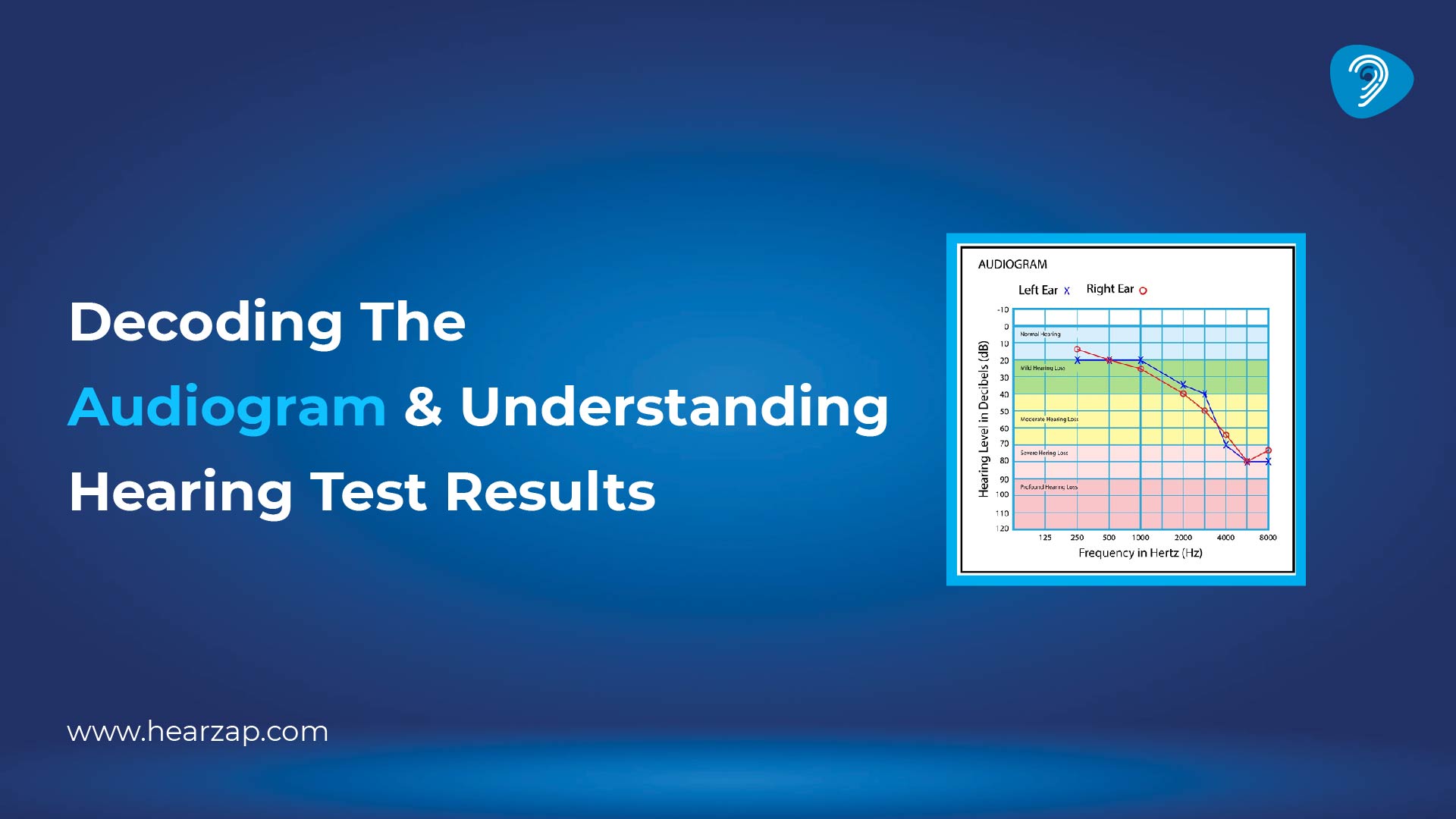
An audiogram can look confusing: lines, circles, crosses and numbers running across a graph. Yet this chart tells a story about how well each ear hears soft, medium and high-pitched sounds. When you understand the basics, your results feel less worrying and useful. Hearzap’s hearing assessment services help people in India understand their hearing, discuss support, and choose hearing aids when needed.
What Is an Audiogram?
An audiogram is a visual record of your hearing test results. The chart shows the softest sounds you can hear at different pitches, tested for the right and left ear. Audiologists use it to check whether hearing is within the expected range, which frequencies are affected, and whether one ear needs more support.
A Hearing test may include listening to beeps, words or tones through headphones. The audiogram turns those responses into a report that supports diagnosis, hearing aid fitting, counselling and follow-up care. It does not only say “good” or “poor” hearing. It shows the exact pattern.
What Is an Audiogram Test?
Audiogram test refers to a structured hearing evaluation where tones are played at different loudness levels. Your responses help identify the quietest sound you can detect. This is the hearing threshold.
How an Audiogram Test Is Performed
Most assessments begin with a case history, ear check and instructions. During a Pure Tone Audiometry Test, you wear headphones and press a button whenever you hear a tone. Some tones are low, like a drum. Some are high, like a whistle.
Bone conduction testing may also be done using a small vibrator placed behind the ear. A Tuning Fork Test can support early checks when checking whether the issue may involve the outer, middle or inner ear.
Who Should Get an Audiogram Test?
An audiogram is useful for children, older adults and anyone exposed to loud sound. Consider testing if you often increase TV volume, miss doorbells, struggle in restaurants, feel one ear hears better, or need people to repeat words. A guide on What is a Hearing Test can help visitors understand what to expect.
How to Read an Audiogram Report
An audiogram report has two main parts. The horizontal line shows frequency, measured in hertz. Low pitches are on the left and high pitches are on the right. The vertical line shows loudness in dB HL. Softer sounds are near the top. Louder sounds appear lower down.
Understanding Frequency and Hearing Levels
Speech uses many frequencies, so a person may hear some sounds clearly and miss others. For example, vowels may seem audible, while softer consonants such as “s”, “f” and “th” may sound unclear. What is considered normal hearing on an audiogram is generally thresholds around 0 to 20 dB HL across important speech frequencies, though interpretation should always be done by a qualified audiologist.
What the Symbols on an Audiogram Mean
O often marks the right ear and X the left during air conduction testing. Brackets or angle marks may show bone conduction results.
What is an air-bone gap audiogram?
It refers to a chart where air conduction and bone conduction thresholds are compared. A noticeable gap may suggest that sound is not passing efficiently through the outer or middle ear.
Audiogram Interpretation
Audiogram interpretation looks at degree, type, shape and speech impact. The audiologist does not judge based on only one number. They consider both ears, the pattern across frequencies, your symptoms, age, work needs and communication goals.
A simple range chart may look like this:
These ranges help explain daily listening problems. Mild difficulty may show up during group conversations. Moderate difficulty can affect normal speech. Severe and profound levels may need stronger amplification, advanced devices or further medical review.
Types of Audiogram
Types of audiogram patterns can point towards different causes. Conductive patterns often show better bone conduction than air conduction. Conductive Hearing Loss may happen when sound is blocked or reduced before it reaches the inner ear, such as due to wax, fluid or middle-ear problems.
Sensorineural patterns usually show similar air and bone results, often linked to inner-ear or nerve-related changes. Mixed patterns combine both. Age-related patterns commonly affect high frequencies first. Noise-related patterns may show a dip around higher pitches, especially in people exposed to machinery, traffic, firecrackers, concerts or loud earphones.
Hearzap Hearing Assessment Services
Hearzap offers advanced hearing evaluations, experienced audiologists, detailed audiogram analysis and personalised hearing aid recommendations. The focus is not just on the graph, but on how you hear at home, work, school, social gatherings and phone calls.
If support is recommended, you can compare suitable devices, understand features and buy hearing aids online after proper guidance. For clearer next steps, book an appointment to discuss results, comfort, budget and follow-up care. Timely care can reduce listening fatigue, improve conversations and support better confidence for people living with hearing loss.
FAQs
What is an audiogram?
An audiogram is a graph that records the quietest sounds a person can hear at different pitches in each ear.
What is an audiogram test?
It is a hearing evaluation where tones are played through headphones and sometimes through bone conduction equipment to measure hearing thresholds.
How do I read an audiogram report?
Read frequency from left to right and loudness from top to bottom. Marks higher on the chart mean softer sounds were heard.
What are the different types of audiogram?
Common patterns include conductive, sensorineural, mixed, age-related and noise-related audiograms.
Why is audiogram interpretation important?
It helps identify the severity, type and pattern of hearing difficulty, so the right support can be planned.
Where can I get an audiogram test?
You can get an audiogram through Hearzap’s hearing assessment services with trained audiologists and result counselling.
Related Blogs
What is a Tone Decay Test? How It Detects Hidden Hearing Loss

5 Reasons Why You Should Get a Hearing Test
When Should You Consult An Audiologist?
Contact us
We are here for all your hearing needs, from hearing tests to hearing aids. Fill out the form below, and we will give you a call soon.
Recent Blogs
By None | Aug. 12, 2026
By None | Aug. 11, 2026
By None | Aug. 10, 2026
By None | Aug. 7, 2026
By None | Aug. 6, 2026