HEARING TEST
Pure Tone Audiometry Test: Procedure, Purpose & Cost
By Team Hearzap | July 2, 2025
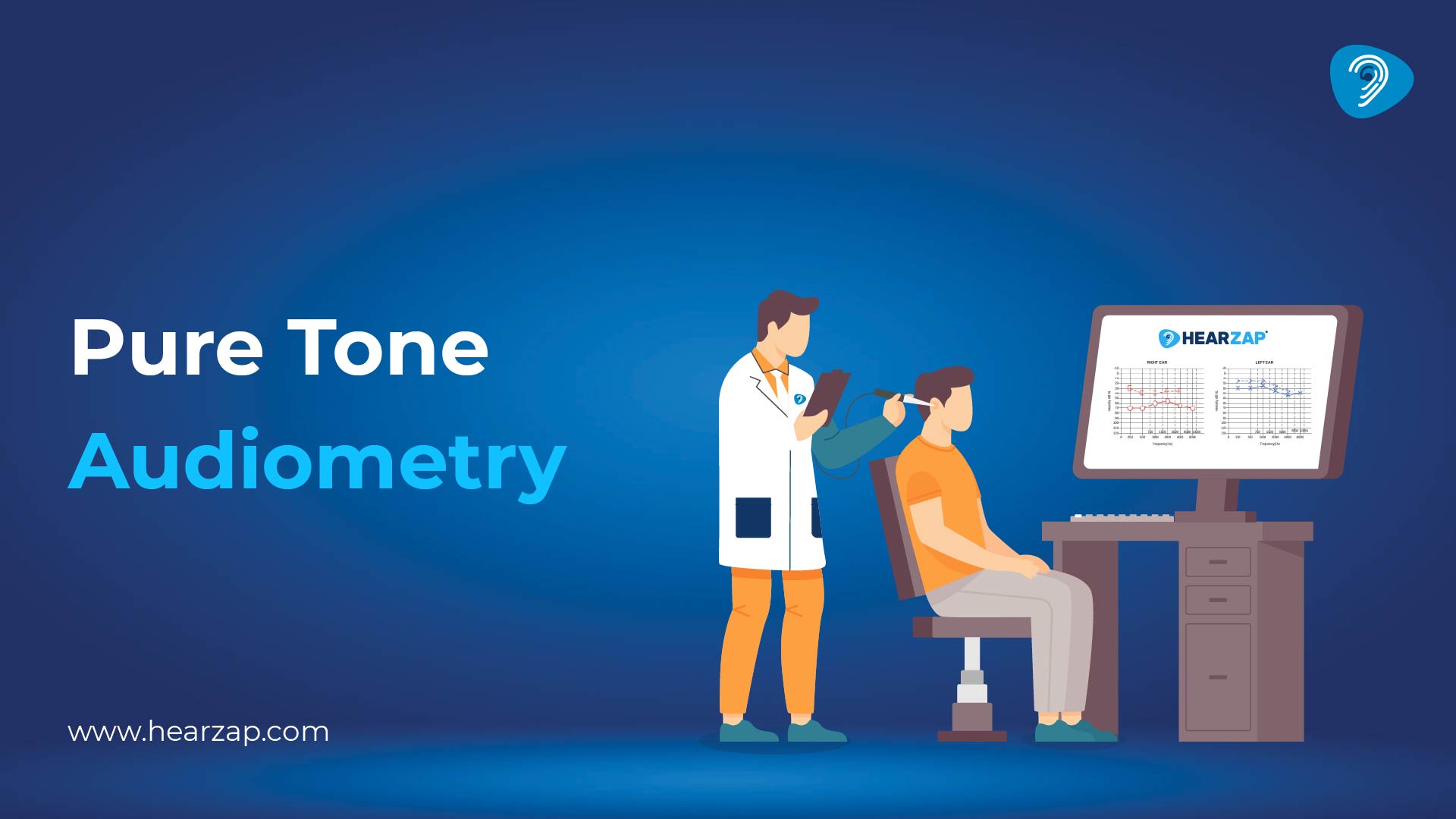
Hearing check-ups play an important role in understanding how well you can respond to everyday sounds. Among the most trusted tools for this test is Pure Tone Audiometry (PTA). It is designed to map your hearing across different pitches with accuracy and comfort. In this guide, we’ll discuss what a pure tone audiometry test is, how the procedure works, and the ways results are interpreted, expected costs and what needs to be done after the test.
What is a Pure Tone Audiometry Test?
Pure Tone Audiometry is a common hearing assessment that determines the ability to distinguish between various levels of sound and different pitches. It aids in detecting the early symptoms of hearing impairment and evaluating the ear-related symptoms. The PTA hearing test is non-invasive, relatively easy and performed by using headphones inside a soundproof room.
Why Is It Done / Indications
An audiometry hearing test is done to measure how well a person can detect sounds at multiple frequencies. It specifically helps to determine the types of hearing loss, which include conductive, sensorineural, or mixed. It also detects the degree of hearing loss among these types and it is measured from mild to profound.
For adults, audiologists use this test with suspected hearing changes, such as difficulties in communication or noise exposure. It is also an important paediatric hearing test that helps to identify hearing issues in infants, toddlers and adolescents.
How the Test Works (Procedure)
A Pure Tone Audiometry checks how your ears respond to specific tones by testing both air and bone pathways. This setup and sequence are designed to get precise and ear-specific hearing thresholds.
Equipment and Setup
The key equipment used during pure tone audiometry ear testing is as follows:
- Audiometer
- Headphones
- Bone Conduction Vibrator
- Soundproof Booth
Procedure Steps
Each of the following steps can help you measure your hearing accuracy:
- Air Conduction Test: During the pure tone air conduction hearing test, the headphones are used to transmit sounds to determine the health of your inner ear as well as the outer ear.
- Bone Conduction Test: This test helps to determine if the detected hearing loss is conductive or sensorineural by transmitting vibrations directly to the inner ear through a bone oscillator.
- Threshold Determination: The audiologist gradually reduces the intensity of each tone until you detect them.
Masking
Masking is used if one ear might ‘overhear’ tones. During this test, the audiologist plays a control masking noise near the non-test ear to ensure accurate, ear-specific results.
Frequencies & Interpretation
The pure tone audiogram test evaluates your hearing between 250 Hz to 8000 Hz. Then, PTA (Pure Tone Average) is calculated to summarise general hearing capacity. Altogether, the results of these ear tests allow audiologists to interpret the type, extent, and form of hearing loss.
Special Cases & Variants
Versions of the pure tone test depend on age, setting, and clinical requirements. Here’s what each test indicates:
- Paediatric Hearing Test (Children’s Audiometry): This audiometry test uses visual cues and play-based responses to monitor hearing in children.
- Pure Tone Air Conduction Hearing Test: The test assesses the sound detection capability of your outer and middle ear through headphones.
- PTA Hearing Test: It is used for workplaces, community screenings, schools, or clinical evaluations to identify early changes or confirm suspected hearing issues.
- Follow-up / Monitoring: Used for individuals with ongoing hearing concerns or noise exposure to track thresholds over time and detect subtle shifts in hearing ability.
To understand your hearing condition, book appointment today with an audiologist. They can help you with guiding proper care to maintain and improve your hearing.
Cost / Pricing
The pure tone audiometry price depends on how detailed the assessment is. The factors affecting the price are as follows:
- Type of facility (basic clinic or specialised audiology centre)
- Adult testing versus paediatric testing
- Use of advanced or calibrated equipment
- Need for additional assessments or follow-up consultations
After the Test – What’s Next?
Once the PTA hearing test is done, the audiologist reviews your audiogram results and explains your hearing thresholds. They also help you understand what the results mean for your hearing health. Based on the findings of the audiogram, the audiologist may recommend you for ENT consultation, buy hearing aids or more diagnostic tests to continue treatment. In children, periodic monitoring is recommended to monitor the development of their hearing capability.
Conclusion
The pure tone audiometry test assists you in getting to know your hearing health. The test is helpful in terms of timely treatment and long-term care, as it measures the sensitivity of each ear to various frequencies. Whether you take the test as a part of your routine check-up, a paediatric evaluation or follow-up care, the results are helpful to guide you to the right next steps.
FAQs
1. Is the pure tone audiometry test painful?
No, the pure tone audiometry test is pain-free because you’ll only have to listen to soft tones through headphones. The procedure is safe for both children and adults.
2. What does a pure tone audiogram show?
A pure tone audiogram shows the quietest sounds you can hear at different frequencies. The test determines whether your hearing conditions are conductive, sensorineural, or mixed, along with their severity.
3. What is the cost of a pure tone audiometry test?
The pure tone audiometry test price can be different due to the nature of the test and the equipment used.
4. What happens after the test?
Once you have completed the hearing test, the audiologist interprets the test results and your hearing thresholds. They may also recommend you for the ENT test, hearing aids, or regular checkups, depending on the results.
5. How long does a pure tone test take?
An average pure tone audiogram test takes about 10-20 minutes. But the duration may take slightly longer if both air and bone conduction tests are included.
Related Blogs
Why Otoscopy is Important for Ear Health and Hearing
What is a Hearing Test & How It Works
How Often Should You Get a Hearing Test?
Hearing Test at Home: Easy, Accurate & Hassle-Free with Hearzap
What is a Tone Decay Test? How It Detects Hidden Hearing Loss
Hearing Test for Adults - Signs, Symptoms & Types
Contact us
We are here for all your hearing needs, from hearing tests to hearing aids. Fill out the form below, and we will give you a call soon.
Recent Blogs
By None | April 7, 2026
By None | April 6, 2026
By None | April 4, 2026
By None | April 3, 2026
By None | April 2, 2026