Generic
Tympanoplasty Surgery – Procedure, Symptoms, Recovery & Success Rate
By Team Hearzap | March 16, 2026
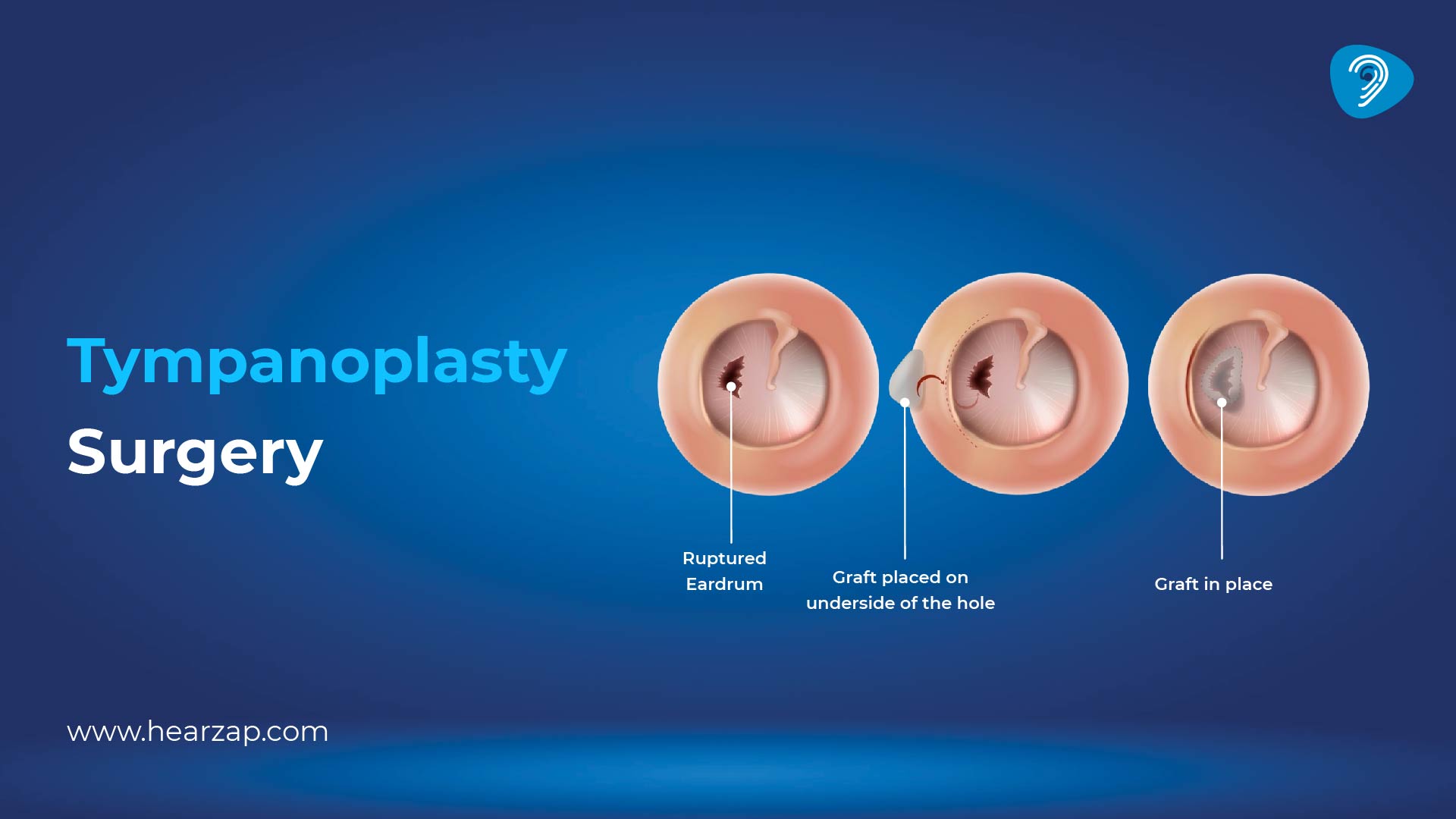
Tympanoplasty surgery is an operation to repair a hole in your eardrum and, when needed, fix the middle ear parts that support hearing. Doctors suggest it when a perforation does not heal on its own, and you keep facing ear discharge, repeated infections, or hearing loss.
This blog explains tympanoplasty causes, tympanoplasty symptoms, when you may need surgery, the tympanoplasty procedure, recovery after tympanoplasty surgery, precautions after tympanoplasty surgery, and the success rate of tympanoplasty.
What is Tympanoplasty Surgery?
Tympanoplasty surgery is done to close a perforated eardrum so the ear can stay protected, and hearing can improve. The main aim is to stop repeated infections and make the ear safer in daily life.
When the eardrum has a hole, water and germs can enter the middle ear easily, especially during bathing or when you have a cold and a cough. Repairing the eardrum helps reduce discharge, lowers the chance of infection, and often improves hearing over time.
To understand your current hearing level, you can begin with a hearing test.
Tympanoplasty Causes and Symptoms
Tympanoplasty causes are usually linked to infection or injury that damages the eardrum. If you notice the signs early, you can plan treatment before the problem becomes long-term.
Tympanoplasty causes
Common causes include repeated ear infections, long-standing ear discharge, and trauma to the ear. Using pins, cotton buds, or other sharp objects to clean the ear can tear the eardrum. A hard slap on the ear, a fall, or an accident can also cause a sudden perforation.
Tympanoplasty symptoms
Typical tympanoplasty symptoms include:
- Hearing loss or muffled hearing in the affected ear
- Ear discharge that returns again and again, sometimes with a smell
- Ear pain, itching, or a heavy, blocked feeling
- Ringing sound in the ear
When Do You Need Tympanoplasty?
You may need tympanoplasty when the perforation lasts for weeks or months, and symptoms continue even after medicines. Your ENT specialist confirms this after ear examination and hearing assessment.
Surgery is commonly advised when:
- Discharge returns despite treatment and ear drops
- Water entry triggers infection easily
- Hearing loss is clearly linked to the perforation
- The hole is not healing naturally
Early diagnosis matters because repeated infection can slowly damage the middle ear and reduce hearing further. If you want a clear answer for your case, book an appointment.
Tympanoplasty Procedure – Step-by-Step
The tympanoplasty procedure is usually done under anesthesia, so you do not feel pain during surgery. Many surgeries are done under general anesthesia, and in select cases, the doctor may use another safe anesthesia plan based on age and health.
The surgeon places a graft, which is a thin piece of tissue, to cover the hole. Over time, the graft becomes part of the healed eardrum.
The graft is often taken from tissue near the ear. The doctor may reach the eardrum through the ear canal or through a small cut near or behind the ear, depending on access and perforation size. After placing the graft, the ear is packed gently to support healing.
Most surgeries take around one to two hours.
Steps of Tympanoplasty
These steps of tympanoplasty may vary slightly, but the overall flow is similar.
- Preparing the ear: The ear canal is cleaned, and the perforation is assessed carefully.
- Removing damaged tissue: Unhealthy tissue is removed so the area is clean for proper healing.
- Placing a graft: The graft is placed over or under the eardrum to seal the perforation.
- Closing the incision: If a cut is made, it is closed, and soft packing is placed to stabilise the graft.
Types of Tympanoplasty
The type of tympanoplasty depends on where the perforation is and how the surgeon can access it. Some cases need only eardrum repair, while others may need additional work inside the middle ear.
Surgeons may choose different approaches based on ear canal shape, size of the hole, and visibility. In simple terms, the surgery can be done:
- Through the ear canal (transcanal)
- Through a small cut near the ear opening
- Through a cut behind the ear for wider access
Your ENT doctor will suggest the method that gives the safest repair and best healing chances for your ear.
Transcanal Tympanoplasty
Transcanal tympanoplasty is done through the ear canal. It is often used when the perforation is easy to reach, and the canal allows a clear view.
Many people prefer it because it usually has less visible scarring and can feel lighter during recovery. Still, it is not suitable for every ear, especially if access is limited or the perforation is very large.
Recovery After Tympanoplasty Surgery
Recovery after tympanoplasty surgery is usually smooth when you protect the ear and follow instructions. Right after surgery, a blocked feeling is common due to ear packing. Mild pain and light discharge for a short time can also happen.
Do not worry if hearing feels dull at first. Improvement often becomes noticeable only after swelling reduces, and the packing is removed during follow-up.
Recovery Time for Tympanoplasty
Recovery time for tympanoplasty differs from person to person, but a basic timeline is:
- First week: rest, medicines, and ear protection
- Two to four weeks: graft settles, discomfort reduces
- Six to twelve weeks: hearing becomes clearer for many patients
Some people may take a few months for complete internal healing, especially if the ear was infected for a long time.
Precautions After Tympanoplasty Surgery
Precautions after tympanoplasty surgery are important because the graft needs time to attach firmly.
- Keep the ear dry. Avoid water entry while bathing and while washing your hair.
- Do not blow your nose forcefully. Sneeze with your mouth open.
- Avoid heavy lifting, running, gym workouts, and swimming until your doctor allows.
- Do not insert anything into the ear, including cotton buds and earbuds.
- Take medicines exactly as prescribed and finish the course.
- If you catch a cold, manage it early, because congestion can increase ear pressure.
If you want a simple guide on home checks, read the hearing test at home.
After Tympanoplasty Surgery – Care & Follow-ups
After tympanoplasty surgery, follow-ups help the doctor confirm that the graft is healing well. The ENT may remove or change packing, clean the ear gently, and check for infection.
Many doctors call you for the first follow-up within 7 to 14 days, and then plan more visits over the next few weeks. A repeat hearing test is often suggested after the ear looks healed, usually around 6 to 12 weeks, so you get a clear picture of improvement.
You may notice ear fullness, mild ringing, or popping sounds for some time. A small amount of discharge can be normal early on, but it should reduce. Contact your doctor if you develop a high fever, severe worsening pain, sudden swelling around the ear, or heavy foul-smelling discharge.
Once healing is complete, your ENT may guide you on hearing improvement and further support. If you need hearing assistance after complete healing, you can buy hearing aids online.
Success Rate of Tympanoplasty
The success rate of tympanoplasty is generally high when infection is controlled, and after surgery, care is followed properly. In many cases, the eardrum heals well, and the hole closes.
Many people also notice better hearing with time.
Factors that can affect the success rate of tympanoplasty include infection control before surgery, perforation size, smoking, overall health, and how well you follow precautions after tympanoplasty surgery. Regular follow-ups also help catch small issues early.
FAQs
1. What is tympanoplasty surgery?
It is a surgery to repair a perforated eardrum and improve ear health. It can reduce repeated infections and improve hearing.
2. How long is the recovery after tympanoplasty surgery?
Most people feel better in a few weeks, but full healing and stable hearing often take six to twelve weeks. Some cases take a little longer.
3. What precautions should I take after tympanoplasty surgery?
Keep the ear dry, avoid nose blowing, avoid heavy activity and swimming, do not insert anything into the ear, and take medicines on time.
4. What is the success rate of tympanoplasty?
The success rate of tympanoplasty is usually high, especially when the ear is infection-free, and follow-ups are done on time.
5. Is tympanoplasty painful?
You do not feel pain during surgery due to anesthesia. After surgery, mild pain is common and is controlled with medicines.
6. When can I return to normal activities after tympanoplasty?
Many people return to light work in about a week. Heavy exercise and swimming should wait until the doctor confirms healing.


Contact us
We are here for all your hearing needs, from hearing tests to hearing aids. Fill out the form below, and we will give you a call soon.
Recent Blogs
By None | March 13, 2026
By None | March 12, 2026
By None | March 11, 2026
By None | March 10, 2026
By None | March 9, 2026