HEARING AIDS
RIC vs BTE Hearing Aids – Which Is Right for You
By Team Hearzap | March 1, 2026
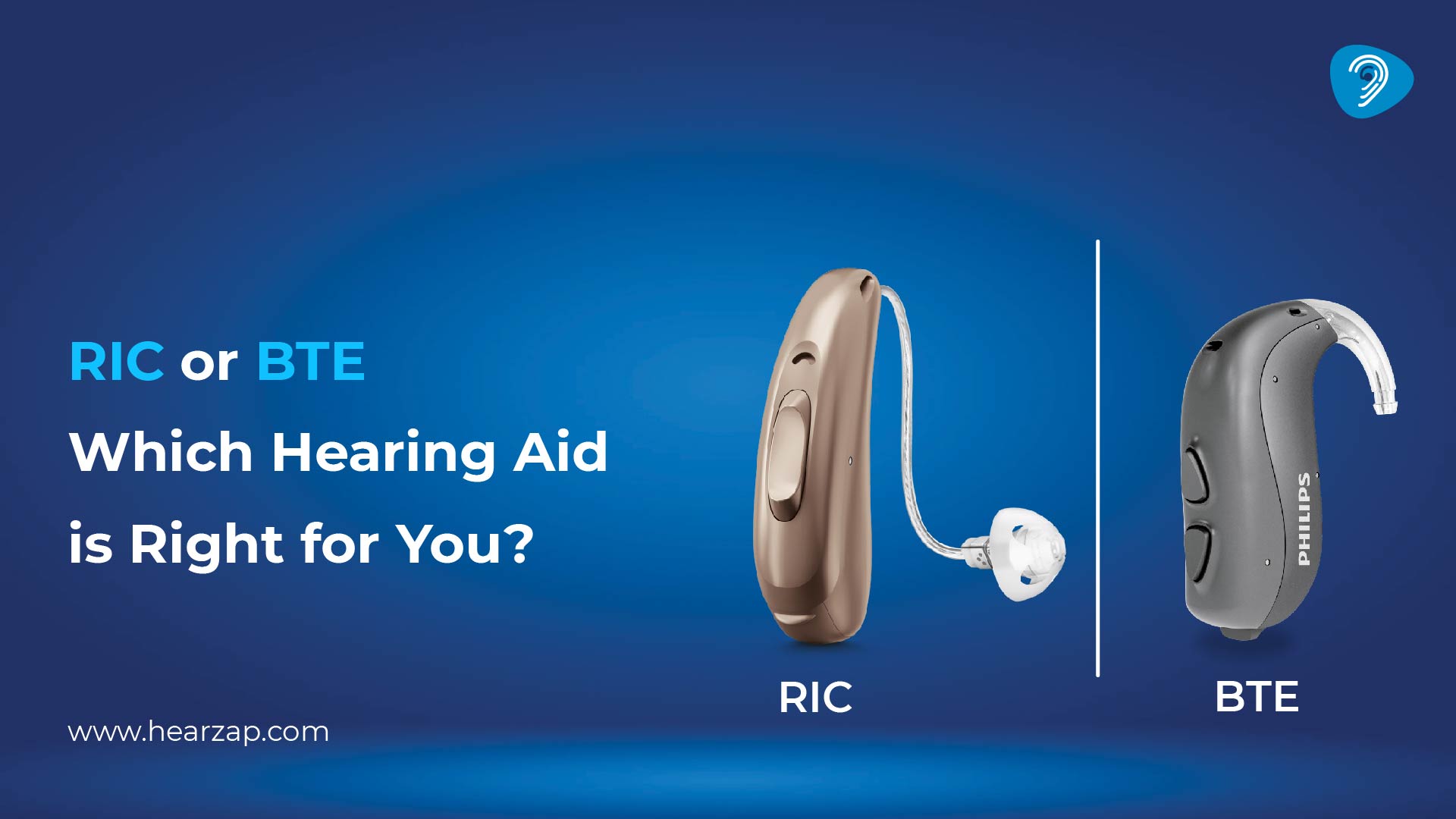
If you are comparing RIC vs BTE hearing aids, you are choosing between a compact style and a higher power style. The best choice depends on your hearing level, comfort needs, and budget, so start with a proper hearing test.
What are RIC Hearing Aids?
A receiver in a canal hearing aid has a small unit behind your ear, while the receiver sits inside the ear canal. A thin wire connects them, so it looks neat.
Many users feel that RIC hearing aids sound more natural for daily conversations because the speaker sits closer to the eardrum.
What is a BTE Hearing Aid?
A BTE hearing aid sits behind your ear and sends sound into the ear through a tube and dome or earmould. The design is sturdy and easy to hold.
BTE options can cover mild to profound loss, and they are often suggested when you need the best hearing aids for severe hearing loss.
RIC vs BTE Hearing Aids – Key Differences
Here is a quick comparison across the points most people care about.
Sound Quality and Performance
RIC can feel open, which helps speech sound clearer for many people. BTE can deliver more amplification without strain, which matters when hearing loss is high.
Comfort and Visibility
RIC is usually less noticeable. BTE is often easier to handle, which can be helpful for seniors and first-time users.
BTE Hearing Aid Price vs RIC Hearing Aid Price
When you compare the BTE hearing aid price and the RIC hearing aid price, it helps to know that there is no fixed “standard rate.” The final cost depends on what you actually need and the technology you choose.
Basic models focus on clear amplification, while advanced models add smarter features that make listening easier in noise, during calls, and in everyday outdoor settings.
The biggest factors that affect price are the level of hearing loss, the feature set (noise reduction, speech focus, feedback control), rechargeable vs battery options, Bluetooth and app control, the brand and model series, and whether you need a custom earmould. Service support also matters.
Things like the fitting sessions, fine-tuning visits, warranty coverage, and after-sales care can influence overall value. Once you shortlist, you can buy hearing aids online from Hearzap or book a hearing test to get a recommendation that matches your budget and hearing report.
Which is Better for Different Hearing Loss Levels?
Start with a hearing test and review the report with a professional. Then pick the style that matches your severity and comfort.
Best Option for Mild to Moderate Hearing Loss
RIC is a common choice for mild to moderate loss because it feels light and supports clear speech. If you want to explore styles, check RIC hearing aids on Hearzap and compare features.
Best Option for Severe Hearing Loss
In case of severe loss, BTE is a common suggestion since it has the potential to offer greater power and a stable earmould fit. You can learn about BTE hearing aids and read about hearing loss to learn the level of severity.
Pros and Cons of RIC and BTE Hearing Aids
Use these points as a quick guide, then confirm with an audiologist.
RIC pros
- Small and discreet
- Natural sound for many users
- Open fit can feel airy.
RIC cons
- The receiver needs careful cleaning.
- Not ideal for every severe case.
BTE pros
- Higher power choices available
- Easy to handle and maintain.
- Works well with earmoulds.
BTE cons
- More visible behind the ear.
- The tube and mould need regular care.
How to Choose the Right Hearing Aid
Consider areas of weakness, such as phone calls, traffic, or family events. You need to determine what is more important to you: ease, type of battery, or a realistic budget.
In case you wear glasses or a mask, inform your audiologist to ensure that the fit behind your ear is comfortable. Request about a trial period and fine-tuning visits early on.
For daily upkeep, read hearing care tips so your hearing aid stays clean, comfortable, and reliable.
Frequently Asked Questions
1. What is the difference between RIC and BTE hearing aids?
RIC keeps the receiver in the ear canal, while BTE keeps the full device behind the ear with a tube.
2. Which hearing aid is better for severe hearing loss?
BTE is often preferred because it can give higher amplification and support earmould fitting.
3. Are RIC hearing aids more comfortable than BTE?
RIC feels lighter for many people, but comfort depends on fitting and wear time.
4. How much do RIC and BTE hearing aids cost?
Both vary by brand and features, but BTE often starts lower, and RIC can start slightly higher.
5. Can RIC hearing aids be used for all types of hearing loss?
They suit many mild to moderately severe cases, but severe loss may need a powerful BTE.
6. What does “receiver in canal hearing aid” mean?
It means the speaker sits in the ear canal, and the main body sits behind the ear.
Related Blogs
Custom vs. Stock Hearing Aids

Reasons Why Hearing Aid Batteries Drain Quickly
Reasons to Choose Philips Hearing Aids
Tips for Buying a Hearing Aid
Hearing Aids vs. Hearing Amplifiers
Contact us
We are here for all your hearing needs, from hearing tests to hearing aids. Fill out the form below, and we will give you a call soon.
Recent Blogs
By None | March 18, 2026
By None | March 16, 2026
By None | March 13, 2026
By None | March 12, 2026
By None | March 11, 2026