HEARING LOSS
Low Frequency Hearing Loss Explained: Why Deep Sounds Become Hard to Hear
By Sri Sai Koti Chennupati | July 7, 2026
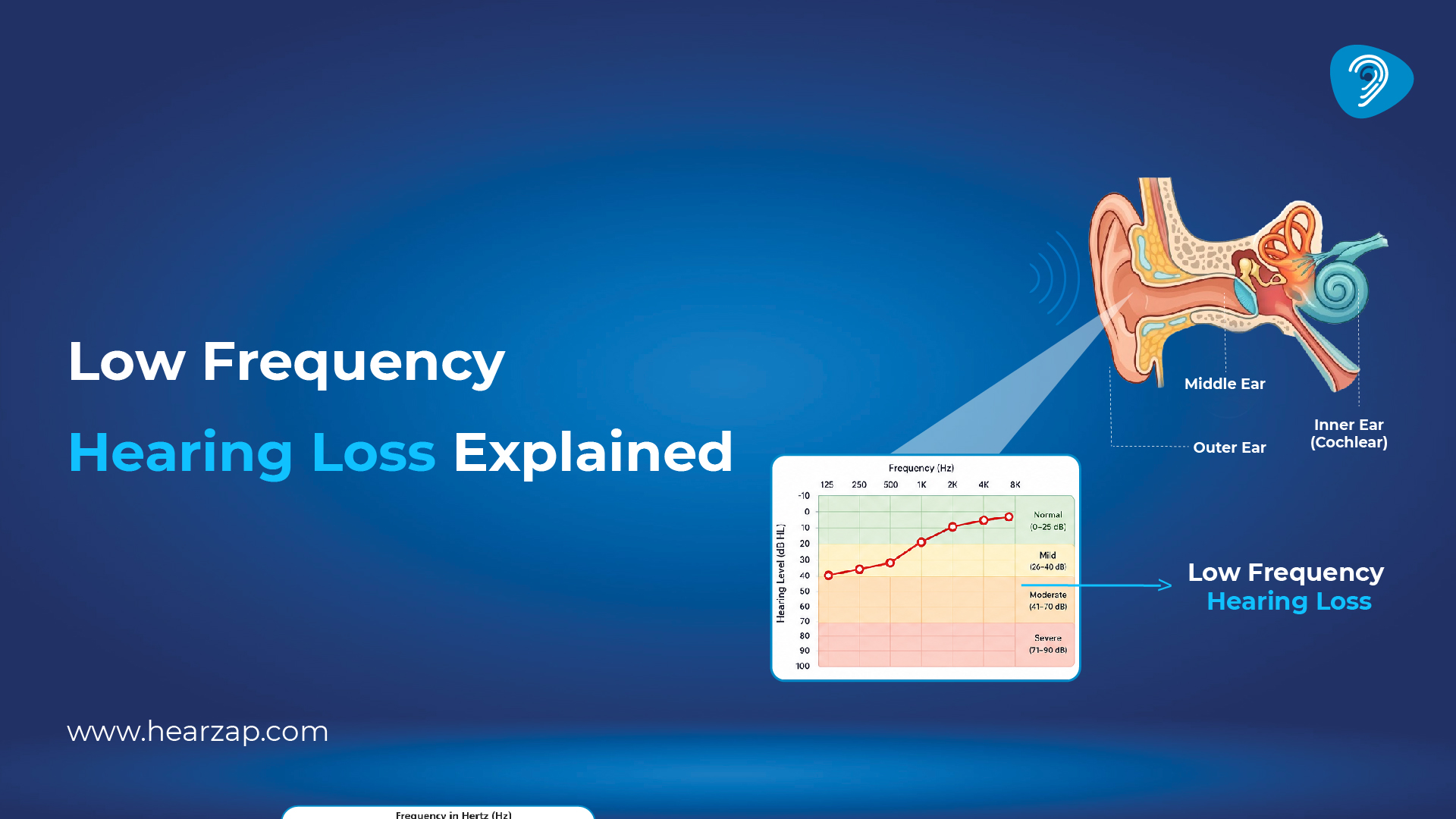
Not every hearing problem feels the same. Some people can hear a phone ring or a child speaking, but they miss a deep male voice, a bus engine, thunder, or the bass in a song. This can feel confusing because the person may think, “I can hear many sounds, so why am I missing these?”
This may happen due to low-frequency hearing loss. In simple words, the ear finds it difficult to catch low and deep sounds clearly. It can affect home conversations, travel, work, music, and even safety in daily life. Hearzap supports people with expert hearing tests, trained audiologists, hearing aid fitting, and personal hearing care.
What is Low-Frequency Hearing Loss?
Low-frequency hearing loss is a condition where low-pitched sounds become hard to hear. These sounds are usually deep and heavy. A father’s voice, an auto engine, thunder, drums, temple bells with a deep tone, and bass notes in music are common examples.
This is different from hearing loss that affects high sounds. In many cases of high sound difficulty, people miss sharp sounds like birds, whistles, bells, or some speech sounds. With low-frequency hearing loss, the person may hear many sharp sounds but still miss deep voices or background sounds. To understand this better, you can read about the types of hearing loss.
How Do We Hear Low-Frequency Sounds?
Hearing looks simple from the outside, but the ear does a lot of quiet work. Sound has to travel properly through the ear before the brain can understand it.
Understanding Sound Frequencies
Every sound has a pitch. Some sounds are high. Some are low. Low sounds feel deep, like a truck passing outside or a drumbeat during a festival.
When sound enters the ear, it moves from the outer ear to the middle ear and then to the inner ear. The brain receives these signals and tells us what we are hearing. If low sounds are not picked up well, the message reaching the brain becomes incomplete.
The Role of the Inner Ear
The inner ear has tiny sound-sensing cells. These cells help send sound signals to the hearing nerve and then to the brain.
If the part that handles low sounds is affected, deep sounds may become weak, dull, or unclear.
This may happen because of inner ear changes, pressure changes, infection, or other health-related reasons. In some people, the problem may be linked with Sensorineural hearing loss, where the inner ear or hearing nerve is involved.
Common Low-Frequency Hearing Loss Symptoms
The signs may not be loud in the beginning. Many people manage somehow and only realise later that certain sounds have slowly become unclear.
Difficulty Hearing Deep Voices
A common sign is trouble hearing deep voices. A person may understand women or children better, but struggle when a man speaks softly.
For example, an elderly mother may miss what her son says from another room. A patient may not catch a doctor’s words if the doctor has a deep voice. In a shop, the person may hear that someone is speaking but not understand every word.
Muffled Speech Sounds
Speech can start sounding blocked or dull. The person may say, “Your voice is not clear,” even when others can hear properly.
This can create small problems at home. Instructions about medicines, money, cooking, or travel may be missed. Family members may think the person is not paying attention, but the real issue could be low-frequency hearing loss.
Trouble Hearing Background Sounds
Some background sounds carry useful information. An engine starting, thunder in the distance, the hum of a fan, or the sound of a washing machine can tell us what is happening around us.
When these sounds are missed often, daily life feels less clear. In traffic or public places, it may also affect awareness of surroundings. These low-frequency hearing loss symptoms should not be ignored if they happen again and again.
What Causes Low-Frequency Hearing Loss?
There can be many low frequency hearing loss causes. Some are related to the inner ear. Some may be linked to family history or medical conditions.
Ménière’s Disease
Ménière’s disease is one known cause. It is a condition of the inner ear and may cause hearing changes, dizziness, ringing in the ear, and a blocked feeling.
In some people, it affects low sounds first. The hearing may come and go in the early stage. If hearing changes are happening along with dizziness, it is better to seek medical advice early.
Genetic Factors
Sometimes hearing patterns run in families. A person may be more likely to develop hearing difficulty if close family members have had similar issues.
This does not mean everyone in the family will have the same problem. Still, if hearing difficulty is noticed early, a hearing test can give a clear picture.
Inner Ear Conditions
The inner ear is delicate. Small changes in pressure, fluid balance, or the health of hearing cells can affect the way sound is received.
Some inner ear conditions may reduce the ability to hear deep sounds. Since the reason is not always visible from the outside, proper testing is important.
Viral Infections and Other Medical Conditions
Viral infections can sometimes affect hearing. Other medical issues, sudden hearing changes, or certain medicines may also play a part.
Any sudden hearing change should be taken seriously. Reading about hearing loss can help you understand why early care is useful, but it should not replace expert advice.
Diagnosis of Low-Frequency Hearing Loss
A person cannot guess the type of hearing loss only by daily experience. Proper testing is the best way to know which sounds are affected.
Hearing Evaluation
An audiologist will ask simple but important questions. When did the problem start? Is there dizziness? Is there ringing in the ear? Are deep voices difficult? Does one ear feel blocked?
These answers help the specialist understand the problem better. They also help decide whether hearing support, medical care, or further testing is needed.
Audiometry Testing
Audiometry testing checks hearing at different sound levels and frequencies. The result is shown in an audiogram.
This chart helps the audiologist see whether low sounds, high sounds, or both are affected. An Auditory Acuity test can also help people understand how hearing ability is measured.
Low-Frequency Hearing Loss Treatment Options
Low-frequency hearing loss treatment depends on the reason behind the problem. The same treatment may not work for everyone.
Hearing Aids
Hearing aids may help many people hear speech and low sounds more clearly. The important part is proper selection and fitting.
Modern hearing aids can be adjusted according to the person’s hearing pattern. If low sounds are weak, the device can be programmed to support those sounds. Before choosing a device, a hearing aid buying guide can make the decision easier. You can also buy hearing aids online with Hearzap support.
Medical Management
If the cause is Ménière’s disease, infection, fluid imbalance, or another medical condition, medical care may be needed. An ENT doctor may suggest medicines or further treatment.
This is why testing should come first. Once the cause is understood, treatment becomes more practical.
Regular Hearing Monitoring
Some hearing problems change slowly. Some remain stable. Some may come and go.
Regular monitoring helps track these changes. It also helps adjust hearing aids when needed. This is useful for people whose symptoms are not the same every day.
Hearzap's Hearing Care Solutions
Hearzap offers hearing tests, expert audiologists, hearing aid fitting, and personal hearing care for different hearing needs. The service is made to feel simple, especially for families who may be dealing with hearing concerns for the first time.
If you or someone at home is finding deep sounds difficult to hear, do not keep guessing. A short visit can bring clarity. You can book an appointment with Hearzap and speak to a hearing care expert.
FAQs
What is low-frequency hearing loss?
Low-frequency hearing loss means deep sounds become hard to hear. Male voices, thunder, engines, drums, and bass sounds may seem unclear or weak.
What are the symptoms of low-frequency hearing loss?
Common symptoms include trouble hearing deep voices, muffled speech, and missing background sounds like engines, fans, or thunder.
What causes low-frequency hearing loss?
Low-frequency hearing loss causes may include Ménière’s disease, genetic factors, inner ear conditions, viral infections, or other medical concerns.
Can low-frequency hearing loss be treated?
Yes, in many cases, treatment can help. Low-frequency hearing loss treatment may include hearing aids, medical care, or regular monitoring, based on the cause.
How is low-frequency hearing loss diagnosed?
It is diagnosed through a hearing evaluation and audiometry testing. The audiogram shows which sound frequencies are affected.
Should I see a hearing specialist if I have difficulty hearing deep sounds?
Yes, if deep voices or low sounds are difficult to hear, it is better to meet a hearing specialist and get tested.

Sri Sai Koti Chennupati
Head of Learning and Development
With a Master's qualification in Audiology and Speech-Language Pathology and more than 18 years of clinical practice, I am devoted to providing the highest standard of diagnostic and rehabilitative care in hearing and communication health.
Related Blogs
Hearing Loss in Women: Causes, Risk Factors and Prevention
Connection Between Hearing Loss and Memory

The Benefits of Community Support Groups for Hearing Loss
Tips for Communicating with Someone with Hearing Loss
Contact us
We are here for all your hearing needs, from hearing tests to hearing aids. Fill out the form below, and we will give you a call soon.
Recent Blogs
By None | Oct. 8, 2026
By None | Oct. 7, 2026
By None | Oct. 6, 2026
By None | Oct. 5, 2026
By None | Oct. 3, 2026