HEARING CARE
TMJ Ear Pain: Why Your Jaw Might Be Behind That Earache
By Team Hearzap | April 27, 2026
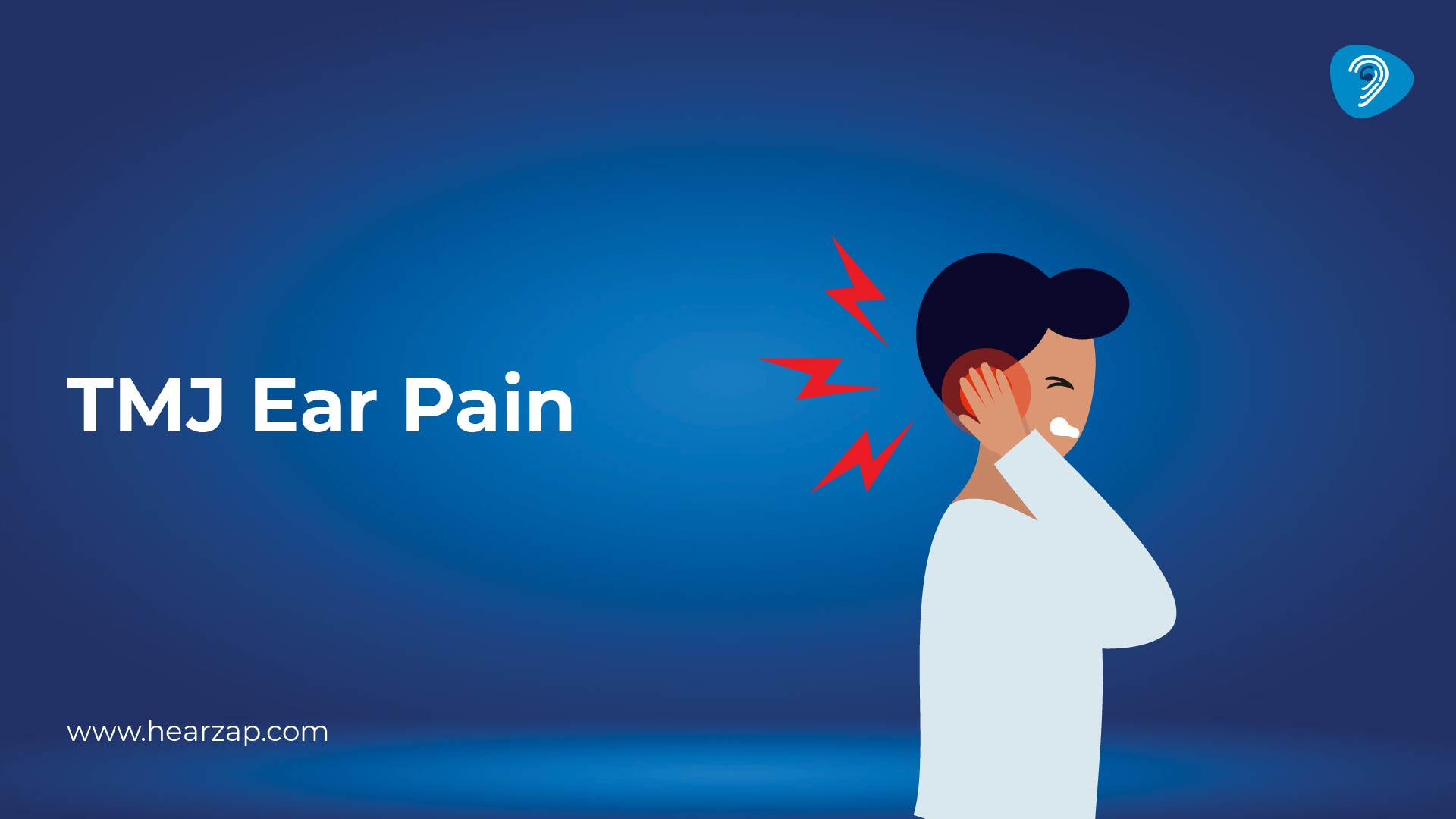
You've had ear pain for weeks. You've checked for infection. You've tried decongestants. No change. Your ears look perfectly fine to every doctor who examines them, and yet the aching, the fullness, the dull throb around your ear just won't quit.
Here's something worth considering. The problem might not be in your ear at all.
For a surprising number of people, ear pain traces straight back to the jaw. Specifically, to a small but mechanically busy joint called the temporomandibular joint, or TMJ. Understanding the connection between the two can finally explain symptoms that have been going around in circles for far too long.
What Is the TMJ, Exactly?
Place your fingertips just in front of your ears and open your mouth slowly. Feel that movement under your fingers? That's your temporomandibular joint. You have one on each side of your face, connecting your lower jaw to the base of your skull.
These joints work constantly throughout the day, every time you chew, swallow, talk, yawn, or clench your teeth under stress. Each joint has a small cartilage disc inside it that cushions the bones and keeps movement smooth. When everything works as it should, you never give it a second thought. When something goes wrong, the effects can travel well beyond the jaw, and the ear is often the first place that feels it.
Can TMJ Cause Ear Pain?
Can TMJ cause ear pain? Yes, genuinely and very commonly. The temporomandibular joint sits just millimetres away from the ear canal. They share branches of the same major nerve, the trigeminal nerve, which is the largest sensory nerve in the head. When the TMJ is inflamed or under strain, the pain it generates travels along these shared pathways and the brain misreads it as coming from the ear. This is called referred pain, and it's the exact same reason a heart attack can make your left arm ache.
Does TMJ cause ear pain the same way in every person? Not at all. The experience varies quite a bit. People describe it as:
- A dull, constant ache around or behind the ear
- Sharp pain when opening the mouth wide
- A blocked or pressured feeling inside the ear, similar to being on a plane
- Clicking or popping sounds near the ear during jaw movement
- Tinnitus, a ringing or buzzing that seems to come from inside the ear
- Muffled hearing that comes and goes
None of these involve anything actually wrong with the ear itself. They are all downstream effects of a struggling joint sitting right next door.
What Causes TMJ to Act Up?
Several things can push the temporomandibular joint into dysfunction. The most common culprits include:
- Teeth grinding and clenching (bruxism): Many people do this during sleep without realising. They wake up with jaw soreness, headaches, and ear discomfort they can't explain.
- Chronic stress: Stress makes people tighten their jaw muscles without noticing it, creating sustained tension that slowly wears on the joint.
- Bite misalignment: When the upper and lower teeth don't meet evenly, the joint compensates and can become strained over time.
- Previous jaw injury: Even an old injury that seemed to heal can leave the joint more vulnerable to dysfunction later.
- Poor posture: A forward head position, very common in people who spend long hours at a desk or on a phone, increases strain on the jaw muscles significantly.
- Arthritis: Inflammatory or degenerative arthritis can affect the TMJ just as it does other joints in the body.
Ear pain due to tmj tends to flare up predictably around certain activities: eating tough or chewy foods, sitting through a long dental appointment, periods of high stress, or even just a lot of talking in a single day.
TMJ Ear Pain Relief Exercises
The good news is that tmj ear pain relief exercises can make a real difference, particularly for mild to moderate cases. They're gentle, take only a few minutes, and can be done at home without any equipment.
- Controlled jaw opening. Place your tongue lightly against the roof of your mouth, just behind your front teeth. Slowly open your mouth as far as is comfortable, hold for a couple of seconds, then close. Repeat ten times. Keeping the tongue in this position helps guide the jaw along its natural path and prevents it from deviating sideways.
- Chin tucks. Sit up straight, then gently draw your chin straight back to create a slight double chin. Hold for five seconds and release. This corrects forward head posture and takes pressure off the jaw muscles and joint. Ten repetitions, twice daily.
- Resisted mouth opening. Place your thumb under your chin, apply light upward pressure, and slowly open your mouth against that resistance. Hold for a few seconds, then close gently. This builds strength and control in the muscles around the joint without overloading it.
- Side-to-side jaw glides. With your mouth slightly open, move your jaw slowly to the left, hold briefly, return to centre, then move to the right. Deliberate and controlled is the goal here, not speed or range.
A warm compress held against the jaw for a few minutes before doing these exercises helps relax the muscles and makes the movements more comfortable, especially during a flare.
Other Things That Help Day to Day
Beyond exercises, small practical changes can significantly reduce tmj ear pain during everyday life:
- Eat softer foods during flare-ups. Give the joint a rest. Soup, eggs, fish, and cooked vegetables are much gentler on the TMJ than bread crusts, raw carrots, or chewy meat.
- Stop chewing gum. It seems harmless but it keeps the joint in constant repetitive motion, which adds up quickly.
- Check your jaw position throughout the day. The resting position should be teeth slightly apart, lips gently closed, tongue resting on the palate. If your teeth are touching when you're not eating, your jaw is working when it shouldn't be.
- Ask your dentist about a night guard. If grinding during sleep is contributing, a custom-fitted night guard protects the joint from hours of nightly pressure.
- Look at your posture. If you're hunched forward at a screen all day, your jaw muscles are working harder than they need to. Simple postural corrections and regular breaks help more than people expect.
When to See Someone
Most mild TMJ-related ear pain responds well to home management. But it's worth seeing a doctor or dentist if:
- The pain is severe or getting progressively worse
- You have significant difficulty opening or closing your mouth
- There is swelling around the jaw joint
- Home exercises and lifestyle changes haven't helped after a few weeks
- You're unsure whether what you're experiencing is TMJ-related or something else
A dentist, physiotherapist, or oral and maxillofacial specialist can assess the joint properly and recommend targeted treatment, whether that's physiotherapy, a splint, or in rare cases, further investigation.
The Bottom Line
Ear pain that doesn't respond to standard ear treatments deserves a second look, and the jaw is often the place worth examining. The close anatomical relationship between the TMJ and the ear means that jaw dysfunction can produce convincing ear symptoms without anything being wrong with the ear at all.
If you've been going around in circles trying to explain unexplained ear pain, raising the possibility of TMJ with your doctor or dentist could be the conversation that finally points you in the right direction. It's a more common connection than most people realise, and once you know what you're dealing with, there's quite a lot you can do about it.
FAQs
Can TMJ cause ear pain?
Yes, TMJ disorders can cause ear pain due to the close connection between the jaw joint and ear.
How long does TMJ ear pain last?
TMJ ear pain can last from a few days to weeks depending on the cause and treatment.
How to relieve TMJ ear pain?
Relief includes jaw rest, warm compress, gentle exercises, and avoiding hard or chewy foods.
What causes TMJ ear pain?
TMJ ear pain is caused by jaw strain, teeth grinding, stress, or joint misalignment.
Related Blogs
Auditory Neuropathy Spectrum Disorder
Red and Hot Ears: Causes, Symptoms & Treatment
Granular Myringitis Explained: Symptoms, Causes & Treatment by Hearzap
Ear Popping: Why It Happens and How to Find Relief
Contact us
We are here for all your hearing needs, from hearing tests to hearing aids. Fill out the form below, and we will give you a call soon.
Recent Blogs
By None | Sept. 9, 2026
By None | Sept. 7, 2026
By None | Sept. 5, 2026
By None | Sept. 4, 2026
By None | Sept. 2, 2026