Generic
Can Migraines Lead to Hearing Loss? Here's What You Should Know
By Team Hearzap | Aug. 5, 2026
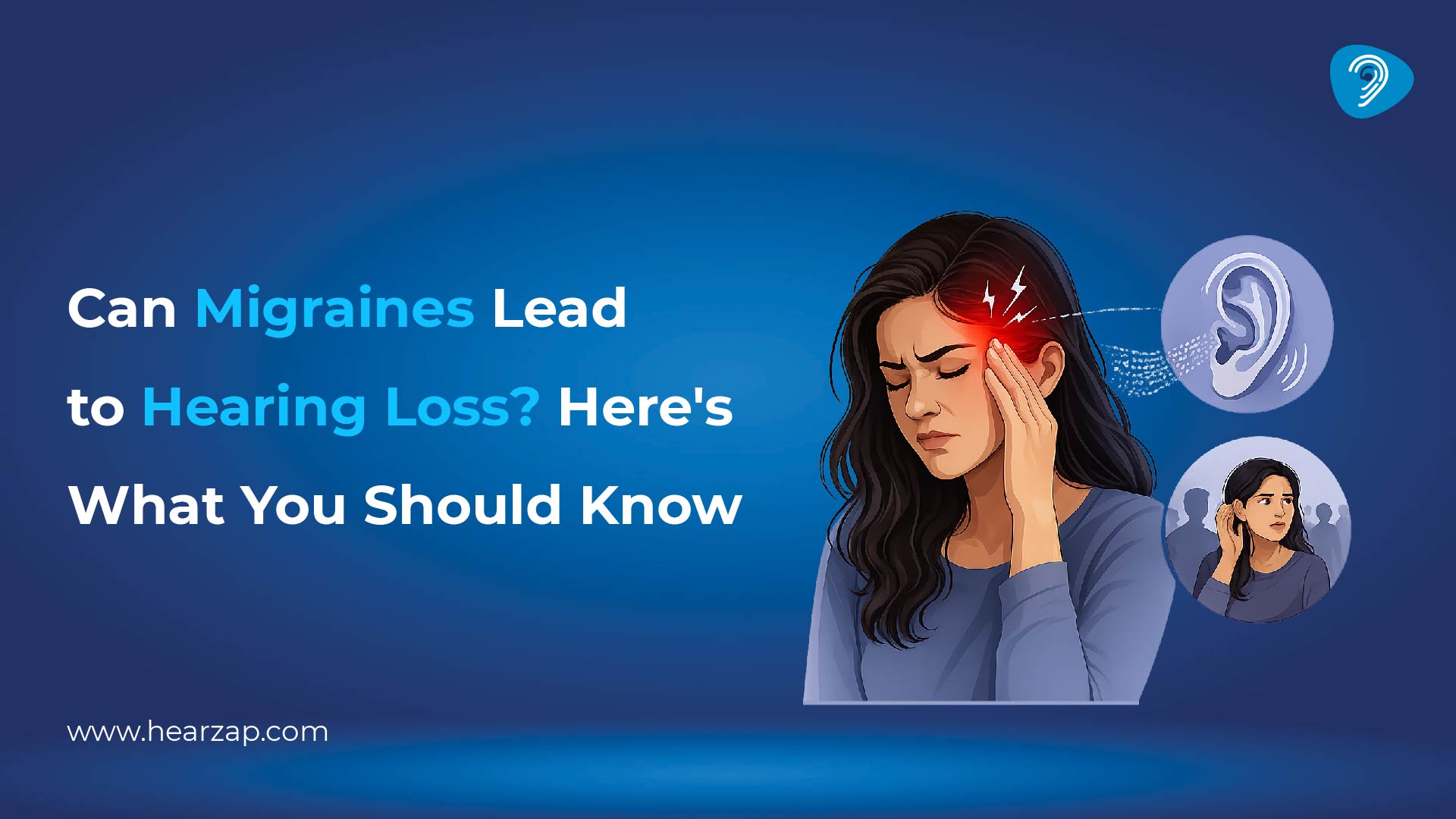
A migraine can affect much more than the head. During an attack, some people become sensitive to light, sound or movement. Others notice ringing in the ears, dizziness, a blocked feeling or a brief change in hearing. These symptoms can be unsettling.
The connection between migraine and hearing loss is still being studied. Hearzap provides detailed hearing assessments for people who notice changes in hearing, balance or sound clarity.
Can Migraines Cause Hearing Loss?
Migraine does not usually cause permanent hearing loss. Still, studies have found a possible association between migraine, tinnitus and certain types of hearing difficulty. Others may find speech harder to follow or notice ringing that fades once the migraine settles.
A temporary change can happen because migraine affects sensory processing. However, not every ear symptom comes from migraine. Wax blockage, infection, medicine side effects, noise exposure and inner ear conditions may cause similar complaints.
Sudden hearing loss is different. A rapid drop in hearing, often in one ear, can happen within hours or over a few days. It needs urgent medical attention because early treatment may improve the chance of recovery. Do not wait for the next migraine attack to see whether the problem disappears.
A professional hearing test can show whether hearing has changed and which frequencies are affected.
How Are Migraines and Hearing Connected?
Hearing begins in the ear, but the brain also plays a major role. It receives sound signals, separates speech from background noise and decides how strongly a sound is felt. Migraine affects the nervous system, which may explain why ordinary sounds can become painful or overwhelming during an attack.
The inner ear also supports balance. Some migraine episodes can involve both systems. A person may feel unsteady while also noticing tinnitus, pressure or temporary sound changes.
Researchers have suggested several possible explanations, including short-term changes in blood flow, increased nerve sensitivity and altered processing of sound and movement.
Changes in Blood Flow and Nerve Function
The inner ear depends on a steady blood supply. A migraine may affect blood vessels and nerve pathways for a short period. The exact effect on hearing remains under study.
Nerve sensitivity may also rise during an attack.
A normal voice, traffic noise or ringing phone may suddenly feel too loud. The same response may contribute to tinnitus or ear fullness.
These symptoms can pass with the migraine, but repeated or one-sided changes should be assessed.
Inner Ear Involvement During a Migraine
The cochlea helps with hearing. Nearby balance organs tell the brain how the head and body are moving. When migraine affects pathways connected with this area, a person may experience vertigo, motion sensitivity, nausea or difficulty walking steadily.
Ear pressure, ringing and less clear hearing may occur at the same time. Even so, these symptoms do not prove permanent inner ear damage.
Doctors may need to rule out Ménière’s disease, ear infection, sudden hearing loss and other balance disorders. A clear history and suitable tests can help separate these conditions.
Vestibular Migraine and Hearing Loss
A Vestibular Migraine is a form of migraine in which dizziness or balance symptoms are especially noticeable. Some people feel that the room is spinning. Others feel unsteady, lightheaded or uncomfortable while travelling. Nausea and sensitivity to movement are also common. A headache may occur, but it is not present in every episode.
The topic of vestibular migraine and hearing loss can be confusing because the condition may also cause tinnitus, ear fullness or sound sensitivity. Mild or temporary hearing changes may occur in some people. Marked, continuing or worsening hearing loss is less typical and should be investigated.
Before a consultation, note when dizziness starts, how long it lasts and whether it comes with headache, ringing or reduced hearing. Sleep changes, skipped meals and stress may also be useful to record.
Migraine and Sensorineural Hearing Loss
Sensorineural hearing loss develops when the sensory cells of the inner ear or the hearing nerve are affected. It can come on slowly, or it may appear suddenly. The discussion around migraine and sensorineural hearing loss is based on research showing an association, not a direct result in every patient.
Scientists have considered changes in circulation, inflammation and nerve activity as possible links. More research is needed.
Sudden sensorineural hearing loss may feel like a blocked ear, but the sound does not return after swallowing or clearing the nose. Tinnitus or dizziness may occur with it. Since it often affects one ear, people sometimes notice it while using a phone.
Anyone experiencing this should seek urgent medical care. A Pure Tone Audiometry Test can measure the change, but treatment must not be delayed while waiting for a routine appointment.
Symptoms That Should Not Be Ignored
A familiar migraine pattern can sometimes change. New hearing or balance symptoms deserve attention, even when they begin during an attack.
Watch for the following signs:
- Sudden hearing loss in one ear or both ears
- Ringing, buzzing or humming without an outside sound
- Vertigo or a repeated spinning sensation
- Pressure, blockage or fullness in the ear
- Difficulty understanding speech, especially in noise
- Frequent migraine attacks followed by hearing changes
Sudden hearing loss is a medical urgency. Persistent dizziness, facial weakness, confusion, fainting, ear discharge or a severe headache that feels different from earlier attacks also needs prompt care.
Early evaluation can show whether the problem relates to migraine, the ear or another medical condition.
Diagnosis and Treatment
Diagnosis usually starts with a conversation. The doctor may ask when the migraine began, how often it happens and whether the hearing change affects one ear or both. Details about tinnitus, dizziness, medicines, infections and noise exposure are also useful.
Hearing tests provide clear information. Pure tone audiometry finds the quietest sounds a person can hear. Speech audiometry checks how clearly words are understood. A Tympanometry Test looks at eardrum movement and middle ear pressure. An ENT specialist or neurologist may suggest further tests when required.
Treatment depends on the cause. Migraine management may include prescribed medicines, regular sleep, enough water, timely meals and avoiding known triggers. Do not change migraine medicine without speaking to a doctor.
When lasting hearing difficulty is confirmed, support may include listening strategies, tinnitus guidance or hearing aids. The device should match the test result, communication needs and comfort. People with a professional recommendation may buy hearing aids online or visit a centre for fitting guidance.
How Hearzap Can Help
Hearing symptoms are not always easy to explain. A person may say that sound is low, unclear, distant or uneven between the ears. Hearzap audiologists use structured tests to understand what is happening rather than relying only on the description.
An assessment may include pure tone audiometry, speech audiometry and tympanometry. These tests look at hearing levels, speech understanding, eardrum movement and middle ear function. The findings can also show whether further medical review is needed.
Audiologists explain the report in simple language. When hearing loss is confirmed, they can discuss suitable rehabilitation and hearing aid options. Device trials, fitting and later adjustments help the user understand how the aid performs in daily life.
Hearzap has hearing care centres across India. You can book an appointment when tinnitus, reduced hearing, repeated ear fullness or balance trouble continues. The assessment does not replace urgent medical care for sudden loss, but it can support diagnosis and longer-term hearing management.
Frequently Asked Questions
Can migraines cause hearing loss?
Migraine may occur with tinnitus, ear pressure or a temporary change in hearing. Research also suggests a link with sudden sensorineural hearing loss, but most people with migraine do not develop permanent hearing damage. Any sudden reduction should be treated as urgent.
What is Vestibular migraine?
Vestibular migraine mainly affects balance. It can cause vertigo, dizziness, nausea, motion sensitivity and unsteadiness. Headache may happen before, during or after the episode, but some attacks occur without noticeable head pain.
Can migraines damage the inner ear?
Migraine may temporarily affect pathways connected with the inner ear through changes in nerve activity or circulation. Permanent damage is not assumed from symptoms alone. Ongoing or one-sided changes need a hearing and medical evaluation.
What are the symptoms of migraine-related hearing problems?
Possible symptoms include ringing, muffled hearing, ear fullness, sound sensitivity, vertigo and difficulty understanding speech. They may settle after the attack, but new, severe or continuing symptoms should not be ignored.
What is the connection between migraines and hearing loss?
Migraine affects the brain’s sensory pathways, while hearing and balance depend on closely connected inner ear and nerve systems. This may explain why auditory symptoms appear in some attacks. The exact relationship is still being studied.
Can migraines cause Tinnitus?
Yes, tinnitus may occur during or around a migraine episode. It can sound like ringing, buzzing or humming. Persistent, pulsating or one-sided tinnitus should be assessed, particularly when it comes with dizziness or reduced hearing.



Contact us
We are here for all your hearing needs, from hearing tests to hearing aids. Fill out the form below, and we will give you a call soon.
Recent Blogs
By None | Sept. 16, 2026
By None | Sept. 9, 2026
By None | Sept. 7, 2026
By None | Sept. 5, 2026
By None | Sept. 4, 2026