HEARING AIDS
Directional Microphones in Hearing Aids: How They Improve Speech Clarity
By Team Hearzap | Sept. 2, 2026
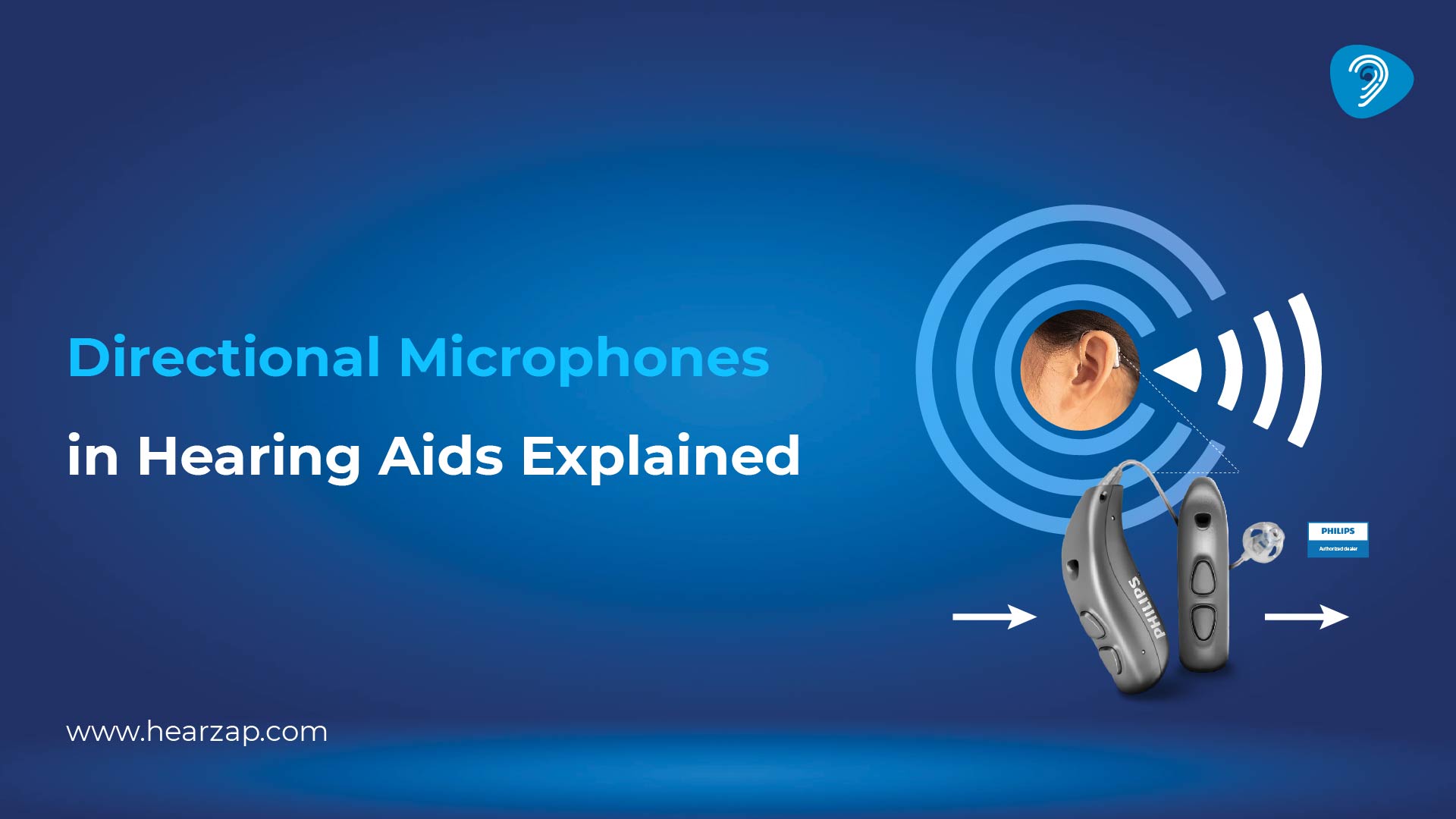
Busy places can make conversations difficult when several sounds reach the ears together. Directional microphones in hearing aids give greater attention to speech coming from a useful direction while reducing unwanted sound around the wearer.
This can make spoken words easier to follow in restaurants, meetings, family gatherings, and other noisy settings. Instead of making every sound equally prominent, the technology helps the hearing aid focus more clearly on the voice the user wants to hear.
What Are Directional Microphones in Hearing Aids?
Directional microphones in hearing aids are systems that give more attention to sound arriving from selected directions. Traditional microphones may collect sound more evenly from around the wearer. Directional systems place greater focus where useful speech is expected.
This is especially helpful when the wearer faces the speaker. Hearing aids with directional microphones can make a voice in front easier to notice while reducing some surrounding sound. The goal is clearer speech when several sounds compete.
How Do Directional Microphones Work?
Directional microphones in hearing aids compare sounds coming from different directions and use the device's processing system to decide where to focus. In many situations, the device may focus greater attention toward the front because users often face the person they want to hear.
Sounds from other directions can then be reduced in relation to the target speech. This can make spoken words stand out more clearly. The result depends on where both speech and noise are located.
Types of Directional Microphone Systems
Directional microphones in hearing aids may use different forms of directionality. The main difference is whether the listening focus stays in one position or changes with the surrounding sound.
Directional microphones in hearing aids can therefore respond differently depending on the system.
Fixed Directional Microphones
A fixed directional system keeps its focus in a set direction, usually towards the front. It is useful when the person speaking stays ahead, and unwanted sound comes mainly from elsewhere.
Since the focus remains fixed, the wearer may need to face the speaker directly for better results.
Adaptive Directional Microphones
Adaptive systems respond to the surrounding sound. Instead of keeping one fixed focus, they can adjust as the position of speech or unwanted noise changes.
This can make hearing aids with directional microphones useful in changing environments where background sound does not remain in one place.
Dynamic Directional Microphones
Dynamic directional systems change their directional behaviour as listening conditions change. Their focus may become stronger, wider, or shift as the hearing aid responds to the current sound environment.
This supports listening when conversations and surrounding sounds change during everyday activity.
What Are the Benefits of Directional Microphones?
For people with hearing loss, separating speech from surrounding noise can sometimes be difficult. Directional microphone technology can support clearer listening by placing greater focus on the voice the user wants to hear, particularly when background sound comes from another direction.
They can support:
- clearer focus on the person speaking
- less distraction from surrounding noise
- more comfortable listening in busy places
- easier participation in conversations
The benefit can vary with the environment, hearing aid settings, and the wearer's position.
How Do Directional Microphones Perform in Real-World Situations?
Directional microphones in hearing aids can help when one voice needs to stand out from surrounding sound. In a restaurant, facing the person across the table may help the system focus on that conversation. During a meeting, a speaker in front may be easier to follow when other sounds come from elsewhere.
At social gatherings, people often move, and speakers change. Adaptive or dynamic systems can respond to these changing conditions by adjusting their focus as the listening scene shifts.
Where Do Directional Microphones Work Best?
Directional microphones in hearing aids are generally most useful when useful speech and unwanted noise come from different directions. A common example is a conversation where the speaker is in front while background activity is behind or beside the wearer.
They may be useful in:
- face-to-face conversations in busy places
- meetings with a main speaker ahead
- restaurants where the wearer faces the speaker
- social settings with a clear target voice
Positioning matters because directionality depends on where sounds come from.
When Should You Use Directional Microphone Settings?
Directional settings can be useful when background noise makes speech harder to follow. Hearing aids with directional microphones may adjust automatically, so the wearer does not always need to change settings manually.
In quieter places, a wider listening pattern may be suitable because sounds from several directions can be useful. In noisy environments, stronger directionality may focus more on speech. The exact response depends on the device and how it is programmed.
How to Get the Most from Directional Microphones
Directional microphones in hearing aids work better when the wearer also uses practical listening habits. Small changes in position can help the system focus more effectively.
Useful steps include:
- face the person you want to hear
- keep strong background noise behind or beside you when possible
- wear the hearing aids as advised
- keep microphone openings clean and free from blockage
- attend follow-up appointments for programming adjustments
If you plan to buy hearing aids online, professional guidance can still help ensure the device settings match your hearing needs and common listening situations.
What Are the Limitations of Directional Microphones?
Directional microphones in hearing aids are not equally effective in every setting. A fixed front-facing focus may be less helpful when the speaker is behind the wearer. It can also be difficult when several people speak from different positions around a room or table.
Directionality does not remove all background noise. Speaker position, room layout, surrounding sound, and device settings can affect the result. The wearer may need to turn towards a speaker or use another listening setting as conversations move.
How Do Directional Microphones Work with Other Hearing Aid Features?
Directionality does not usually work alone. Other hearing aid features, such as noise reduction, speech enhancement, AI processing, and environmental detection, may work alongside the microphones to manage sound according to the listening situation.
Some systems may also use AI processing or environmental detection to decide how sound should be managed. Together, these features help the device adapt more effectively to changing listening conditions. Their exact behaviour depends on the hearing aid and its programming.
How Do Hearing Aids Adapt to Different Sound Environments?
Modern hearing aids can analyse surrounding sound and recognise changes between quieter and noisier situations. Directional microphones in hearing aids may then become more or less active depending on what the device detects.
A hearing aid may use a broader listening pattern in a quiet room and become more focused when competing noise increases. Automatic environmental classification can reduce the need for constant manual changes, although the response depends on the device, available features, and programmed settings.
Can Directional Microphones Be Customised?
Yes. Directional microphones in hearing aids can be programmed as part of an individual's hearing aid fitting. A professional hearing test can help an audiologist understand the type and degree of hearing difficulty before adjusting directional settings and listening preferences.
Someone who often attends meetings or spends time in busy social settings may need different adjustments from someone who mainly listens in quieter places. Personalised programming can help balance speech clarity, comfort, and awareness of surrounding sounds. Further adjustments may also be made after the hearing aids have been used regularly.
Get Expert Hearing Aid Guidance at Hearzap
Choosing suitable hearing aids with directional microphones starts with understanding individual hearing needs. A hearing assessment can identify hearing difficulty, while an audiologist consultation can relate the results to everyday listening challenges.
Professional support may include personalised hearing aid recommendations, programming, fitting, trials where available, and ongoing support. You can book an appointment with an audiologist to discuss your hearing needs and device settings. Guidance can also support correct use, maintenance, comfort, and confident listening.
FAQs
1. How does a directional microphone work?
A directional microphone gives greater attention to sound coming from a selected direction and reduces the relative level of sound from other directions. In hearing aids, the focus is often towards the front so the wearer can follow the person they are facing more easily.
2. What are the advantages of a directional microphone?
The main advantages are clearer speech focus, less interference from background noise, and more comfortable listening when speech and noise come from different directions.
3. Can a directional mic reduce background noise?
Yes. It can reduce the relative impact of background sound coming from directions outside its main focus. It does not remove every unwanted sound, and performance depends on the listening environment and speaker position.
4. What are some examples of directional microphones?
Common examples include fixed, adaptive, and dynamic directional microphone systems. Fixed systems keep a set focus, while adaptive and dynamic systems can change their behavior as surrounding sound changes.
5. Do directional microphones work through walls?
Directional microphones are designed to manage sounds that reach the hearing aid from the surrounding environment. They are not intended to focus clearly on speech through walls. Physical barriers can weaken or block sound, so direct listening conditions remain important.
Related Blogs
What to Do if One Hearing Aid Stops Working? Causes & Solutions

Are Rechargeable Hearing Aids Good for Seniors?
What Is a Telecoil (T-Coil) in Hearing Aids and How Does It Work?
Contact us
We are here for all your hearing needs, from hearing tests to hearing aids. Fill out the form below, and we will give you a call soon.
Recent Blogs
By None | Sept. 1, 2026
By None | Aug. 31, 2026
By None | Aug. 29, 2026
By None | Aug. 28, 2026
By Team Hearzap | Aug. 27, 2026