HEARING TEST
What Is Speech Audiometry? A Beginner’s Guide to Speech Hearing Tests
By Dattatreya M | July 17, 2026
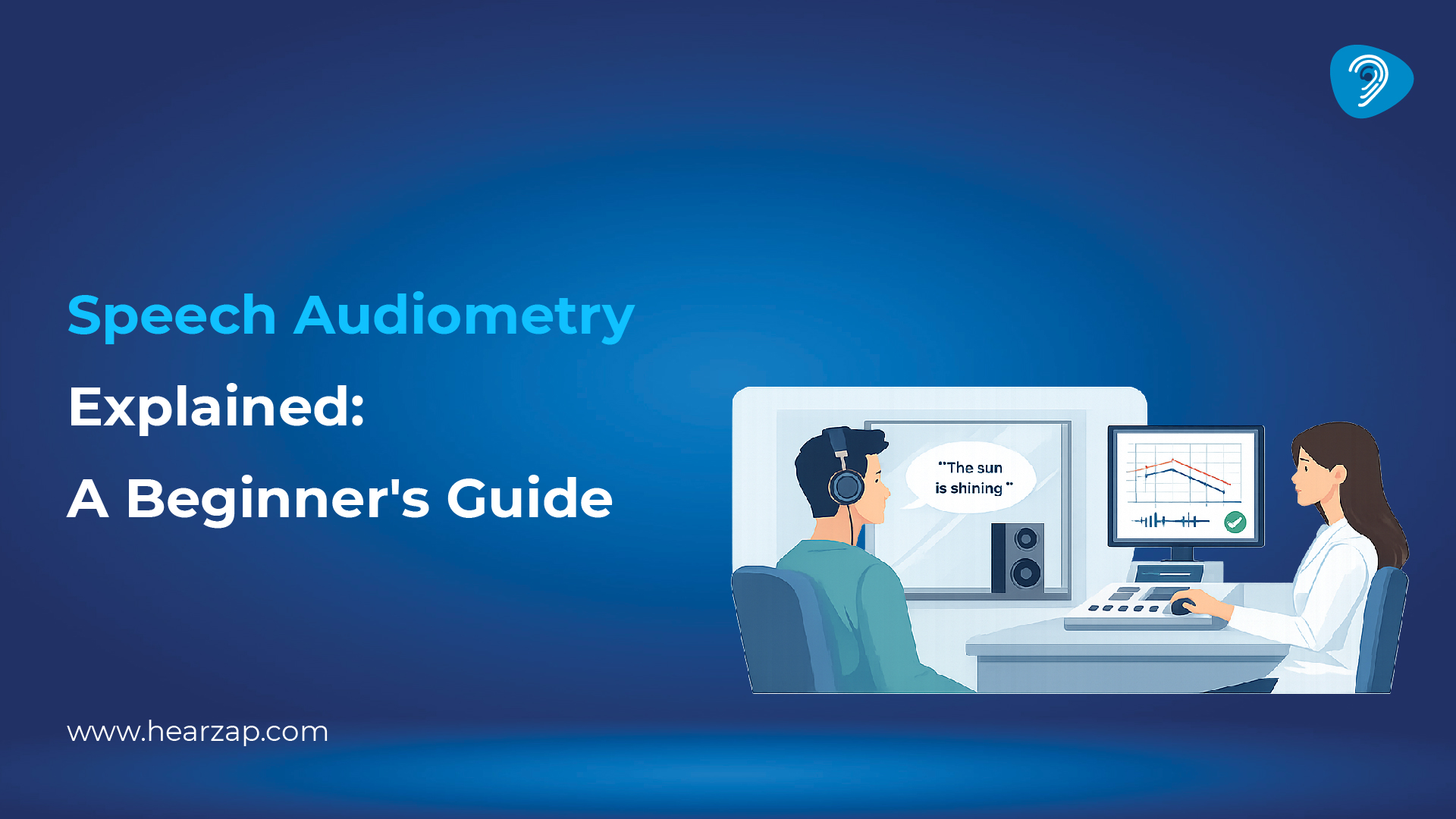
Speech audiometry checks how well a person hears and understands spoken words. A regular tone test tells how softly someone can hear different sounds, but speech testing comes closer to real life. It shows whether words are clear, comfortable, and easy to repeat.
Hearzap offers audiologist-led hearing assessments that help users understand their hearing health and choose suitable hearing care with more confidence. In many Indian homes, this test is useful when families notice that the volume is high but speech still feels unclear.
What is Speech Audiometry?
Speech audiometry is a hearing test where a person listens to words or sentences and repeats what they hear. The audiologist presents speech at different loudness levels and records how clearly the person recognises it. It is different from a pure-tone audiometry test.
Pure tone audiometry testing checks the softest tones a person can hear at different pitches. Speech testing checks how well the ear and brain work together to understand words. Both tests are useful because hearing is not only about detecting sound. It is also about making sense of speech in daily life.
Why is a Speech Audiometry Test Performed?
A speech audiometry test is performed when the audiologist wants to know how hearing affects communication. It explains why someone may hear speech yet miss words.
Diagnosing Hearing Loss
Audiologists may suggest this test when someone has trouble following conversations at home, work, or social gatherings. It helps measure how loud speech needs to be before it becomes clear. The test also supports diagnosis when hearing loss signs are present, such as asking others to repeat, increasing phone volume, or misunderstanding common words.
Evaluating Speech Understanding
Some people can hear, but cannot understand. Speech audiometry is useful in such cases. It checks whether the person can recognise words at a comfortable loudness level. This is important for phone calls, family discussions, meetings, online classes, and daily communication.
Hearing Aid Assessment
Speech scores help the audiologist understand whether hearing aids may improve clarity. If speech understanding becomes better with amplification, it gives useful direction for fitting. The results may also show which listening situations need more support, such as speech in noise or soft voices.
Speech Audiometry Procedure Explained
The speech audiometry procedure is simple and comfortable. The person listens carefully, repeats words, and follows the audiologist’s instructions.
Preparing for the Test
Before starting, the audiologist may ask about ear history, noise exposure, listening problems, current devices and daily communication needs. The ear may also be checked to see if wax or any visible concerns can affect the result.
The person is seated in a quiet test room. Headphones or earphones are placed properly. This helps the audiologist present speech to each ear in a controlled way.
Listening to Words Through Headphones
During the test, the person hears words or sentences through headphones. The loudness may be changed step by step. The audiologist may begin with clear, comfortable speech and then adjust the level to understand the softest point at which words can be recognised. Clear instructions are given before every section, so the person knows what to do.
Repeating Words and Sentences
The person repeats the words or sentences they hear. The responses help show how clearly speech is understood. The audiologist notes correct and incorrect answers. These findings are then studied with other hearing results. This gives a fuller picture of listening ability.
Understanding Speech Audiometry Test Results
Speech audiometry test results show how well a person detects and understands speech. The audiologist usually reviews them along with tone test results and listening concerns.
Speech Recognition Threshold (SRT)
Speech Recognition Threshold, or SRT, shows the softest level at which a person can recognise simple speech correctly. It helps confirm whether speech hearing matches the tone-based result. If the SRT is higher than expected, the person may need louder speech to understand words comfortably.
Word Recognition Score (WRS)
Word Recognition Score, or WRS, shows how many words a person repeats correctly at a comfortable listening level. A good score usually means speech becomes clearer when the sound is loud enough. A lower score may mean clarity is affected even when the person can hear the sound.
Interpreting the Results
The audiologist compares speech scores, tone thresholds, hearing loss symptoms. This helps explain whether the main issue is audibility, clarity, or both. The findings may guide fitting, counselling, further testing, or medical referral.
What is the Speech Audiometry Test Price?
The speech audiometry test price can differ from one hearing care centre to another. It usually depends on the location, equipment, test package, audiologist consultation, and whether other hearing checks for good hearing health are included.
Sometimes, it is part of a complete hearing test. What matters most is that a qualified professional conducts the test, explains the results clearly to the family, and guides improving speech with hearing aids when needed.
Benefits of Speech Audiometry
Speech audiometry is useful because it connects hearing results with real conversations. It helps audiologists plan support that is more personal and practical.
Accurate Hearing Assessment
It shows whether a person can understand words clearly and how speech recognition changes with loudness. It is especially helpful for people who struggle in conversation even when they can hear sounds around them.
Better Hearing Aid Fitting
Speech results help the audiologist decide how hearing aids should support speech clarity and comfort. The fitting can be adjusted based on real-world understanding, not only on sound detection. People who plan to buy hearing aids online should still use professional test results for proper selection and fitting.
Improved Treatment Planning
A clear speech audiometry report helps decide the next step. Some users may need hearing aids. Others may need further testing, counselling, listening strategies, or medical advice. When the exact cause of speech difficulty is understood, the care plan becomes more useful for communication and hearing health.
Who Should Consider a Speech Audiometry Test?
Speech audiometry may be helpful for people who can hear someone speaking but cannot follow the words properly. It can also help existing hearing aid users who still feel speech is unclear.
People with Hearing Difficulties
People who often ask others to repeat, miss words during meetings, or find phone calls unclear may benefit from this test. It is also useful when family members notice that conversations are becoming difficult. A proper evaluation can show whether the issue is linked with hearing loss or another listening concern.
Hearing Aid Users
Existing hearing aid users may need speech testing if speech still sounds unclear after using the device. The results can help check whether the hearing aid settings, programme, or fitting need changes. It is also useful during follow-up visits after a new device is fitted. It also helps during follow-up care when listening needs change with age, work, or routine over time.
Individuals Experiencing Speech Understanding Problems
Some individuals can hear that someone is speaking, but the words still feel mixed or incomplete. This may happen in group conversations, classrooms, phone calls, or places with background noise. Speech audiometry checks how well the person recognises speech and helps the audiologist plan suitable care.
Hearzap's Hearing Assessment Services
Hearzap offers hearing tests, audiology consultations, speech audiometry exams and hearing aid fitting for all listening requirements. In this assessment, we evaluate how you hear, how well you can speak, how clear your word recognition is, and how easy it is to understand people on a day-to-day basis.
Users can also book an appointment for personal assistance and advice with hearing aid selection, device adjustments, and after-care follow-up to enhance speech understanding.
FAQs
1. What is speech audiometry?
Speech audiometry is a hearing test that checks how clearly a person hears and understands spoken words. It helps measure speech recognition and supports diagnosis, hearing aid fitting, and care planning.
2. What is a speech audiometry test used for?
It is used to check speech understanding, identify hearing difficulty, and guide hearing aid selection. It helps explain why a person may hear sound but still miss words.
3. What happens during the speech audiometry procedure?
The person listens to words or sentences through headphones and repeats what they hear. The audiologist changes loudness levels and records the responses.
4. How are speech audiometry test results interpreted?
The results are reviewed through speech thresholds, word recognition scores, tone test results, and listening concerns. This helps the audiologist understand speech clarity and hearing support needs.
5. What factors affect the speech audiometry test price?
The price may depend on the centre location, diagnostic package, equipment used, audiologist consultation, and whether other hearing evaluations are included.
6. Is speech audiometry different from pure tone audiometry?
Yes. Pure tone testing checks the softest tones a person can hear, while speech testing checks how clearly the person understands spoken words.

Dattatreya M
Audiology Innovation Manager
Helping You Hear Life Again. At Hearzap, we believe hearing is the key to staying connected with family, friends, and the world around us. With over 48 years of trusted care & my 15 years in audiology, I’ve seen how improved hearing brings back confidence
Contact us
We are here for all your hearing needs, from hearing tests to hearing aids. Fill out the form below, and we will give you a call soon.
Recent Blogs
By None | July 16, 2026
By None | July 15, 2026
By None | July 13, 2026
By None | July 9, 2026
By None | July 8, 2026