HEARING TEST
Understanding the 7 Types of Hearing Tests
By Dattatreya M | Aug. 4, 2026
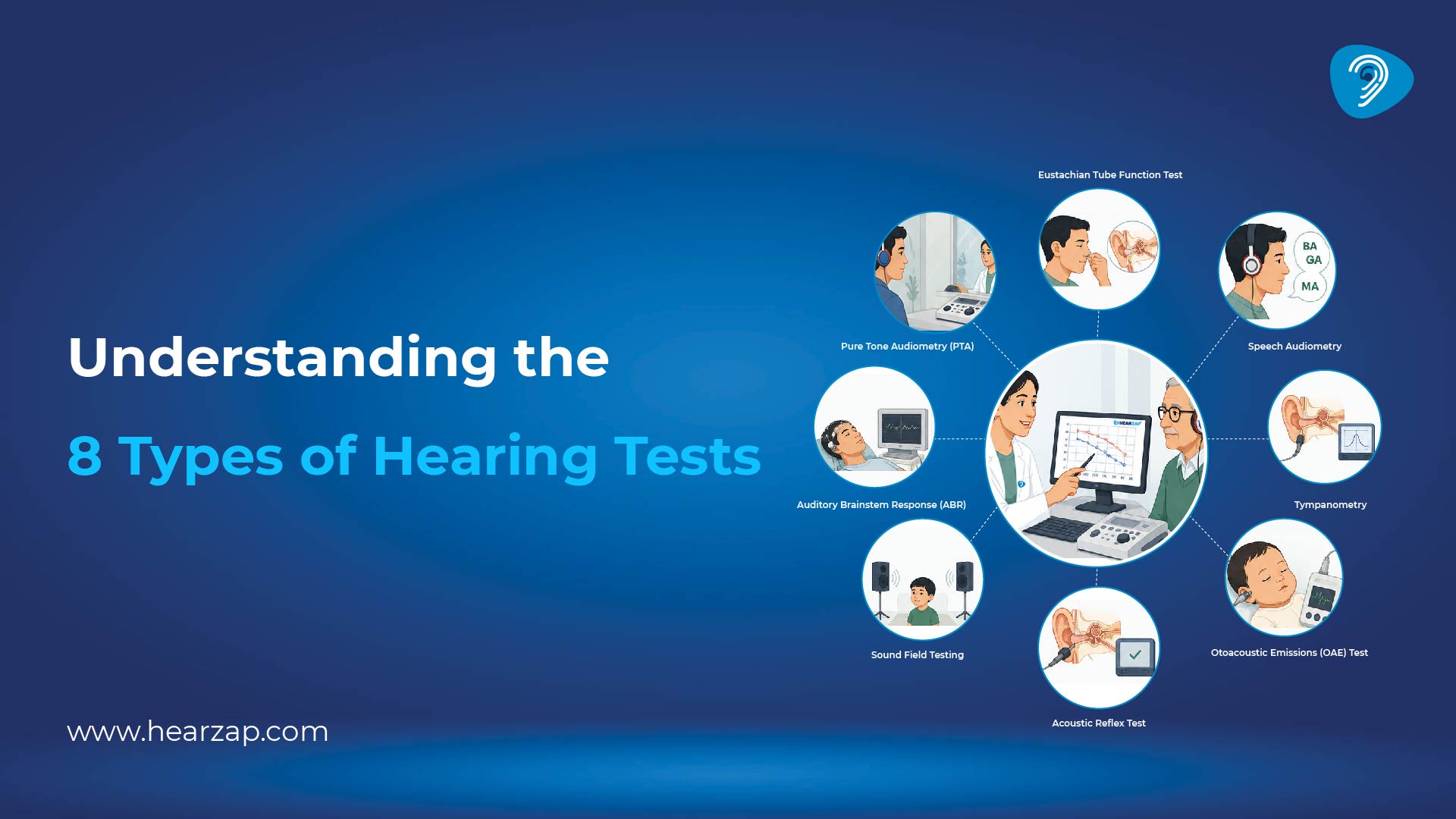
Hearing changes rarely announce themselves. They show up in ordinary moments: a missed doorbell, a half-heard phone call, a child not reacting to sound. Assessment helps separate temporary blockage from age-related, noise-related, middle-ear, inner-ear, or nerve-related concerns. Hearzap offers advanced hearing assessment services for people who want clear answers from audiologists.
What Are Hearing Tests?
Hearing tests are structured assessments used to understand how sound travels through the ear and how clearly speech is understood. A hearing test may measure soft tones, spoken words, eardrum movement, inner-ear response, or hearing-nerve activity. To find where the listening difficulty may be coming from.
Many people delay testing because they can still “hear something”. That is different from hearing well. You may hear a voice but miss words in traffic, offices, classrooms, weddings, restaurants, or family gatherings.
Testing is useful for people who notice ringing, blocked ears, ear pain, dizziness, sudden changes, frequent infections, speech delay in children, or regular exposure to loud sounds. Untreated hearing loss can affect confidence, learning, work, safety, and relationships. Early assessment helps the audiologist plan the next step.
The types of hearing tests are selected after understanding age, symptoms, lifestyle, and ear condition. Some require active responses. Others record the ear’s response.
7 Different Types of Hearing Tests
The different types of hearing tests work like pieces of one larger puzzle. These hearing test categories help identify the type and possible source of the concern.
Pure Tone Audiometry (PTA)
Pure tone audiometry is one of the most common types of audiometry test used for adults and older children. During the Pure Tone Audiometry Test, the person wears headphones and listens for beeps at different pitches. Each time a sound is heard, they press a button or raise a hand.
The audiologist records the softest sound heard at each frequency. This creates an audiogram, which shows whether hearing is within the expected range or affected at low, mid, or high pitches. The degree may be mild, moderate, severe, or profound.
PTA gives a measurable starting point and compares one ear with the other. Through Audiogram Interpretation, the audiologist explains what the graph means for phone calls, meetings, television volume, and home conversations.
Bone conduction testing helps reveal whether hearing difficulty may be linked to the outer ear, middle ear, inner ear, or a combination. A small vibrator is placed behind the ear. It sends sound through the skull bone and directly stimulates the inner ear.
The audiologist compares bone conduction results with air conduction results from PTA. If bone scores are better than air scores, the issue may involve wax, fluid, eardrum movement, or middle-ear function. If both are reduced, the concern may involve the inner ear or nerve.
This is one of the important types of hearing test for adults because it adds depth to the final report and helps guide the next step.
Speech Audiometry
Speech audiometry checks something closer to real life: how well a person recognises and understands words. Daily hearing is not about beeps; it is about following speech when people speak quickly, softly, or from another room.
Words or sentences are played through headphones or speakers, and the person repeats what they hear. Speech may be tested in quiet or with background noise. The results show whether sound is only being detected or actually understood.
This test helps people who say, “I can hear, but I cannot make out the words.” It also supports hearing aid planning because speech scores help the audiologist choose suitable fitting strategies.
Tympanometry
Tympanometry checks the middle ear. It looks at how the eardrum moves when gentle air pressure changes inside the ear canal. During the Tympanometry Test, a small probe is placed at the ear opening. The test is quick, and the person does not need to answer.
This assessment can point towards fluid behind the eardrum, pressure imbalance, eardrum stiffness, a small perforation, or Eustachian tube difficulty. These issues may happen after colds, allergies, infections, flights, or repeated blocked-ear episodes.
Tympanometry does not directly tell how softly a person hears. Instead, it explains whether sound may be getting blocked before it reaches the inner ear. It is useful for children and people with a full or heavy ear feeling.
Otoacoustic Emissions (OAE) Test
The OAE test checks the response of tiny sensory cells inside the cochlea, part of the inner ear. A soft probe is placed in the ear canal. It plays gentle sounds and records a small echo-like response produced by the inner ear.
The person does not need to press a button, repeat words, or follow instructions. For that reason, OAE is commonly used in newborn hearing screening and in cases where a person cannot respond reliably.
A present OAE response usually suggests that the cochlea is responding well. An absent response needs careful interpretation. Wax, fluid, noise, movement, or probe position may affect the result, so the audiologist reads it with other findings.
Auditory Brainstem Response (ABR) Test
Auditory Brainstem Response testing measures how the hearing nerve and brainstem respond to sound. Small sensors are placed on the head, and clicking sounds or tone bursts are played through earphones. The equipment records the electrical response from the hearing pathway.
ABR is useful for babies, young children, and people who cannot give consistent answers during routine testing. Infants may be tested while asleep. Adults may also need ABR when the audiologist wants to study nerve pathway function.
This test does not depend on pressing buttons or repeating words. It gives objective information and may be part of a wider assessment when standard behavioural tests are not enough.
Tuning Fork Tests (Rinne & Weber)
Tuning fork tests are simple, old-fashioned, but still useful checks. During a Tuning Fork Test, the audiologist strikes a metal fork so it vibrates, then places it near the ear or on the bone behind the ear.
The Rinne test compares air conduction with bone conduction. It helps show whether sound travels better through the ear canal or through vibration. The Weber Test places the fork in the centre of the head to check whether sound is heard equally or louder on one side.
These tests do not replace detailed audiometry. They are quick screening tools that help separate conductive hearing concerns from sensorineural concerns.
Acoustic Reflex Test
The acoustic reflex test checks whether a tiny middle ear muscle reacts to sound. Normally, this muscle tightens when a sufficiently loud sound is heard. A probe placed in the ear measures that response.
The test may give clues about the middle ear, hearing nerve, facial nerve, and parts of the auditory pathway. It is often paired with tympanometry, pure tone audiometry, speech testing, or ABR.
The audiologist studies the pattern and matches it with symptoms, history, and other test findings.
Which Hearing Test Is Right for You?
People often ask what are the different types of hearing tests and which one they should choose. The practical answer is that the audiologist chooses after listening to the concern and checking the ear. A child with speech delay may need OAE or ABR. An adult who hears sound but misses words may need PTA and speech audiometry. A blocked sensation may call for tympanometry.
The decision may depend on:
- Age and ability to respond
- Sudden or gradual change
- One ear or both ears affected
- Ringing, pain, discharge, dizziness, or fullness
- Noise exposure at work, travel, events, or festivals
- Past infections, surgery, injury, or hearing aid use
To understand how a hearing test works, think of it as a guided investigation. The audiologist checks sound detection, speech clarity, middle-ear movement, inner-ear response, and nerve function where required.
Why Choose Hearzap for Hearing Tests?
Hearzap supports people who want careful hearing assessments and clear explanations. The experience is guided by trained audiologists, advanced diagnostic equipment, and an understanding of everyday listening needs in India.
A report should not feel like a page of symbols. It should tell you what is happening, what it means, and what can be done next. Hearzap focuses on comprehensive hearing assessments, personalised care, hearing aid consultation, and fitting support where required.
Hearzap offers:
- Experienced audiologists
- Advanced diagnostic equipment
- Complete hearing assessments
- Personalised care plans
- Hearing aid consultation and fitting
- Nationwide hearing care centres
Some people come for a first assessment. Others already use hearing aids and need updated advice. Those with a clear recommendation may choose to buy hearing aids online with professional guidance. You can book an appointment when hearing changes begin affecting conversations, calls, studies, work, travel, or family life.
FAQs
What are the different types of hearing tests?
The main types of ear test include pure tone audiometry, speech audiometry, tympanometry, OAE, ABR, tuning fork tests, acoustic reflex testing, and bone conduction testing.
Which hearing test is the most accurate?
No single test suits everyone. Accuracy improves when the audiologist chooses the right mix of tests for the person’s symptoms, age, and ear condition.
Are hearing tests painful?
Most hearing tests are painless. You may hear beeps, words, pressure changes, or feel mild vibration during certain assessments.
How long does a hearing test take?
A basic adult assessment may take around thirty minutes. Detailed testing, child assessment, or multiple procedures may take longer.
Who should get a hearing test?
Anyone who misses words, raises volume, struggles in noise, hears ringing, feels blocked ears, or works around loud sound should get tested.
Where can I get a professional hearing test?
You can get a professional assessment through Hearzap’s hearing care centres across India. An audiologist can review symptoms and explain results.

Dattatreya M
Audiology Innovation Manager
Helping You Hear Life Again. At Hearzap, we believe hearing is the key to staying connected with family, friends, and the world around us. With over 48 years of trusted care & my 15 years in audiology, I’ve seen how improved hearing brings back confidence
Related Blogs
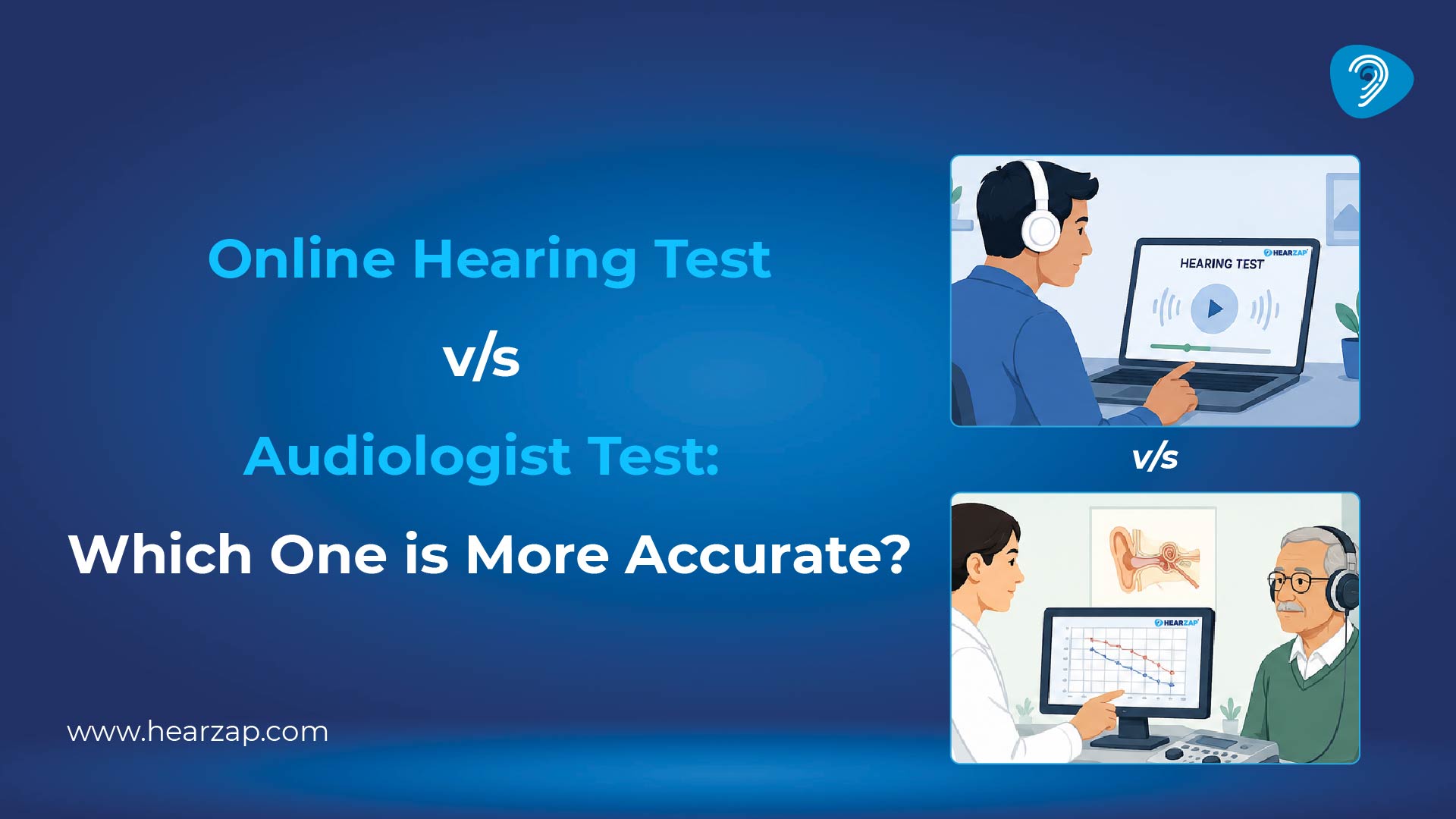
Online Hearing Test vs Audiologist Test: Which Is Better?
How to Test Baby Hearing at Home
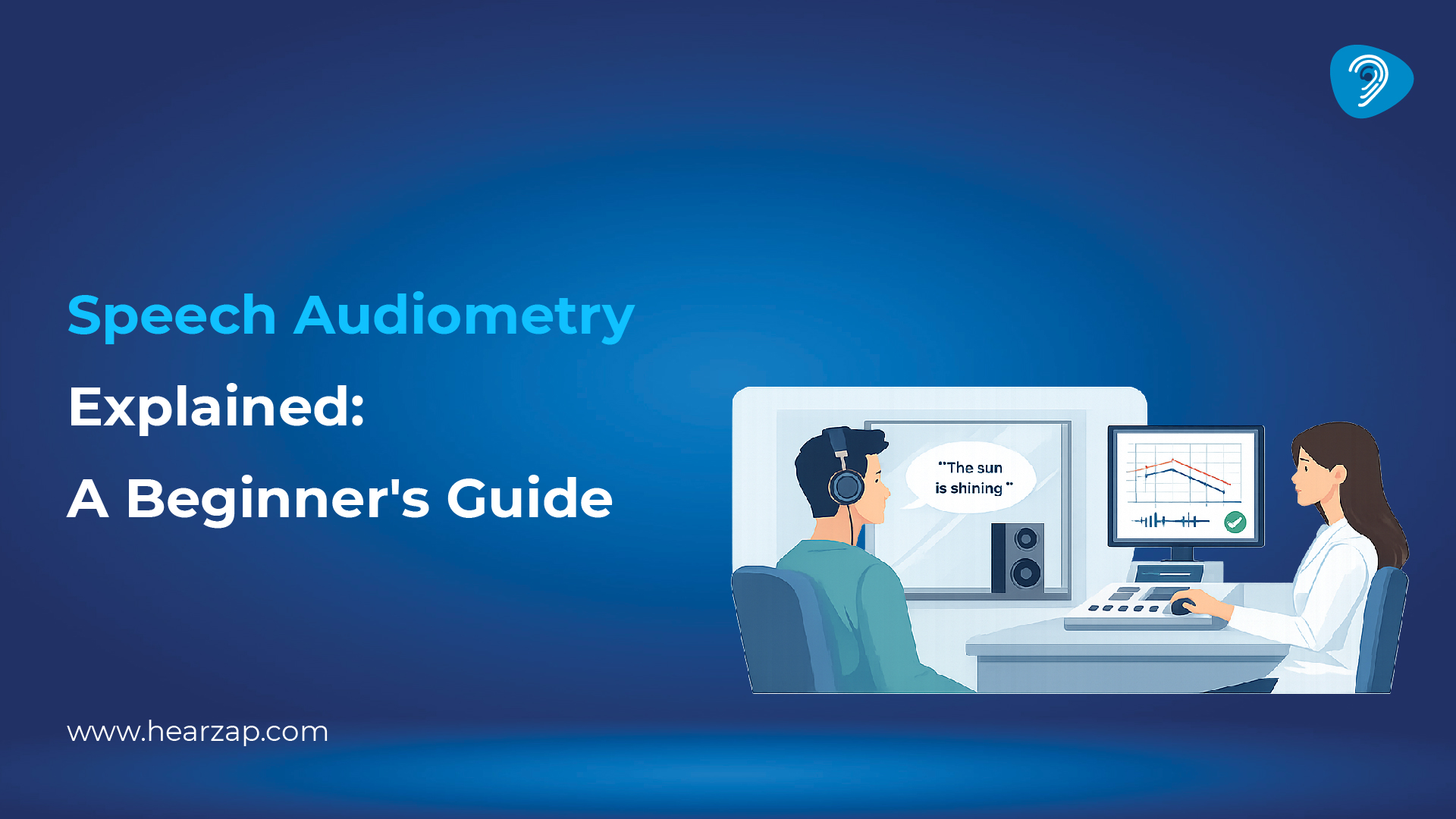
What Is Speech Audiometry? A Beginner’s Guide to Speech Hearing Tests
Contact us
We are here for all your hearing needs, from hearing tests to hearing aids. Fill out the form below, and we will give you a call soon.
Recent Blogs
By None | Sept. 16, 2026
By None | Sept. 9, 2026
By None | Sept. 7, 2026
By None | Sept. 5, 2026
By None | Sept. 4, 2026