HEARING AIDS
Cochlear Implant: Meaning, Surgery, Benefits & Recovery
By Team Hearzap | Aug. 6, 2026
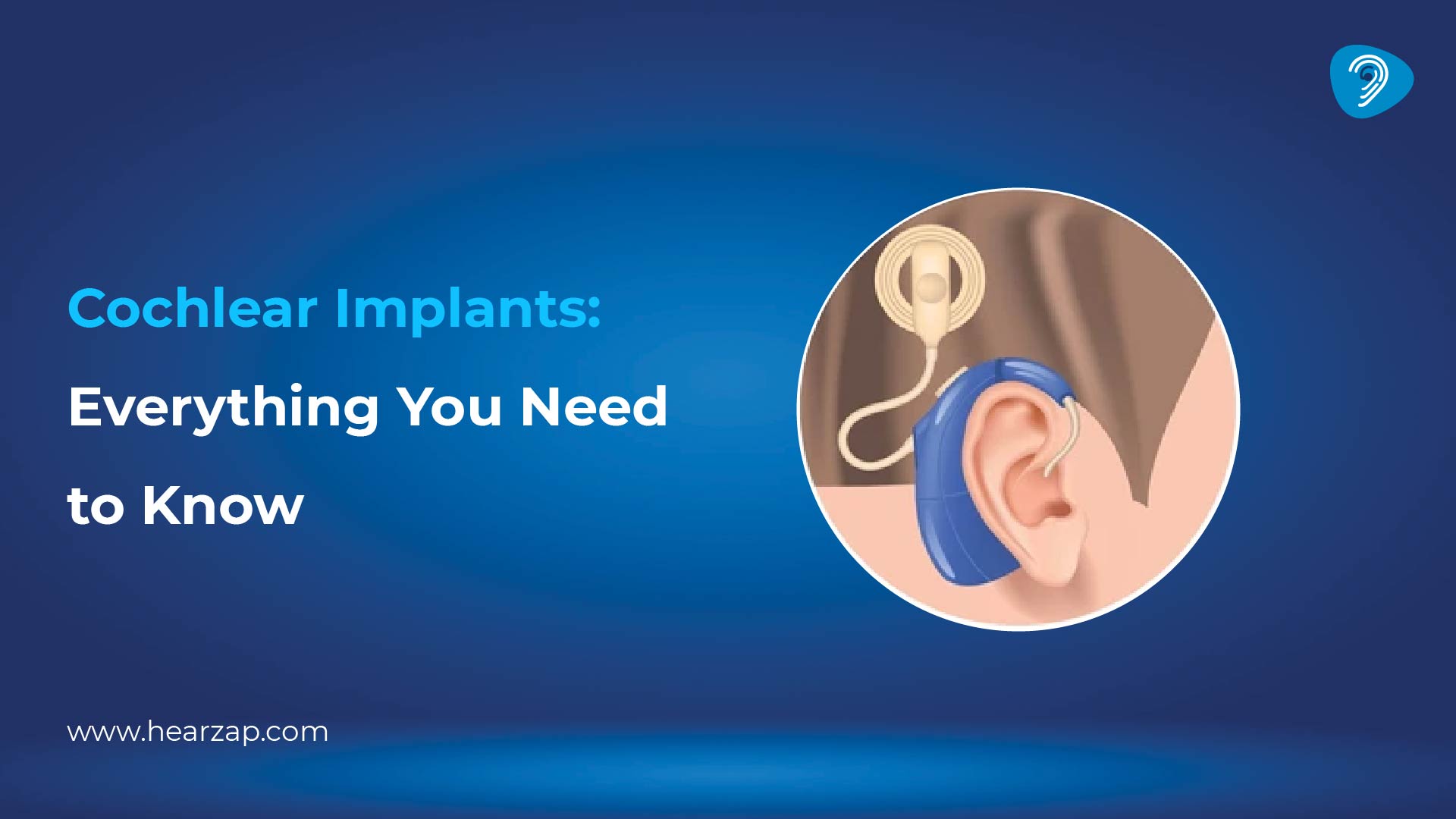
Severe hearing difficulty can make daily life feel smaller, from missed conversations at home to strain in classrooms, offices and social spaces. A cochlear implant is meant for people who receive little benefit from ordinary amplification and need another route to sound. Hearzap supports people with hearing evaluations, implant guidance and follow-up support so families can understand the journey before deciding.
What Is a Cochlear Implant?
The simplest cochlear implant meaning is this: it is an electronic hearing device that bypasses damaged inner-ear hair cells and directly stimulates the hearing nerve. Unlike natural hearing, it changes sound into electrical signals that the brain learns to recognise. The cochlear implants meaning is often misunderstood because people expect instant normal hearing.
In reality, the device gives access to sound, while listening skills improve through mapping, therapy and practice. Cochlear implants may be advised for severe to profound sensorineural hearing loss when well-fitted devices do not provide enough speech understanding.
Types of Cochlear Implant
The main types of cochlear implants are usually discussed by ear involvement, device style and listening needs. A person may receive one implant, implants in both ears, or one implant with a device in the other ear. Some processors sit behind the ear, while others are off-the-ear units. The right choice depends on age, hearing reports, ear anatomy, lifestyle, language goals and medical suitability. For children, decisions also consider school support and speech development.
How Does a Cochlear Implant Work?
A cochlear implant has outside and inside parts that work together. The external part collects sound and converts it into coded signals. The internal part receives those signals and sends electrical pulses to electrodes placed in the cochlea. These pulses stimulate the auditory nerve, which carries information to the brain.
External Sound Processor
The sound processor sits outside the head and is usually worn behind the ear or slightly off the ear, depending on the model. Its microphones pick up speech and environmental sounds. The processor filters, organises and codes the sound before sending it through a transmitter coil. This part can be removed for bathing, sleeping or charging.
Internal Cochlear Implant
The internal cochlear implant is placed under the skin during surgery. It includes a receiver and an electrode array that rests inside the cochlea. Once the external processor sends signals across the skin, the receiver passes them to the electrodes. These electrodes stimulate different areas linked to pitch. The user does not hear exactly as before.
Cochlear Implant vs Hearing Aid
A hearing aid amplifies sound so that remaining inner-ear hair cells can send signals to the brain. A cochlear implant takes a different route because it directly stimulates the hearing nerve. This is why the phrase cochlear implant hearing aid can be misleading, although people use it casually. Hearing aids may suit mild to severe loss, while implants may suit severe to profound loss with poor speech clarity.
A detailed comparison of cochlear implant vs hearing aid will let people understand which option is realistic before making a clear decision. Those who want to buy hearing aids online should still rely on a recent assessment before choosing any device.
Who Is a Candidate for a Cochlear Implant?
Candidacy is not based only on how loud the sounds need to be. It also depends on speech understanding, hearing history, communication goals, inner-ear structure, general health and motivation for rehabilitation. A person may be considered when strong hearing aids do not make speech clear enough in daily situations. A complete hearing test and medical review help decide suitability.
Adults with Severe Hearing Loss
Adults may consider an implant when conversations remain unclear even after using suitable hearing aids. Many people reach this stage slowly, while others experience sudden or progressive changes. Cochlear implants for seniors can also be suitable when overall health allows surgery and follow-up. Age alone should not decide candidacy. Benefit from current devices, listening goals and commitment to therapy matter more.
Children with Hearing Loss
For children, early evaluation is important because access to sound supports speech, language, learning and social growth. Parents who are reading about hearing Loss in children should seek guidance quickly, especially when newborn screening, delayed speech or poor response to sound raises concern. An implant may be considered if powerful hearing aids are not enough. Families also need counselling about therapy and school planning.
Hearing Test Before Surgery
Before surgery, the care team usually reviews hearing reports, aided speech scores, imaging, ear health, vaccination advice and general fitness for anaesthesia. The aim is to confirm that the hearing nerve and cochlea can support the device. Families should ask about expected outcomes, time commitment, maintenance and realistic listening goals. Book an appointment with Hearzap if hearing aids are not helping enough anymore.
Cochlear Implant Surgery Explained
Cochlear implant surgery is usually done under general anaesthesia by an ear surgeon. A small cut is made behind the ear, a receiver is placed under the skin, and the electrode array is carefully inserted into the cochlea. The external processor is not switched on during the operation. Most people stay under observation for a short period.
Preparing for Surgery
Preparation includes hearing evaluation, imaging, blood tests, anaesthesia review and discussion of medicines. The surgeon may advise vaccination or infection prevention steps. Adults should plan leave from work, transport and help at home for the first few days. Parents should prepare children in simple words. The processor model, ear side and rehabilitation plan should be clear before surgery.
During the Procedure
During the procedure, the person is asleep and does not feel pain. The surgeon places the implant package under the skin and guides the electrode array into the cochlea. The device may be checked before the wound is closed. The surgical area is dressed, and recovery staff monitor breathing, comfort and balance. Operation time varies by case.
Recovery After Surgery
Initial recovery may include mild pain, swelling, dizziness, pressure around the ear or tiredness. These symptoms improve with rest and prescribed medicines, but fever, increasing pain, fluid discharge or facial weakness need urgent review. The wound must stay clean and dry as advised. Sound activation happens later, after healing.
Activation and Rehabilitation After Cochlear Implant Surgery
Activation usually happens after the surgical area heals. During activation, the audiologist connects the processor and creates the first listening programme, often called mapping. Sounds may seem mechanical, soft, sharp or unusual at first. Several sessions are needed to adjust comfort and clarity.
Rehabilitation teaches the brain to listen, recognise speech and manage noise. Children need speech-language work, while adults need structured listening practice. A calm plan makes the process easier, especially for first-time users and families balancing treatment, school, work and everyday communication goals at home together.
Benefits of a Cochlear Implant
The benefits of cochlear implants may include better access to speech, improved awareness of doorbells, traffic, alarms and voices, and easier participation in family or work life. Children may gain stronger support for language learning when intervention is timely and followed by therapy. Adults may feel less isolated because conversations become manageable. Results vary, but regular processor use and follow-up usually improve progress.
Risks and Possible Complications
Every surgery has risks, and implants are no exception. Possible concerns include infection, bleeding, dizziness, taste change, ringing sound, facial nerve injury, device failure, wound problems or anaesthesia-related issues. Some people may lose their remaining natural hearing in the implanted ear. The device can also require future replacement or repair. These points should be discussed openly before treatment.
Cochlear Implant Cost: What Affects the Price?
Cochlear implant costs vary across India because several factors are involved. These may include the implant brand, processor features, hospital charges, surgeon fees, tests, imaging, surgery, medicines, activation, mapping, therapy and follow-up care. Families should also ask about warranty, processor upgrades, battery expenses and repair support. Some government schemes, insurance arrangements or charitable programmes may help eligible people. Consider the long-term care plan for cochlear hearing implants.
Common Myths About Cochlear Implants
One common myth is that implants restore natural hearing instantly. They do not. Another is that anyone with reduced hearing can receive one, which is not correct. Some people think a hearing aid and an implant are the same, but their working methods are different. Others fear that users cannot enjoy music or phone calls. Many can, but results vary and practice matters.
Frequently Asked Questions
What do I need to know about cochlear implants?
You should know that an implant is a long-term hearing solution, not a quick switch. It needs surgery, activation, mapping, therapy, maintenance and daily use. Outcomes vary, so proper evaluation and realistic expectations are essential.
How long will a cochlear implant last?
The internal part is designed for long-term use and may last many years, but processors, cables, batteries and accessories may need servicing or upgrading. Regular follow-up helps keep the system working well.
Is cochlear implant high risk?
For suitable candidates, the surgery is commonly performed, but it still carries surgical and device-related risks. The safest decision comes after medical review, imaging, hearing evaluation and a clear discussion of benefits and limitations.
What is the best age to get a cochlear implant?
There is no single best age for everyone. Children often benefit from early intervention because speech and language develop rapidly. Adults and seniors can also benefit when tests show that hearing aids are not enough.
What are the disadvantages of cochlear implants?
Disadvantages may include surgery, cost, device maintenance, rehabilitation time, variable sound quality, possible loss of remaining hearing and dependence on external equipment. These concerns should be weighed against communication goals and the expected benefit.
Related Blogs
Latest Innovations in Hearing Aid Technology
CIC vs IIC Hearing Aids: What’s the Difference?

Are Rechargeable Hearing Aids Good for Seniors?
What Is a Telecoil (T-Coil) in Hearing Aids and How Does It Work?
Hearing Amplifiers vs Hearing Aids: What’s the Difference?
Contact us
We are here for all your hearing needs, from hearing tests to hearing aids. Fill out the form below, and we will give you a call soon.
Recent Blogs
By None | Sept. 21, 2026
By None | Sept. 16, 2026
By None | Sept. 9, 2026
By None | Sept. 7, 2026
By None | Sept. 5, 2026