HEARING AIDS
CROS vs BiCROS Hearing Aids: What’s the Difference?
By Sri Sai Koti Chennupati | July 18, 2026
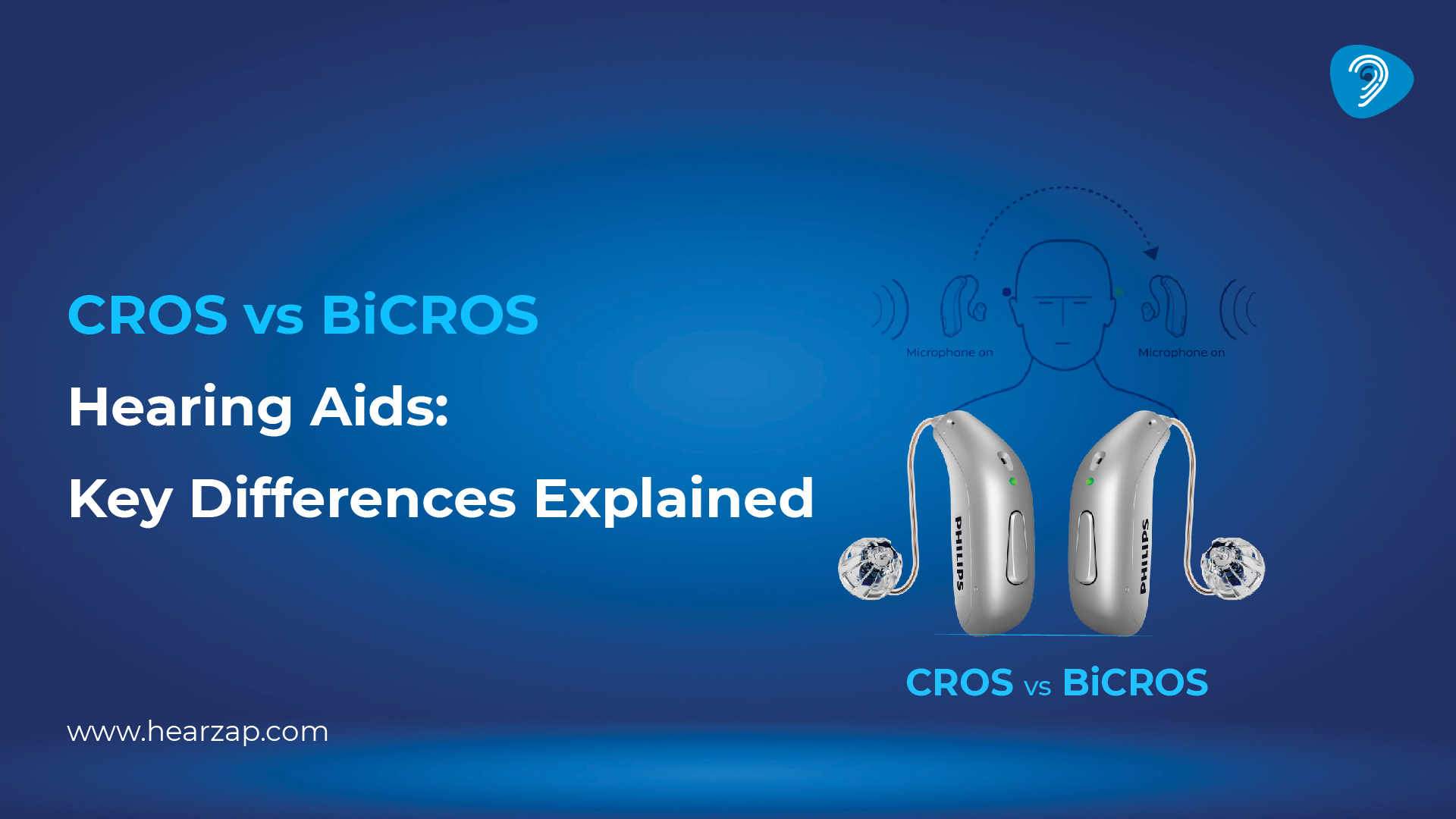
Hearing is not always equal in both ears. Some people hear well from one side but miss speech from the other. Others have one very weak ear and another ear that also needs help. CROS and BiCROS hearing aids are made for these uneven hearing patterns.
They do not restore natural hearing in the poorer ear, but they can send sound to the ear that can use it better. Hearzap helps users with hearing test support, audiologist guidance, fitting, and practical device advice.
What Are CROS Hearing Aids?
CROS hearing aids are designed for people who have very poor or no usable hearing in one ear, while the other ear hears well enough to receive sound. In simple words, sound from the weaker side is sent to the better ear.
How CROS Hearing Aids Work
A CROS system usually has two small devices. One sits on the poorer hearing side and works like a microphone. It picks up sound from that side and sends it wirelessly to the hearing ear.
This does not make the weak ear hear again. It helps the user notice speech and sounds from that side without turning the head every time.
Who Can Benefit from CROS Hearing Aids?
CROS hearing aids may suit people with single-sided deafness or very weak hearing in one ear, while the other ear has useful hearing. A user may miss speech when someone sits on the poorer side or struggle during meetings.
A proper hearing test is needed before choosing this option. It shows whether the better ear can handle routed sound comfortably.
What Is a BiCROS Hearing Aid?
A BiCROS hearing aid is used when one ear has very poor hearing, and the better ear also has hearing loss. The system sends sound from the poorer side and also amplifies sound for the ear that can still hear.
How BiCROS Technology Works
BiCROS technology also uses devices on both sides. The poorer side picks up sound and transfers it to the better side. The better side receives that sound and also amplifies speech around that ear.
This makes BiCROS useful for people who need side awareness and amplification. The settings are adjusted as per the better ear.
Who Should Use a BiCROS Hearing Aid?
A BiCROS hearing aid may suit people with very limited hearing in one ear and reduced hearing in the other. It helps when the poorer ear cannot use sound well, but the better ear can benefit from amplification.
Users can book an appointment for support with an audiologist to check whether BiCROS suits their hearing pattern and daily routine.
CROS vs BiCROS Hearing Aids: Key Differences
The main difference is simple. CROS sends sound to the better-hearing ear that does not need much amplification. BiCROS sends sound to a better ear that also needs amplification.
Hearing Loss Requirements
CROS is usually chosen when one ear has little or no usable hearing, while the other ear hears well. BiCROS is chosen when the better ear also has hearing loss.
Key Benefit: Improves awareness from the weaker side. Supports side awareness and speech clarity in the better ear.
Sound Processing
In a CROS system, sound from the poorer ear is routed to the better ear, which already hears well. In BiCROS, the better ear receives routed sound and also gets amplification. This matters when it needs added support.
Amplification Features
CROS focuses mainly on routing sound. It usually does not add strong amplification for the better ear. BiCROS includes routing and amplification. The better ear device is programmed based on hearing level, comfort, speech clarity, and daily listening needs.
User Experience
CROS users often feel more aware of sounds coming from the weaker side. They may not need to keep turning towards the speaker. BiCROS users may also notice better clarity because the better ear receives extra help. Still, results depend on testing, fitting, practice, and follow-up.
Benefits of CROS and BiCROS Hearing Aids
CROS and BiCROS hearing aids can make daily listening less tiring for suitable users. They can help with conversations, movement, and social spaces.
Better Awareness of Surrounding Sounds
Both systems help users notice sounds from the poorer-hearing side. This can be useful while walking, travelling, attending a meeting, or listening at home. Sound reaches the ear that can process it better.
Improved Conversation Understanding
When someone speaks from the weaker side, speech can be easy to miss. CROS and BiCROS systems send the speech to the better side. This can make it easier to respond without asking people to change seats or repeat every sentence.
Enhanced Listening in Social Situations
Family functions, offices, classrooms, and public places can have many voices at once. These devices may help users access speech from different directions. The right fit can reduce effort and make group listening more manageable.
How to Choose Between CROS and BiCROS Hearing Aids
The right choice depends on hearing in both ears, comfort, lifestyle, and professional advice. Online reading can explain the basics, but a decision should come after testing.
Based on Hearing Test Results
A hearing test shows how much hearing is available in each ear. It also tells whether the better ear needs amplification. These results help the audiologist decide between CROS and BiCROS instead of relying only on a hearing aid buying guide.
Lifestyle Considerations
Daily routine matters. Someone who attends meetings may need stronger speech support. A senior citizen may want easy handling and comfort. A student may need better awareness in classrooms. While exploring types of hearing aids, users should also think about phone use, battery comfort, charging, and wearing style.
Audiologist Recommendations
An audiologist can explain the report, compare device options, and guide the fitting. Users who want to buy hearing aids online should still seek professional guidance before finalising CROS or BiCROS devices. Fitting, volume, routing, and comfort need careful adjustment.
Limitations to Consider
CROS and BiCROS hearing aids can be useful, but they also require realistic expectations. They improve access to sound from the poorer side, but they do not create normal two-ear hearing.
Adaptation Period
At first, the sound may feel different because one ear is receiving sound from both sides. Some users adapt quickly, while others need more time. Regular use and small fitting changes can help the brain get comfortable.
Performance in Noisy Environments
Noisy places can still be challenging. The system may send background sound from the poorer side to the better ear. The latest hearing aid technology can help with noise control, but no device removes every difficulty in crowded spaces.
Maintenance and Care
CROS and BiCROS systems need regular cleaning, charging or battery checks, and safe storage. Users should keep the devices dry and follow care instructions. Follow-up visits are useful if sound becomes weak, unclear, or uncomfortable.
Hearzap's Hearing Aid Solutions
Hearzap provides hearing tests, expert audiologist consultations, hearing aid fitting services, and personalised recommendations for CROS and BiCROS users. The process starts by understanding hearing loss in both ears and how it affects real conversations.
Based on the results, audiologists can explain whether CROS, BiCROS, hearing aids for severe hearing loss, or another option may be suitable. Users also receive support with comfort, device settings, routine care, and follow-up. This helps them choose with less confusion and use the device with better confidence.
FAQs
1. What are CROS hearing aids?
CROS hearing aids are used when one ear has little or no usable hearing, and the other ear hears better. They send sound from the poorer hearing side to the better ear.
2. What is a BiCROS hearing aid?
A BiCROS hearing aid is used when one ear has very poor hearing, and the better ear also has hearing loss. It routes sound and adds amplification.
3. What is the difference between CROS and BiCROS hearing aids?
CROS is for one poor-hearing ear and one better-hearing ear. BiCROS is for one poor-hearing ear and one better ear that also needs amplification.
4. Who should use CROS hearing aids?
CROS may suit people with single-sided deafness or very poor hearing in one ear, while the other ear has usable hearing.
5. Are BiCROS hearing aids suitable for both ears?
BiCROS systems use devices on both sides, but the main amplification is for the better ear. The poorer side sends sound across.
6. How do I know whether I need a CROS or BiCROS hearing aid?
A hearing test and audiologist consultation can confirm which option suits your hearing pattern, speech needs, comfort, and daily listening situations.

Sri Sai Koti Chennupati
Head of Learning and Development
With a Master's qualification in Audiology and Speech-Language Pathology and more than 18 years of clinical practice, I am devoted to providing the highest standard of diagnostic and rehabilitative care in hearing and communication health.
Related Blogs
Does Health Insurance Cover Hearing Loss? What You Need to Know
Hearing Aids vs Cochlear Implant
Why are my hearing aids beeping? Common Causes & Solutions
Contact us
We are here for all your hearing needs, from hearing tests to hearing aids. Fill out the form below, and we will give you a call soon.
Recent Blogs
By None | Sept. 2, 2026
By None | Sept. 1, 2026
By None | Aug. 31, 2026
By None | Aug. 29, 2026
By None | Aug. 28, 2026