HEARING AIDS
Open vs Closed Hearing Aid Domes: Which One Is Best for You?
By Team Hearzap | July 9, 2026
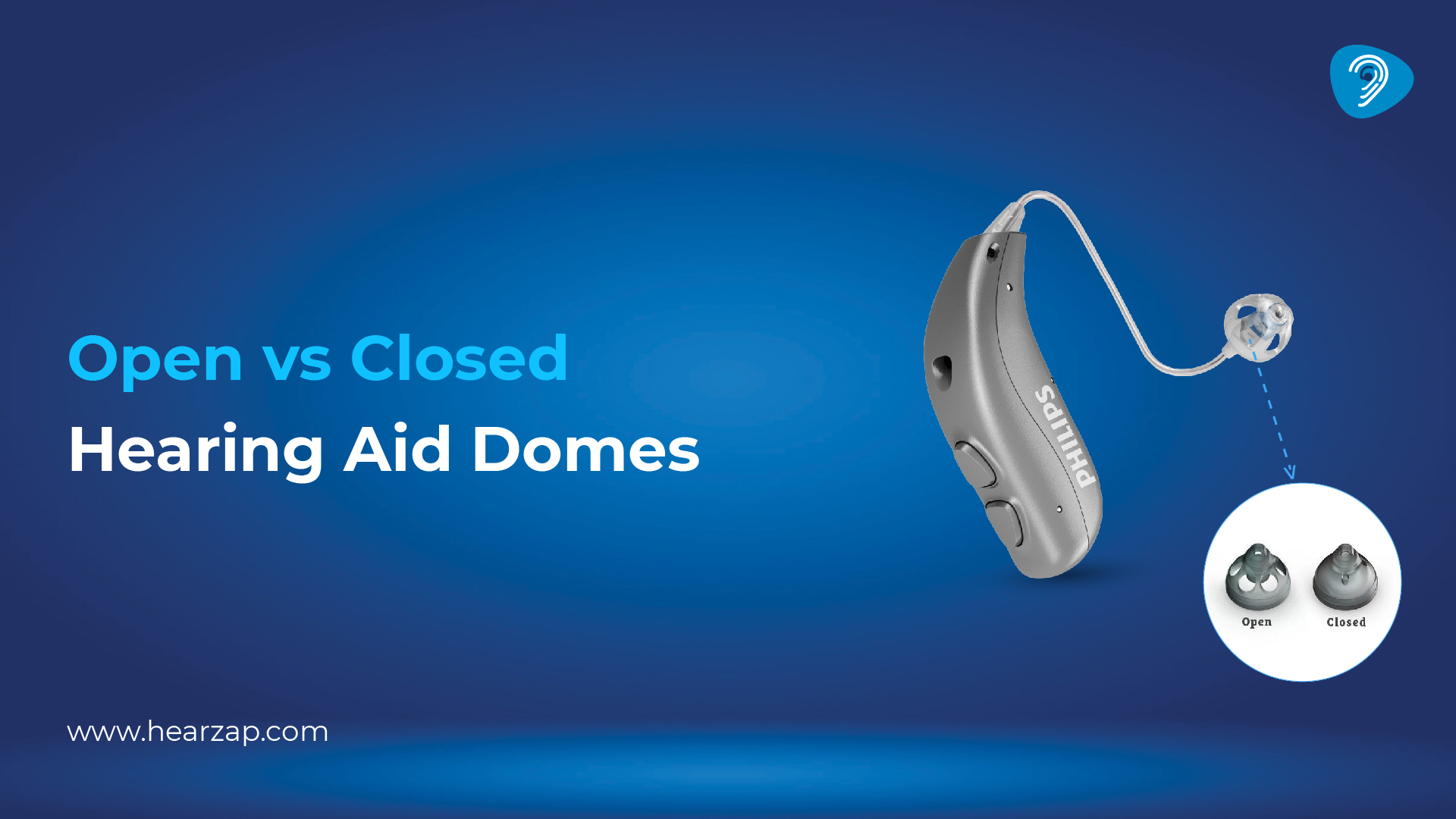
A hearing aid may be small, but every small part matters. One such part is the dome. It sits at the end of the hearing aid tube or receiver and rests inside the ear canal. A good dome can make listening clear and comfortable. A wrong dome can cause a blocked feeling, whistling, or a weak sound.
Many people buying hearing aids do not think much about domes. They simply wear what is given. But the choice between open hearing aid domes and closed hearing aid domes can change how natural speech feels, how much sound reaches the ear. Hearzap helps users choose the right hearing aid, dome, and fitting with the help of expert audiologists.
What Are Hearing Aid Domes?
Hearing aid domes are small, soft tips attached to certain hearing aids, especially receiver-in-canal and behind-the-ear models. They guide sound from the hearing aid into the ear canal and help keep the receiver or tube in place.
Domes come in different sizes and styles. Some have holes for airflow. Some give a tighter seal. The right dome depends on your ear shape, comfort, and level of hearing loss.
Understanding- Open Hearing Aid Domes
Open domes are made with small vents or holes. These openings allow air and natural sound to move in and out of the ear canal.
Features of Open Domes
Open domes do not fully block the ear. Because of this, your own voice may sound more natural. Many users feel less pressure in the ear.
They are often used when a person hears low sounds fairly well but needs help with higher sounds. This is common in mild to moderate hearing difficulty.
Benefits of Open Domes
Open domes feel light in the ear. They reduce the blocked ear feeling that some users dislike. They also allow outside sounds to enter naturally, so the hearing aid sound may feel more balanced.
For people new to hearing aids, open domes can feel easier to accept. The ear feels less sealed, especially in warm Indian weather when comfort matters.
Who Should Use Open Domes?
Open domes may suit people with mild to moderately high sound hearing difficulty. They are also helpful for users who complain that their own voice sounds loud or echoing.
Still, they are not right for everyone. If more sound power is needed, an open dome may let too much amplified sound escape.
Understanding Closed Hearing Aid Domes
Closed domes cover the ear canal more than open domes. They may have fewer holes or no large venting, depending on the design.
Features of Closed Domes
Closed domes hold more amplified sound inside the ear canal. This can help users who need stronger hearing support.
They may also improve bass sounds and speech volume. Because they create a better seal, they can give more controlled sound delivery.
Benefits of Closed Domes
Closed domes can make speech clearer for people with more noticeable hearing loss. They reduce sound leakage and help the hearing aid provide better amplification.
They may also work better in noisy places when fitted correctly. For office meetings, family functions, markets, or travel, this extra sound support can be useful.
Who Should Use Closed Domes?
Closed hearing aid domes may suit people with moderate to severe hearing loss, or those who need more loudness and clarity.
They may not feel as open as vented domes. Some users need time to adjust. A proper hearing test helps decide whether a closed dome is suitable.
Open vs Closed Hearing Aid Domes: Key Differences
Both dome types have a purpose. One is not better for everyone. The right choice depends on hearing needs, comfort, and the audiologist's advice.
Sound Quality
Open domes allow natural sound to mix with hearing aid sound. This can feel pleasant for users who still hear some sounds well.
Closed domes give stronger amplification. They may be better when speech needs more support, but the sound can feel fuller.
Comfort and Fit
Open domes usually feel softer and less blocked. Closed domes may feel tighter because they seal the ear more.
Comfort also depends on dome size. A dome that is too big can hurt. A dome that is too small can slip out.
Hearing Loss Severity
Open domes are mostly used for lighter hearing needs. Closed domes are chosen when the user needs stronger support.
This is why the dome choice should follow hearing test results, not guesswork. You can also read about types of hearing aids to understand how fittings differ.
Background Noise Management
Closed domes may help the hearing aid manage sound better because less sound escapes. Open domes may feel more natural, but may not give enough support in noisy areas for some users.
The best result comes from a good hearing aid setting and the right dome together. Modern devices also offer useful digital hearing aid features that support listening in noise.
How to Choose the Right Hearing Aid Dome
Choosing a dome should not be done only by feel. Comfort matters, but hearing clarity matters too.
Based on Hearing Loss Type
Your audiogram shows which sounds you hear well and which sounds need support. If only high sounds are weak, an open dome may work well. If many sounds need amplification, a closed dome may be better.
A hearing care expert can explain this in simple words after testing.
Based on Comfort Preferences
Some people do not like the feeling of a blocked ear. Some want a stronger sound, even if the ear feels more sealed. Both preferences are valid.
The audiologist may try different dome sizes and styles during fitting. Small changes can improve daily comfort a lot.4
Audiologist Recommendations
Audiologist guidance is important because the wrong dome can affect sound quality, feedback, and speech clarity.
Before choosing any hearing aid or dome, it helps to read tips for choosing the right hearing aid. Expert fitting is still the final step. If suitable, you can also buy hearing aids online with proper support.
Common Problems with Hearing Aid Domes
Domes are small, so users sometimes ignore them. But a small fitting issue can make the whole hearing aid feel uncomfortable.
Poor Fit
A poor fit may make the dome loose, painful, or unstable. It may fall out while talking or chewing.
If this happens often, do not push the dome deeper. Ask an audiologist to check the size and placement.
Whistling or Feedback
Whistling can happen when amplified sound leaks out and goes back into the hearing aid microphone. This is called feedback.
It may happen because the dome is loose, the ear has wax, the hearing aid setting is too strong, or the dome style is not right. A fitting check can usually find the reason.
Ear Discomfort
Mild awareness is common in the first few days. Pain, itching, pressure, or redness should not be ignored.
Domes also need regular replacement. Old domes can become loose, hard, or dirty. Your hearing care provider can tell you how often to change them based on use.
Hearzap's Hearing Aid Fitting Services
Hearzap offers hearing assessments, hearing aid fitting, dome selection support, and expert audiologist consultations. The aim is to make hearing care simple and comfortable for Indian users.
If your hearing aid feels blocked, weak, noisy, or uncomfortable, the dome may be one reason. Do not keep adjusting it on your own. You can book an appointment with Hearzap and get the right guidance for your ears, hearing aid, and daily listening needs.
FAQs
What are hearing aid domes?
Hearing aid domes are small, soft tips attached to some hearing aids. They sit in the ear canal and help send sound into the ear.
What is the difference between open and closed hearing aid domes?
Open domes have vents and feel more natural. Closed domes seal the ear more and give stronger sound support.
Who should use open hearing aid domes?
Open hearing aid domes may suit people with mild to moderate high-frequency hearing difficulty and those who dislike a blocked ear feeling.
Who should use closed hearing aid domes?
Closed hearing aid domes may suit people who need more amplification, better sound retention, or support for moderate to severe hearing loss.
Can I switch between open and closed hearing aid domes?
Yes, but only after checking with an audiologist. Switching without guidance can affect sound quality and comfort.
How often should hearing aid domes be replaced?
Domes should be replaced when they become loose, hard, dirty, damaged, or uncomfortable. Many users need replacement every few weeks or months.
Related Blogs
Open-Fit vs Traditional Hearing Aids: Which One Should You Choose?
What Is a Telecoil (T-Coil) in Hearing Aids and How Does It Work?
5 Dos of Hearing Aids Care
Contact us
We are here for all your hearing needs, from hearing tests to hearing aids. Fill out the form below, and we will give you a call soon.
Recent Blogs
By Team Hearzap | Aug. 21, 2026
By None | Aug. 19, 2026
By None | Aug. 14, 2026
By None | Aug. 12, 2026
By None | Aug. 11, 2026