HEARING LOSS
Struggling to Hear Deep Sounds? Reverse Slope Hearing Loss Explained
By Team Hearzap | June 12, 2026
If you can hear birds, beeps, or children clearly but struggle with deeper voices, you are not imagining it. This pattern can make everyday conversations feel oddly “muffled” even when your ears seem fine in quiet moments. In India, many people notice it first during family get-togethers, in a busy office, or while chatting on the phone in traffic noise.
This article breaks down what this pattern means, why it happens, and what you can do next. The goal is simple: help you recognise the signs early, get the right assessment, and choose support that improves day-to-day communication.
What is Reverse Slope Hearing Loss?
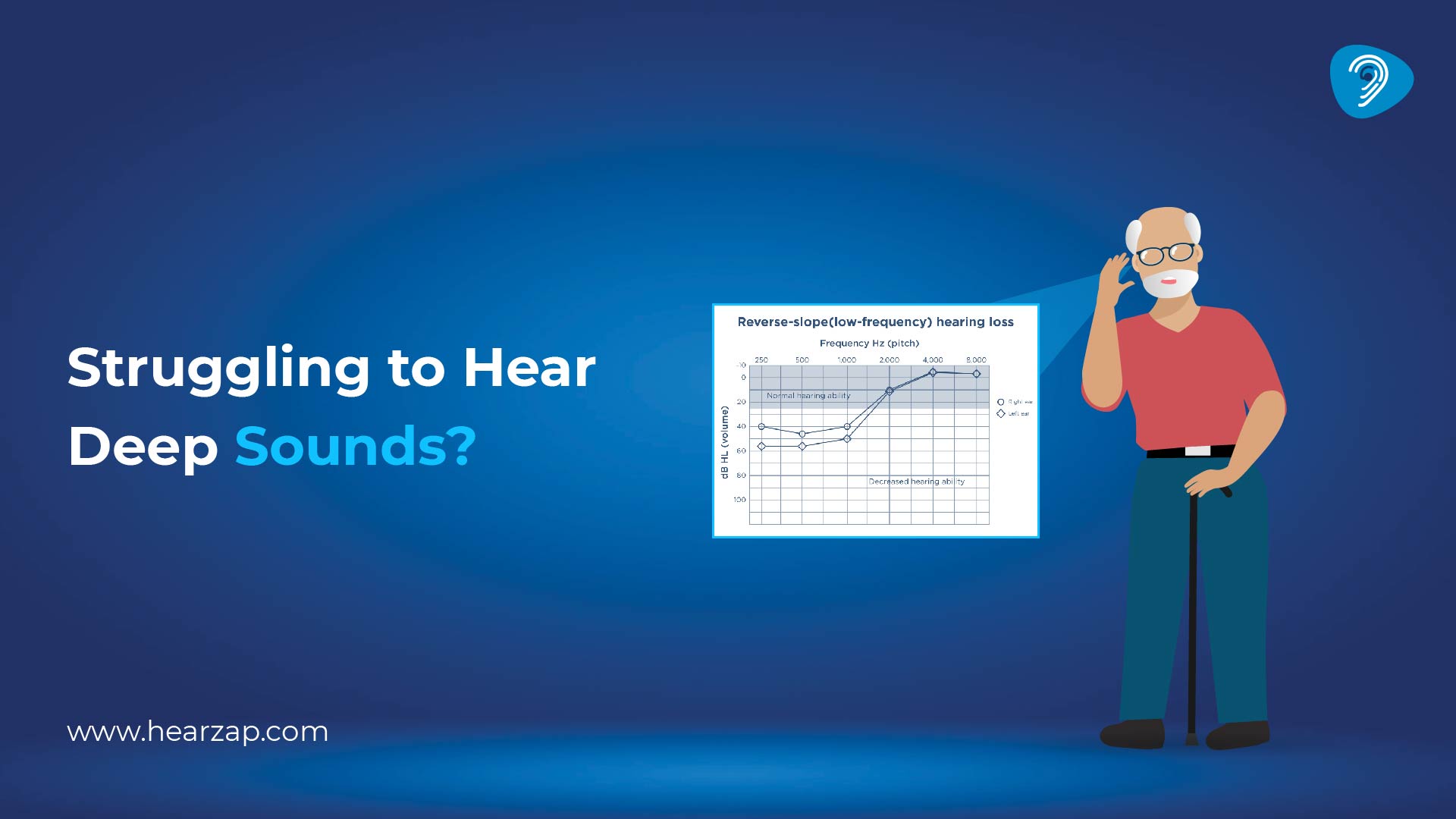
Reverse-slope hearing loss is a less common pattern where low frequencies (deep sounds) are reduced more than high frequencies. On a hearing chart, the line slopes “up” as pitches get higher, hence the name. You may also hear it called low-frequency hearing loss.
Because low pitches carry power and “fullness” in speech, missing them can make voices sound thin or unclear, even if you catch some consonants. This is different from the more typical age-related pattern, which often affects high pitches first.
How Does Reverse Slope Hearing Loss Affect Hearing?
Low-frequency sound carries the rhythm and weight of speech: the hum of vowels, the tone of a speaker, and the bass in music. When those parts are reduced, your brain works harder to fill gaps. Over time, this extra effort can feel tiring, especially in complex listening environments.
Common ways it shows up include:
- Men’s voices sounding softer than women’s voices
- Difficulty tracking a conversation in a café, wedding hall, or open-plan office
- Speech that feels unclear, as if people are speaking from behind a mask
- More stress on phone calls and group chats, where context changes quickly
If you want an overview of patterns, check out our resource Types of Hearing Loss, which can help you compare what “reverse slope” means against other hearing profiles.
A useful way to picture it: consonants like “s”, “t”, and “k” sit higher in pitch, while vowels like “a” and “o” carry more low-frequency energy. If the vowel “body” is reduced, speech can sound like you are hearing fragments rather than a full sentence. That is why you might manage one-to-one chats at home but struggle when the environment is layered with other sounds.
In Indian day-to-day life, the problem often pops up during:
- Announcements on the metro or at railway stations
- Conversations in a moving car or auto-rickshaw
- Religious gatherings where loudspeakers echo
- Family dinners where several people speak at once
Early identification matters because the brain adapts to what it hears. When the right sounds are restored sooner, it is easier to rebuild confidence and avoid the social withdrawal that many people associate with hearing loss.
When you trial devices, give your brain weeks to settle into the sound.
Symptoms of Reverse Slope Hearing Loss
Difficulty Hearing Low-Pitched Sounds
Deep voices can lose clarity, even when the volume seems adequate. You might hear the sound but miss the meaning, like you are catching the outline of words without the details.
Trouble Following Conversations
This is often most obvious in noise. Background sounds (fans, traffic, multiple speakers) compete with the low-frequency cues your brain needs to separate speech from clutter.
Feeling That People Are Mumbling
Many people describe it exactly this way: “Everyone’s mumbling.” In reality, some speech pieces are reaching you, but key parts are faint, so the whole message feels incomplete.
Ear Fullness or Tinnitus
Some people also notice a blocked-ear sensation or ringing/buzzing, also known as tinnitus. If this happens, note when it started, whether it comes and goes, and if it is linked with dizziness or a recent infection.
Reverse Slope Hearing Loss Causes
Low-frequency loss can appear for different reasons, and the cause influences the next steps. Common possibilities include:
- Genetic factors (a family pattern of low-frequency loss)
- Ménière’s disease, which may include fluctuating hearing, ear pressure, and vertigo
- Inner-ear structural differences that affect how sound is processed
- Viral infections that inflame or disturb the inner ear
- Sudden sensorineural hearing changes that need urgent attention
If your hearing changes suddenly (especially in one ear), treat it as time-sensitive and seek an ENT review quickly.
How is Reverse Slope Hearing Loss Diagnosed?
Diagnosis starts with a detailed history: when you noticed changes, which situations are hardest, and whether you have dizziness, ear pressure, or a recent illness. Then comes testing.
A proper hearing test usually includes pure-tone audiometry (to measure thresholds across pitches), speech testing (to see how well you understand words), and checks that rule out middle-ear issues. Your audiogram may show poorer thresholds at low frequencies, improving as pitch increases.
An audiologist can interpret the pattern, and an ENT specialist may be involved if there are medical red flags such as vertigo, sudden loss, or one-sided symptoms.
reverse-slope hearing loss treatment
There is no one-size-fits-all plan because management depends on the cause and the extent to which the pattern affects your routine. Many people do well with a combination of technology and listening strategies.
Hearing Aids
Hearing aids can help, but they need careful tuning. Low-frequency amplification must be balanced so it boosts clarity without making your own voice feel boomy. Modern digital devices allow precise adjustments, and directional microphones can help reduce noise.
If you prefer to explore options from home, you can buy hearing aids online and still arrange professional programming and follow-up for the best results.
Medical Treatment
Medical care depends on the underlying issue. For example, Ménière’s disease may involve diet changes, medicines to manage fluid balance, or other ENT-led options. If the loss is sudden, timely medical management can be critical. Don’t self-treat; get evaluated so the plan matches the diagnosis.
Hearing Therapy & Monitoring
Hearing support is not just about devices. Regular reviews help track stability or progression. Some people benefit from auditory training and communication coaching, especially if work involves frequent calls or meetings. This is also where you learn practical ways to reduce strain when hearing loss affects daily life, for you and for the people around you.
best hearing aid for reverse slope hearing loss
The “best” device is the one that matches your audiogram, lifestyle, and comfort. For reverse-slope patterns, look for:
- Advanced frequency shaping for low pitches
- Strong noise reduction for busy Indian environments
- Feedback control to prevent whistling when the bass is boosted
- A fit that supports natural sound (often with custom settings, not generic presets)
Many users also ask about battery convenience. If you commute or travel often, the best rechargeable hearing aids can be a practical starting point. For deeper comparison features, check out our “Hearing Aid Buying Guide” and shortlist models before a trial.
Can Reverse Slope Hearing Loss Get Worse?
It depends. Some cases remain stable for years, while others fluctuate or progress gradually, especially when linked with inner-ear conditions. The most useful habit is periodic testing to catch changes early and adjust settings.
Watch for:
- Sudden drops in one ear
- New dizziness or spinning sensations
- Noticeable changes in ear pressure or sound distortion
If you notice any of these, book an appointment with a qualified professional rather than waiting it out.
Tips to Manage Reverse Slope Hearing Loss
Small changes can make a big difference:
- Reduce background noise where possible (turn down TV volume, move away from speakers at events)
- Face the person speaking and use good lighting for lip cues
- Ask people to speak clearly and slightly slower, not louder
- Use well-fitted devices and attend regular check-ups for reprogramming
- In group settings, choose a seat with your better ear towards the conversation
Also, share your needs with family. A simple “I hear you better when I can see your face” can prevent frustration on both sides.
Why Choose Hearzap for Hearing Care?
If you are looking for structured support, Hearzap offers:
- Advanced hearing assessments and detailed counselling
- Experienced audiologists who tailor settings to your listening goals
- Personalised hearing aid fitting and fine-tuning over follow-ups
- Access to the latest digital hearing technology
- Multiple centres across India, making ongoing care easier when you travel or relocate
The advantage of a multi-city network is continuity. Your records and settings can be reviewed consistently, even if you move between cities.
FAQs
What is reverse slope hearing loss?
It is a pattern in which low-frequency (deep) sounds are affected more than high-frequency sounds, often making deep voices and speech “fullness” harder to detect.
What causes reverse slope hearing loss?
Possible reasons include genetics, inner-ear conditions such as Ménière’s disease, viral infections, structural differences in the inner ear, or sudden sensorineural changes.
Can hearing aids help reverse slope hearing loss?
Yes. Properly programmed devices can improve access to low-frequency speech cues and reduce listening effort, especially when combined with noise management features.
What are the symptoms of reverse slope hearing loss?
Common signs include difficulty with deep voices, trouble understanding speech in noise, feeling that people mumble, and sometimes ear pressure or ringing.
Is reverse slope hearing loss rare?
It is less common than high-frequency loss, so it is often missed early. Testing is the quickest way to confirm the pattern.
Can reverse slope hearing loss be cured?
Some causes are treatable or stabilised medically, but many cases are managed rather than “cured”. The right diagnosis, timely care, and well-tuned support can significantly improve communication.
Related Blogs
Functional vs Organic Hearing Loss: Key Differences You Should Know
The Link Between Hearing Loss and Mental Health
Contact us
We are here for all your hearing needs, from hearing tests to hearing aids. Fill out the form below, and we will give you a call soon.
Recent Blogs
By None | Sept. 16, 2026
By None | Sept. 9, 2026
By None | Sept. 7, 2026
By None | Sept. 5, 2026
By None | Sept. 4, 2026