Generic
Balloon Eustachian Tuboplasty
By Sri Sai Koti Chennupati | July 23, 2026
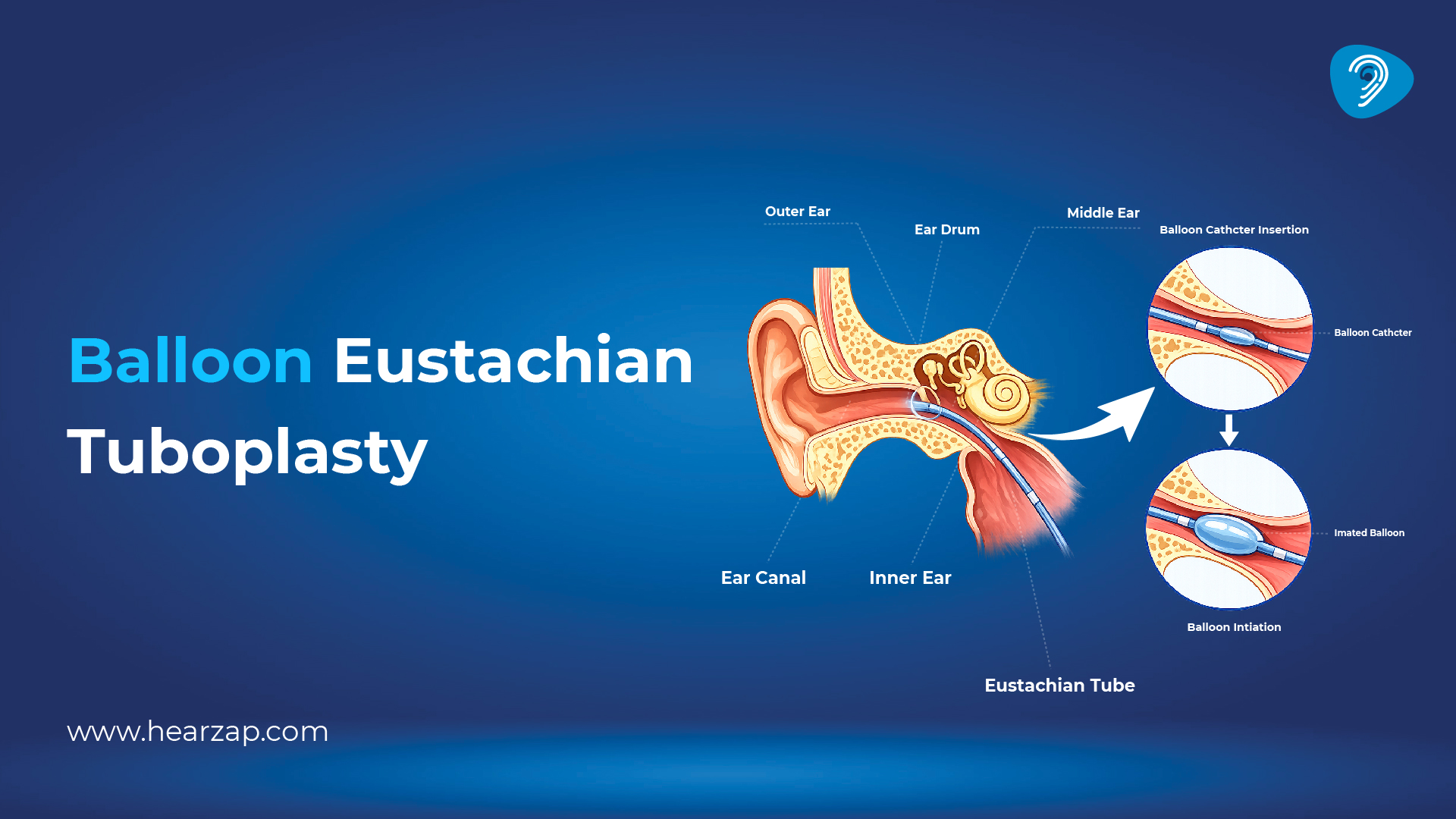
Balloon eustachian tuboplasty is no longer the obscure procedure it once was in otolaryngology circles. For individuals whose Eustachian tube dysfunction simply refuses to settle despite a genuine, well-documented trial of conservative management, balloon dilation has become a legitimate next step rather than a last resort. If you are dealing with persistent aural fullness, hypoacusis, or otitis media that keeps recurring no matter what you try, it helps to understand what is actually going wrong in the tube itself before deciding whether this procedure is worth pursuing with your specialist.
Eustachian Tube Physiology and Dysfunction
The Eustachian tube runs between the middle ear cleft and the nasopharynx, and it earns its keep in three ways: equalising pressure across the tympanic membrane, clearing mucus through ciliary action, and shielding the middle ear from nasopharyngeal secretions and pressure surges. When it stops opening properly during swallowing or yawning, the result is what clinicians label Eustachian tube dysfunction, and the presentation is rarely subtle. Individuals commonly report aural fullness, otalgia, intermittent tinnitus, and in some cases autophony, along with conductive hearing changes driven by negative middle ear pressure or effusion.
The aetiology is frequently multifactorial. Allergic rhinitis, chronic rhinosinusitis, adenoid hypertrophy, and mucosal oedema at the torus tubarius are commonly implicated. First-line management typically involves intranasal corticosteroids, antihistamines when an allergic component is suspected, and autoinflation techniques such as the Valsalva or Toynbee manoeuvre. A subset of patients, however, remains symptomatic despite a well-documented trial of medical therapy spanning several weeks to months. It is this cohort for whom balloon dilation is generally considered.
Procedural Technique
The procedure, often referred to interchangeably as eustachian tube balloon dilation, applies principles adapted from vascular angioplasty to the cartilaginous portion of the Eustachian tube. Under endoscopic guidance, a semi-rigid guide catheter is introduced transnasally and positioned at the pharyngeal orifice of the tube. A balloon catheter is then advanced through the guide sheath into the cartilaginous lumen and inflated to a standardised pressure, typically maintained for approximately two minutes.
This sustained inflation produces controlled microfracture of the surrounding cartilaginous framework and compresses hypertrophic or inflamed mucosa lining the tube. Over the subsequent weeks, tissue remodelling occurs, which in most cases results in improved luminal patency and more efficient tubal function. The balloon is then deflated and withdrawn, with the contralateral side treated in the same sitting if bilateral pathology is present.
Balloon sinuplasty for eustachian tube dysfunction is a term some patients use interchangeably, though this is technically inaccurate. Sinuplasty deals with obstruction at the sinus ostia in cases of chronic rhinosinusitis, while tuboplasty is directed specifically at the tubal orifice. The two can certainly be performed in the same sitting when a patient presents with combined sinonasal and tubal pathology, but the anatomical targets and the clinical reasoning behind each remain distinct.
Patient Selection
Not every patient with intermittent aural fullness needs to be on the table for this. Candidacy is usually established through a fairly structured diagnostic workup, which includes:
- A comprehensive otologic and rhinologic history, covering how long symptoms have persisted and how they affect daily function
- Nasal endoscopy to directly visualise the tubal orifice and check for mucosal disease
- Tympanometry to assess middle ear pressure and tympanic membrane compliance
- Confirmation of an adequate, well-documented trial of medical therapy that has not produced symptomatic resolution
Suitable candidates generally include those with chronic obstructive Eustachian tube dysfunction, recurrent otitis media with effusion, or barotrauma linked to air travel or diving. Patulous Eustachian tube, a distinct condition characterised by abnormal tubal patency rather than obstruction, is a contraindication, as dilation would not address the underlying mechanism and may worsen symptoms.
Does Eustachian Tube Balloon Dilation Hurt
This remains among the most common questions raised during preoperative consultation. The degree of discomfort experienced depends largely on the anaesthetic approach selected.
Under general anaesthesia, which is the standard approach when the procedure is combined with concurrent sinus surgery, patients are fully unconscious and feel nothing during the intervention itself. Under local anaesthesia with conscious sedation, some patients notice transient pressure or fullness as the catheter is advanced, though genuine pain is uncommon given adequate topical anaesthesia of the nasal mucosa beforehand.
Postoperative discomfort tends to be mild and self-limiting. Findings commonly reported include:
- Nasal congestion or oedema lasting several days
- Mild pharyngeal or nasal irritation
- Blood-tinged nasal discharge, usually resolving within 24 to 48 hours
- Transient fluctuation in hearing as mucosal oedema settles
Significant pain postoperatively is atypical, and most patients find the recovery far more tolerable than they expected going in. Simple analgesics are generally enough to manage whatever discomfort remains.
Postoperative Course
Recovery after balloon eustachian tuboplasty is comparatively quick when set against more invasive otologic procedures. Most patients are back to routine activity within two to three days, though anything involving significant pressure change, such as flying, diving, or strenuous exertion, is usually held off for one to two weeks.
Symptomatic improvement is not always immediate. Some patients notice relief early on, while others find it builds gradually over four to six weeks as mucosal healing and tissue remodelling continue. Postoperative follow-up gives the surgeon a chance to confirm healing is on track and assess whether tubal patency has genuinely improved.
Cost Considerations
Eustachian tube balloon dilation cost varies quite a bit depending on geographic region, whether one or both sides are treated, the treatment setting, and whether it is performed alongside additional procedures such as functional endoscopic sinus surgery. Office-based procedures performed under local anaesthesia are generally less costly than those performed in a hospital or ambulatory surgical setting under general anaesthesia, given the additional facility and anaesthesia fees involved.
Insurance coverage is similarly variable. Some payers classify the procedure as medically necessary once conservative management has been adequately documented as unsuccessful, while others continue to regard it as investigational, requiring prior authorisation. Patients are advised to:
- Confirm coverage directly with their insurance provider prior to scheduling
- Request an itemised cost estimate, inclusive of facility and anaesthesia fees
- Clarify whether the procedure will be billed as an in-office or hospital-based surgical case, as this materially affects total expenditure
Risks and Limitations
As with any interventional procedure, balloon eustachian tuboplasty carries inherent risk, though reported complication rates remain low in the existing literature. Potential complications include epistaxis, transient vertigo, and, in rare instances, injury to adjacent structures such as the internal carotid artery given its proximity to the tubal lumen. Symptom recurrence is also possible, and a subset of patients may require repeat dilation. Long-term outcome data, while expanding, remains less robust than that available for more established otologic interventions.
Terminology Clarification
While researching this topic, patients will come across several closely related terms such as eustachian balloon, eustachian tube balloon, and balloon eustachian tuboplasty. These essentially describe the same procedure, and which term gets used tends to come down to a particular surgeon's preference or regional convention rather than any real difference in the clinical approach.
Clinical Summary
For people whose day-to-day life has been genuinely disrupted by chronic Eustachian tube dysfunction, despite having given conservative therapy a fair and adequate trial, balloon dilation offers a minimally invasive option that is increasingly backed by clinical evidence. That said, it is not the right fit for every individual, and a proper diagnostic evaluation should always precede the decision to proceed. A frank conversation with an otolaryngologist about candidacy, likely outcomes, associated outcomes, associated costs, and realistic recovery expectations remains the appropriate first step toward an informed treatment decision.
FAQ’s
Q: Is balloon Eustachian tuboplasty permanent?
A: It can provide long-term relief, though results vary by individual.
Q: Does balloon Eustachian tuboplasty hurt?
A: The procedure is usually painless as it is performed under anaesthesia.
Q: How successful is Eustachian tube balloon surgery?
A: It has a high success rate in improving Eustachian tube function and relieving symptoms.
Q: How much does balloon tuboplasty cost?
A: The cost varies depending on the hospital, surgeon, and your treatment needs.

Sri Sai Koti Chennupati
Head of Learning and Development
With a Master's qualification in Audiology and Speech-Language Pathology and more than 18 years of clinical practice, I am devoted to providing the highest standard of diagnostic and rehabilitative care in hearing and communication health.
Related Blogs
Waardenburg Syndrome

Electrocochleography

Telemedicine: The Future of Healthcare Delivery

Common Reasons for Ear Pain in Adults: Causes, Symptoms & Treatment

How Cold and Flu Affect Your Ears
Ossiculoplasty: A Complete Guide to Middle Ear Reconstruction

What Is Selective Hearing? Myth or Medical Condition?
Contact us
We are here for all your hearing needs, from hearing tests to hearing aids. Fill out the form below, and we will give you a call soon.
Recent Blogs
By None | Sept. 7, 2026
By None | Sept. 5, 2026
By None | Sept. 4, 2026
By None | Sept. 2, 2026
By None | Sept. 1, 2026