HEARING TEST
A Complete Guide to Tuning Fork Tests for Hearing Assessment
By Team Hearzap | July 27, 2026
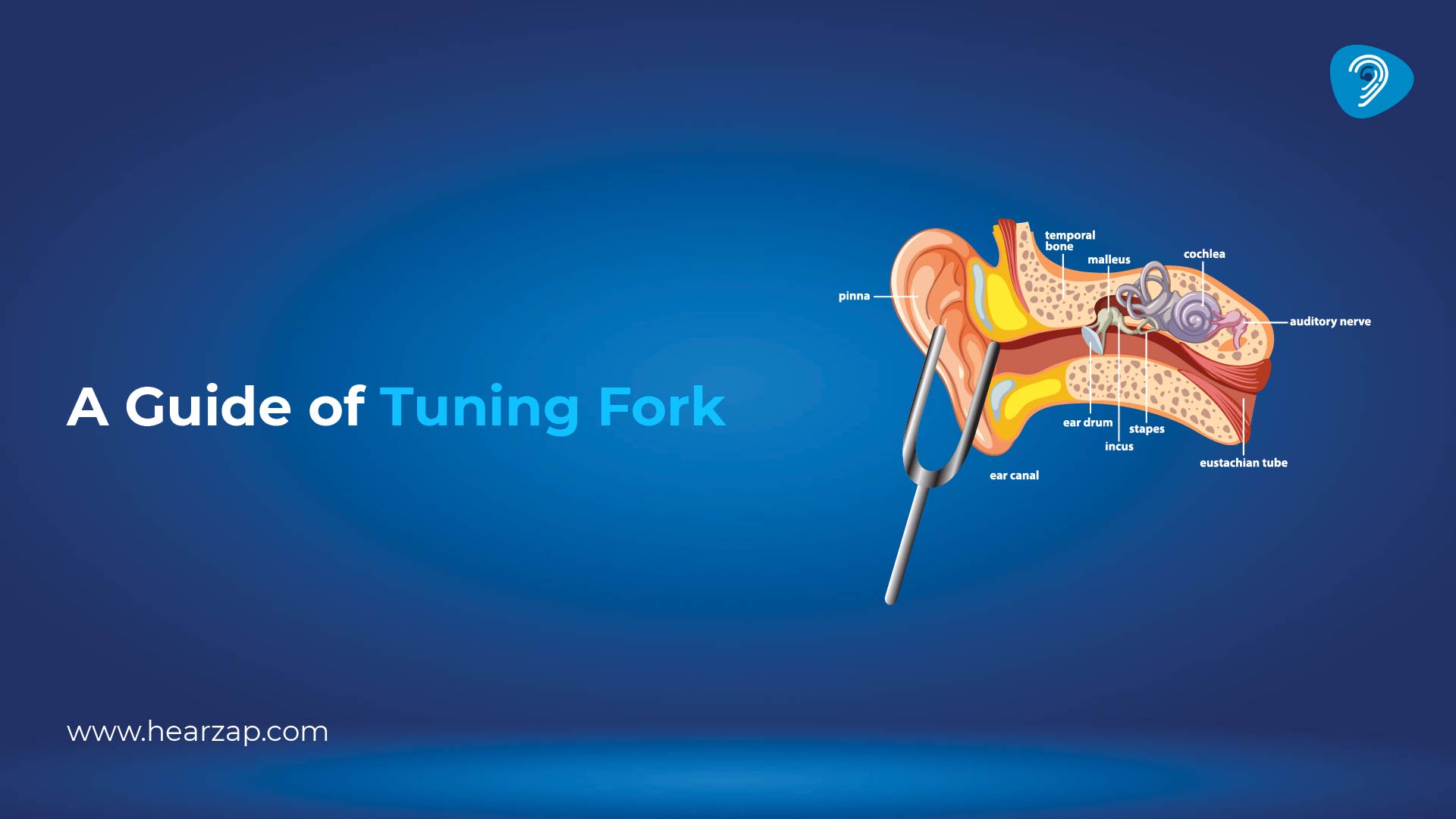
A tuning fork may look basic, but it gives useful first clues. The Tuning Fork test helps a healthcare professional check how sound travels through air and bone. It is quick, painless and often used before detailed audiology tests. For anyone noticing muffled speech or blocked ears, this guide explains what the test shows and when Hearzap’s evaluation can help identify hearing loss early.
What Is a Tuning Fork Test?
A Tuning Fork test for hearing uses a vibrating fork to compare air conduction and bone conduction. Once struck gently, it produces a steady tone. The examiner places it near the ear, behind the ear, or on the forehead and asks where sound is heard better.
It is performed when a person reports reduced hearing, blocked sensation, tinnitus, sudden change in one ear, or difficulty following speech. The test is only an initial screening step. A complete hearing test may follow when symptoms continue.
Types of Tuning Fork Tests
The main Tuning Fork test types used in routine assessment are the Rinne and Weber tests. Both are simple, but they answer different questions and help separate outer- or middle-ear problems from inner-ear or nerve-related concerns.
Rinne Test Tuning Fork
The Rinne Test Tuning Fork compares air conduction with bone conduction in one ear at a time. First, the vibrating fork is placed on the mastoid bone behind the ear. When the tone fades, it is moved beside the ear canal.
In normal hearing, air conduction is heard longer. When bone conduction is heard longer, it suggests a conductive pattern, often linked to wax, fluid, eardrum changes or middle-ear trouble.
Weber Tuning Fork Test
The Weber Tuning Fork Test checks whether sound is heard equally in both ears. The vibrating fork is placed on the centre of the forehead or head. The person says whether the tone is central, louder in the right ear, or louder in the left ear.
If the sound stays in the middle, hearing may be normal or similar on both sides. If it moves to one side, interpretation matters. In outer- or middle-ear blockage, sound may seem louder in the affected ear. In inner-ear or nerve-related difficulty, it may be louder in the better ear.
Weber Test vs Rinne Test
The Weber Test Tuning Fork and Rinne test work best when viewed together.
Weber may show that sound shifts to one ear, while Rinne helps explain whether that shift suggests Conductive Hearing Loss or another pattern. This view reduces guesswork and supports further testing.
What Do Tuning Fork Test Results Mean?
A normal Rinne result means air conduction is better than bone conduction. A normal Weber result means sound is heard in the centre without shifting. These findings do not always rule out mild or early changes.
Abnormal findings point in different directions. If Rinne is negative in one ear and Weber shifts to the same side, a conductive issue is likely. If Rinne stays positive but Weber shifts to the opposite ear, inner-ear or nerve-related reduced hearing may be suspected.
Results also depend on technique, room noise, ear blockage and whether both ears are affected. A tuning fork result is a clue, not a final diagnosis. Audiometry, speech testing and middle-ear checks give a clearer picture.
Limitations of Tuning Fork Tests
Tuning fork tests are useful because they are quick, simple and low-cost. However, they cannot measure the exact degree of reduced hearing. They test limited frequencies and may miss mild, mixed or both-sided changes. Assessment is important for treatment decisions.
A Pure Tone Audiometry Test measures the quietest sounds a person can hear across selected frequencies. A Tympanometry Test checks middle-ear movement and can help identify fluid, pressure changes or eardrum stiffness. Speech tests show how clearly a person understands words in daily situations.
When Should You Get a Professional Hearing Test?
Do not wait for hearing trouble to become severe. Many people first notice small changes at home, at work, while travelling, or during phone calls. Early assessment is useful when communication starts feeling tiring.
Watch for these signs of hearing loss:
- Asking people to repeat often.
- Increasing TV or phone volume.
- Missing doorbells, alarms or soft voices.
- Hearing better in one ear.
- Ringing, buzzing or fullness.
- Dizziness with ear symptoms.
- Repeated ear infections or discharge.
Age-related changes, noise exposure, diabetes, earwax, infections and long headphone use can affect hearing. A timely test helps separate temporary concerns from issues needing care.
Hearzap Hearing Assessment Services
Hearzap offers comprehensive hearing assessments supported by experienced audiologists, advanced diagnostic equipment and personalised guidance. The process can include case history, ear health review, audiometry, speech-based checks and advice on the next step. The aim is to understand how well you hear sounds and speech in real life.
After evaluation, Hearzap can guide users who wish to buy hearing aids online with options matched to their hearing profile and lifestyle. For quick support, book an appointment with our expert for a professional evaluation without delay.
Final Thoughts
Tuning fork tests give quick information without complex equipment. Still, hearing should not be judged from one small test alone. If conversations feel unclear or ear symptoms return, a complete assessment supports clearer decisions.
FAQs
What is the tuning fork test for hearing?
It is a quick bedside method that compares air and bone pathways to suggest the likely site of hearing loss. The Weber checks localisation; the Rinne compares air and bone on each side.
What tuning fork to use for hearing assessment?
A 512 Hz fork is preferred because it lasts long enough to compare air and bone and is less likely to be felt as vibration rather than heard.
How to use a tuning fork for hearing tests?
Strike it gently on a soft pad, place midline for Weber, then mastoid and beside the ear for Rinne, asking the person to report where and when the tone is heard.
What’s the difference between Rinne & Weber tests?
Weber evaluates side-to-side localisation; Rinne compares air versus bone on each ear. Used together, they point towards conductive or inner ear causes.
How do you use a tuning fork step by step?
Prepare a quiet space, explain the test, use the Weber first, then Rinne on both sides, and record Weber lateralisation plus each ear’s Rinne as positive or negative, noting any asymmetry.
Related Blogs
Online Hearing Test vs Audiologist Test: Which Is Better?
Hearing Test at Home: Easy, Accurate & Hassle-Free with Hearzap
Contact us
We are here for all your hearing needs, from hearing tests to hearing aids. Fill out the form below, and we will give you a call soon.
Recent Blogs
By None | Sept. 23, 2026
By None | Sept. 21, 2026
By None | Sept. 16, 2026
By None | Sept. 9, 2026
By None | Sept. 7, 2026