Generic
Superior Semicircular Canal Dehiscence:
By Sri Sai Koti Chennupati | May 16, 2026
There's a particular kind of misery that comes with being able to hear your own eyeballs move.
It sounds like something out of a science fiction story. But for people living with superior semicircular canal dehiscence, this is an actual, documented symptom. The sound of their own heartbeat. Their footsteps booming inside their head. Their voice reverberating so loudly internally that speaking feels unbearable. Food crunching at a volume that seems completely disproportionate to what's actually happening.
If any of this sounds familiar, or if you've been told your ears are perfectly fine despite experiencing all manner of strange symptoms, read on.
What Is Superior Semicircular Canal Dehiscence?
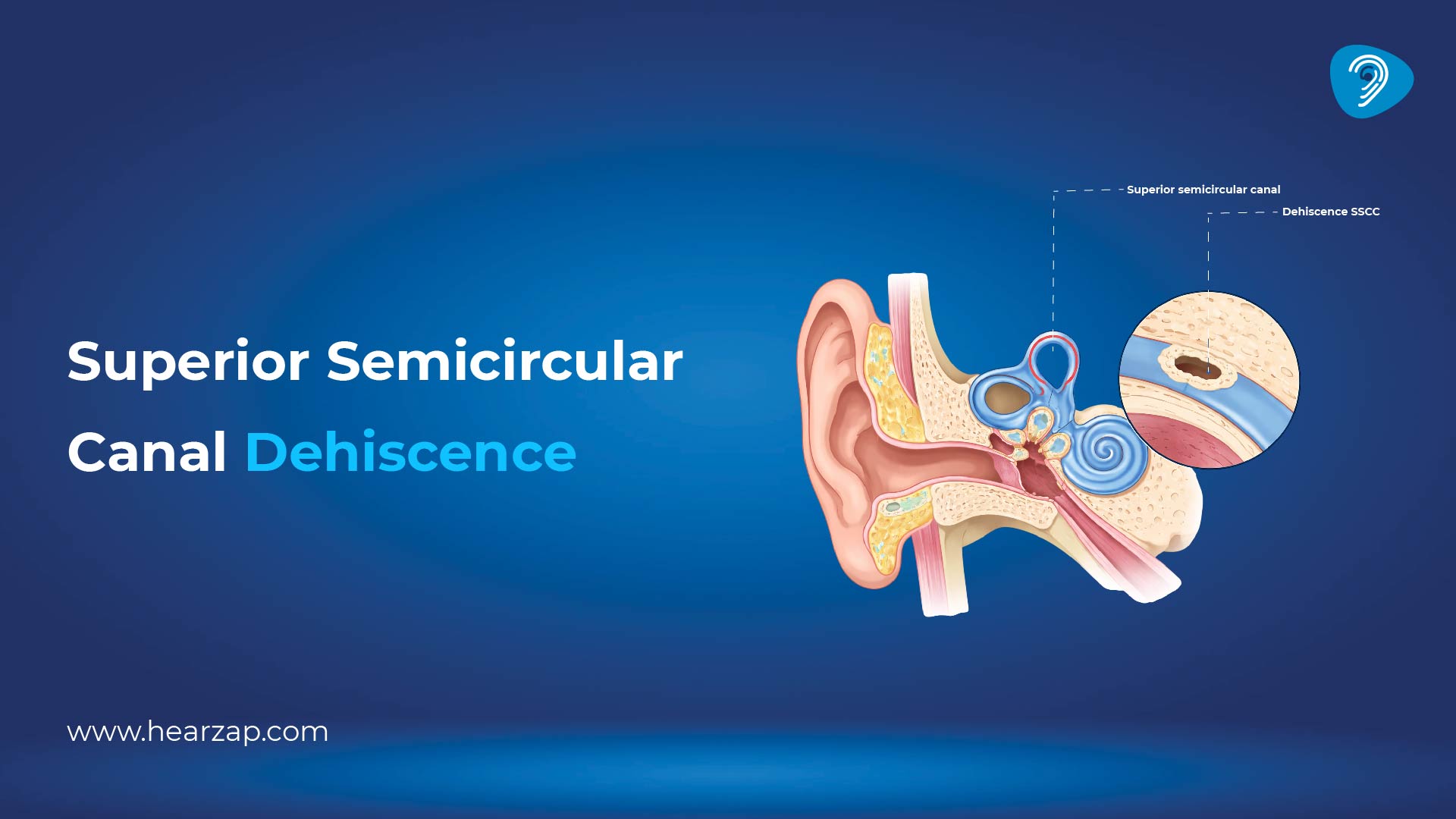
Inside your inner ear, nestled within some of the densest bone in the human body, sit three fluid-filled loops called the semicircular canals. These canals are responsible for detecting rotational movement and feeding that information to your brain so you can maintain balance. The superior semicircular canal sits at the top, and in most people it is completely encased in solid bone.
In superior semicircular canal dehiscence syndrome, that bony covering over the superior canal is missing or abnormally thin, creating a gap or hole where solid bone should be. This gap opens a pathway between the inner ear and the space inside the skull. The result is a third mobile window into the inner ear, and this is where the problem begins.
The inner ear normally has two pressure points: the oval window and the round window. Sound enters through one and pressure equalises through the other. When a third opening appears through the dehiscence, sound energy and pressure that should be driving the cochlea for hearing instead leaks out through this gap. At the same time, sounds generated inside the body, heartbeat, breathing, footsteps, voice, joint movement, find a new and abnormally direct pathway into the inner ear, arriving at an amplified and distorted volume.
It was first formally described in 1998 by otolaryngologist Dr. Lloyd Minor, which means this is a relatively recently recognised condition. Many patients spent years or even decades being told nothing was wrong with their ears before the diagnosis even existed.
What Does It Actually Feel Like?
The symptoms of superior semicircular canal dehiscence syndrome are genuinely unusual, and that's part of why it gets missed so often.
- Autophony, hearing your own voice, breathing, and bodily sounds at an amplified, often overwhelming volume
- Pulsatile tinnitus, the sound of your own heartbeat thudding inside the ear
- Tullio phenomenon, vertigo or eye movement triggered by loud sounds. A sudden noise, a loud concert, even someone shouting nearby can cause a spinning sensation
- Valsalva-induced vertigo, dizziness triggered by bearing down, straining, coughing, or blowing your nose
- Brain fog and chronic fatigue from the constant neurological effort of filtering out all the internal noise
- Hearing loss, which can feel confusing given how loudly internal sounds are perceived
The combination of hearing too much internally while struggling to hear externally is deeply disorienting. Many patients describe feeling permanently disconnected from the world around them.
Superior Semicircular Canal Dehiscence Audiogram
Because the symptoms can overlap with so many other conditions, getting to the right diagnosis often involves piecing together several tests. The superior semicircular canal dehiscence audiogram has some specific and recognisable features.
The classic finding is a low-frequency conductive hearing loss, meaning the hearing test suggests a middle ear problem even though the middle ear bones are perfectly normal. This happens because of the third window effect, where sound energy leaks out through the dehiscence instead of properly driving the cochlea.
Alongside this, bone conduction thresholds may appear artificially enhanced, sometimes measuring better than normal. This is unusual and distinctive. It happens because internal sounds are conducted so efficiently through the dehiscent canal that they register abnormally well on bone conduction testing.
Vestibular evoked myogenic potential testing, known as VEMP testing, is particularly useful here. Patients with this condition typically show abnormally low thresholds on cervical VEMP testing, meaning the inner ear responds to sound stimulation at much lower volumes than it should. This finding strongly supports the diagnosis and helps distinguish it from other causes of conductive hearing loss.
Superior Semicircular Canal Dehiscence Radiology: Seeing the Gap
Audiological testing points toward the diagnosis, but imaging confirms it. Superior semicircular canal dehiscence radiology relies on high resolution CT scanning of the temporal bone, and the imaging protocol matters enormously here.
Standard CT cuts are often not thin enough to reliably identify the dehiscence. The scan needs to be reconstructed in the plane of the superior canal, a specific reformatted view that runs along the axis of the canal itself. On correctly reformatted images, the gap in the bony roof of the superior canal is visible as an absence of the normal bony covering. In some cases the bone is present but extremely thin, which can be just as clinically significant.
False positives are a known issue with CT imaging in this condition, meaning the scan can sometimes suggest a gap that isn't truly there due to the limitations of resolution. Clinical correlation with symptoms and audiological findings is therefore essential. A CT finding alone, without supporting symptoms and test results, is not sufficient for diagnosis.
MRI plays a limited role but may occasionally provide additional information, particularly when other inner ear pathology needs to be ruled out.
Superior Semicircular Canal Dehiscence Hearing Loss: Understanding the Pattern
Superior semicircular canal dehiscence hearing loss confuses both patients and sometimes clinicians because it doesn't follow the usual rules. Most people with this condition can hear external sounds reasonably well at moderate to high volumes, yet they fail hearing tests due to low-frequency conductive thresholds. Meanwhile they're overwhelmed by internal sounds that nobody else can hear.
The explanation sits in the third window. High energy internal sounds travel efficiently through bone and fluid directly into the inner ear through the dehiscent gap, arriving loudly and clearly. External airborne sounds, however, lose energy through that same gap rather than efficiently reaching the cochlea, creating a measurable conductive loss.
This pattern is important to recognise because it can easily be mistaken for otosclerosis or other middle ear conditions. The distinguishing features are the very specific symptom profile, the VEMP findings, and the CT confirmation.
Living With Superior Semicircular Canal Dehiscence
Living with superior semicircular canal dehiscence before diagnosis is often described as one of the most isolating experiences patients go through. Because the symptoms are so unusual, and because early examination of the ears appears completely normal, many patients are told it's anxiety, stress, or that they are simply hypersensitive to sound. Being dismissed when your own body is generating an overwhelming internal soundscape is genuinely demoralising.
Post-diagnosis, management depends on the severity of symptoms. For milder cases, conservative approaches help considerably:
- Avoiding activities that trigger symptoms, particularly anything involving straining or pressure changes
- Using earplugs in loud environments to reduce Tullio phenomenon triggers
- Vestibular rehabilitation therapy to help the brain compensate for balance disturbances
- Treating any underlying conditions like raised intracranial pressure, which may be contributing
For patients whose symptoms significantly affect daily life and don't respond to conservative management, surgery is available and can be very effective. The procedure involves either plugging the dehiscent canal to eliminate the third window effect, or resurfacing the thinned bone with a patch. Both approaches aim to restore the normal closed hydraulic environment of the inner ear. Outcomes in carefully selected patients are generally positive, though surgery in this region carries inherent risks that require thorough discussion with an experienced surgeon.
The Bottom Line
Superior semicircular canal dehiscence is a condition that hides behind normal-looking ears and symptoms strange enough to be dismissed as psychological. But it has a real structural cause, a recognisable pattern across audiological testing and imaging, and genuine treatment options.
If you've spent years being told your ears are fine while experiencing vertigo triggered by loud sounds, your own voice echoing inside your head, or unexplained low-frequency hearing loss, this diagnosis is worth asking about specifically. The gap in the bone is small. The impact on daily life is not.
FAQs
What causes superior semicircular canal dehiscence?
It is caused by a thinning or absence of bone over the superior semicircular canal of the inner ear.
What are the symptoms of superior semicircular canal dehiscence?
Symptoms include dizziness, sound sensitivity, hearing internal body sounds, and balance issues.
How do you treat superior semicircular canal dehiscence?
Treatment includes avoiding triggers, sound protection, or surgery in severe cases.
What are the diagnostic criteria for superior semicircular canal dehiscence?
Diagnosis involves symptoms, hearing tests, balance tests, and confirmation with CT imaging.
What does superior canal dehiscence syndrome sound like?
It can make everyday sounds seem unusually loud and amplify internal sounds like heartbeat or footsteps.

Sri Sai Koti Chennupati
Head of Learning and Development
With a Master's qualification in Audiology and Speech-Language Pathology and more than 18 years of clinical practice, I am devoted to providing the highest standard of diagnostic and rehabilitative care in hearing and communication health.
Related Blogs
Waardenburg Syndrome
Mastoidectomy: Procedure and Recovery
Ossiculoplasty: A Complete Guide to Middle Ear Reconstruction

What Happens if a Bug Goes Into Your Ear?

What are Ear Wax Guards?
Exostosis Ear: Causes, Symptoms, and Everything You Need to Know
Contact us
We are here for all your hearing needs, from hearing tests to hearing aids. Fill out the form below, and we will give you a call soon.
Recent Blogs
By None | Oct. 3, 2026
By None | Oct. 1, 2026
By None | Sept. 30, 2026
By None | Sept. 29, 2026
By None | Sept. 28, 2026