Generic
Bilateral Hearing Loss: Causes, Symptoms & Treatment
By Team Hearzap | Aug. 25, 2026
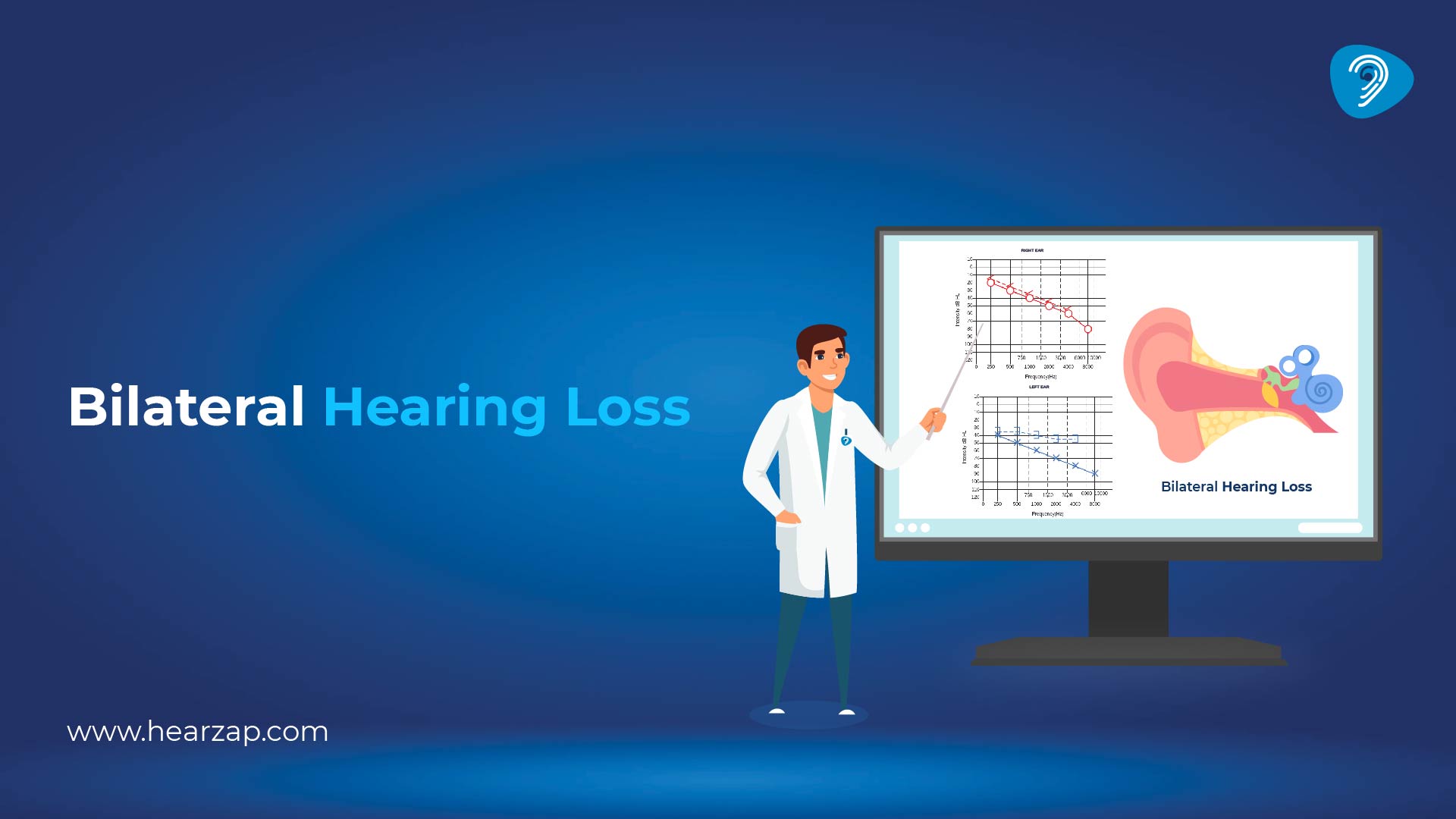
Hearing loss in both ears can quietly change the way everyday conversations, family moments, work meetings and even simple sounds are experienced. Some people notice it gradually, while others become aware of the problem after struggling to follow speech in busy places.
Bilateral hearing loss can have different causes and levels of severity, making timely assessment important for understanding the condition and finding the right support.
What Is Bilateral Hearing Loss?
Bilateral hearing loss is a condition in which a person has reduced hearing in both ears. The level of hearing difficulty may differ between ears and can range from mild to profound, developing either gradually over time or quite suddenly.
Types of Bilateral Hearing Loss
The type depends on where hearing is affected.
Bilateral Sensorineural Hearing Loss
Bilateral sensorineural hearing loss involves damage within the inner ear or auditory pathways. Ageing, noise exposure and some medical conditions may contribute. It is commonly permanent.
Bilateral Conductive Hearing Loss
Conductive loss occurs when sound cannot travel efficiently through the outer or middle ear. Earwax, fluid, infections or eardrum problems may be responsible. Some causes are treatable.
Common Causes of Bilateral Hearing Loss
Hearing loss in both ears can develop for several reasons, affecting people differently depending on age, health and exposure.
Common causes include:
- Ageing
- Prolonged loud noise exposure
- Genetic conditions
- Ear infections
- Certain ototoxic medicines
- Inner-ear or middle-ear disorders requiring assessment
In cases of severe inner-ear hearing loss, a cochlear implant may be considered as a hearing solution after specialist evaluation.
Symptoms of Bilateral Hearing Loss
Common signs include:
- Muffled speech
- Difficulty hearing in noise
- Asking for repetition
- Increasing device volume
- Listening fatigue
- Ringing or buzzing
How Bilateral Hearing Loss Is Diagnosed
Diagnosis usually begins with a discussion about hearing difficulties and ear health. An audiologist may then perform tests to understand the type and severity of hearing loss.
- Ear examination
- Pure-tone hearing test
- Speech understanding test
- Middle-ear assessment
Treatment Options for Bilateral Hearing Loss
Treatment varies by cause, ranging from medical care to rehabilitation.
Hearing Aids for Bilateral Hearing Loss
Hearing aids can improve access to speech and everyday sounds. When both ears have aidable loss, two devices may support balanced listening.
Cochlear Implants and Other Hearing Solutions
For severe and profound hearing loss where hearing aids provide limited benefit, cochlear implants may be considered after specialist evaluation. Other options may help.
When Should You See an Audiologist?
An audiologist should be consulted when hearing difficulties begin affecting conversations, work, learning or daily comfort. Early assessment can help identify the cause and suitable support.
- Sudden or rapidly worsening hearing loss
- Persistent dizziness, ear discharge or significant ear pain
Expert Hearing Care Services
Professional hearing care helps people understand their hearing condition and choose suitable solutions based on individual needs.
A qualified hearing-care clinic may provide:
- Detailed hearing assessments and counselling
- Hearing-aid selection and fitting
- Device adjustments, maintenance and regular follow-up care
Is Bilateral Hearing Loss Permanent?
Bilateral hearing loss is not always permanent. The outcome largely depends on its type and underlying cause.
- Conductive hearing loss may improve after appropriate treatment.
- Sensorineural hearing loss is usually permanent, but hearing devices can support clearer communication and everyday listening.
Bilateral Hearing Loss in Children Vs Adults
Bilateral hearing loss can affect people differently depending on their age and communication needs.
- Children may face difficulties with speech, language development, learning and social interaction.
- Adults may notice communication problems at work, home or social gatherings, making early assessment valuable.
Can Bilateral Hearing Loss Be Prevented?
Not every form of bilateral hearing loss can be prevented, particularly when genetics or ageing are involved. However, certain habits may help protect hearing.
- Limit exposure to excessive noise.
- Use hearing protection when needed.
- Seek timely treatment for persistent ear problems.
Living with Bilateral Hearing Loss: Daily Challenges and Tips
Daily communication can feel tiring when both ears are affected.
Helpful habits include:
- Reduce background noise.
- Face the speaker directly.
- Sit closer during conversations.
- Use suitable hearing support when recommended.
You may also buy hearing aids online after professional hearing assessment and guidance.
What Happens if Bilateral Hearing Loss Is Left Untreated?
Untreated hearing loss can gradually make everyday communication more difficult and tiring. It may affect confidence, social interaction, learning or workplace communication.
- Conversations may become harder to follow.
- Listening effort may increase.
- Communication challenges may become more noticeable over time.
If hearing difficulties are affecting daily life, it can be helpful to book an appointment with an audiologist for a proper hearing assessment and personalised guidance.
Bilateral Hearing Loss and Tinnitus: Is There a Connection?
Tinnitus and bilateral hearing loss can sometimes occur together. Tinnitus may sound like ringing, buzzing or humming even when no external sound is present.
- Hearing changes may influence sound perception.
- Persistent tinnitus should be discussed with an audiologist or hearing-care professional.
How to Choose the Right Hearing Aid for Bilateral Hearing Loss
Choosing a hearing aid involves more than selecting a particular device. The right option should match your hearing profile and everyday needs.
- Consider hearing-test results and ear health.
- Think about comfort and lifestyle.
- Professional fitting and follow-up help improve overall usability.
Frequently Asked Questions
1. What does a bilateral hearing loss mean?
It means hearing is reduced in both ears, though the degree may differ.
2. Can bilateral hearing loss be cured?
Some conductive causes can be treated. Permanent sensorineural loss is generally managed rather than cured.
3. Is bilateral hearing loss a disability?
It may be considered a disability when it limits communication or functioning, depending on applicable criteria.
4. What causes hearing loss in both ears?
Common causes include ageing, noise exposure, genetic factors, infections, certain medicines and inner-ear or middle-ear disorders.
5. Which hearing loss is permanent?
Sensorineural hearing loss is generally permanent because it involves damage within the inner ear or auditory pathways.


Contact us
We are here for all your hearing needs, from hearing tests to hearing aids. Fill out the form below, and we will give you a call soon.
Recent Blogs
By None | Sept. 21, 2026
By None | Sept. 16, 2026
By None | Sept. 9, 2026
By None | Sept. 7, 2026
By None | Sept. 5, 2026