HEARING TEST
Online Hearing Test vs Audiologist Test: Which Is Better?
By Team Hearzap | Aug. 1, 2026
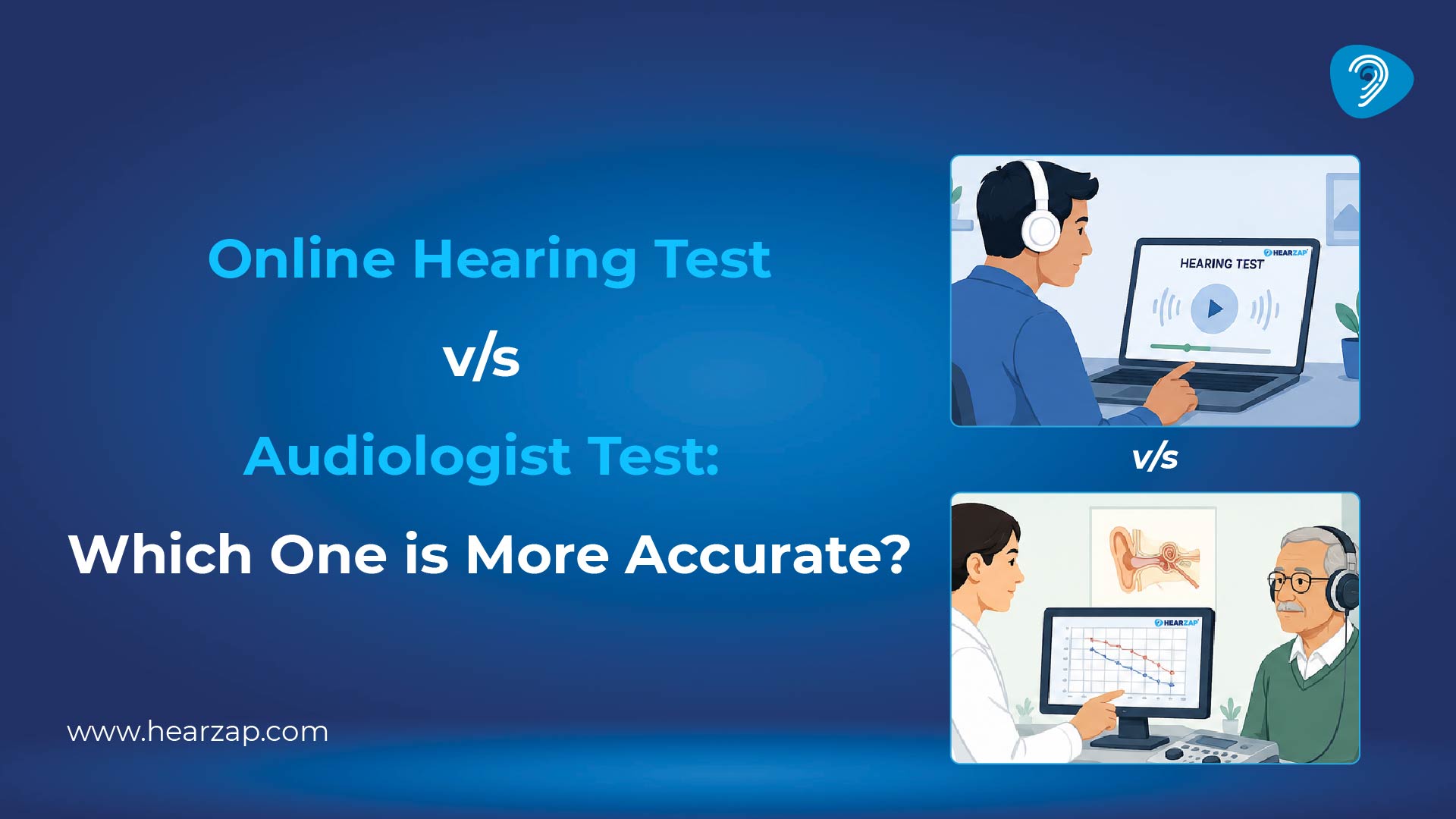
Hearing problems rarely arrive with clear signs. A parent may miss soft words, a working professional may struggle on calls, or a student may feel drained after group conversations. That is when many people compare an online hearing test with an audiologist hearing test. One offers quick direction from home. The other gives a complete understanding of hearing health. Hearzap helps people in India choose the right next step.
What Is an Online Hearing Test?
An online hearing test is a basic hearing screening taken through a phone, laptop, or tablet. It asks the user to wear earphones, sit quietly, set the volume, and respond to tones, words, or sound levels. Some also ask about daily listening.
The purpose is early awareness. It can show whether your hearing response seems within range or whether further testing may be useful. It is not a medical diagnosis, and it cannot explain the reason behind reduced hearing. Room noise, earphone quality, device volume, and attention can affect the result.
A hearing test online works well when someone wants a first check without delay. Hearzap’s Online Hearing Test can be a helpful starting point for people who are unsure, but any concern that continues should be checked professionally.
What Is an Audiologist Hearing Test?
An audiologist hearing test is a detailed hearing evaluation performed by a qualified hearing care professional. It does not depend only on whether you can hear a tone. It checks each ear across different frequencies, speech understanding, and whether the pattern suggests a problem that needs attention.
The audiologist may ask about ear pain, blocked-ear feeling, past infections, noise exposure, family history, medicines, work environment, and listening challenges. The test can include pure tone audiometry, speech testing, bone conduction testing, and middle-ear checks.
A professional evaluation gives an audiogram and a clear explanation. The result helps decide whether you need monitoring, medical referral, hearing protection, hearing aid support, or communication guidance. A hearing test done this way is useful when hearing changes affect comfort, confidence, safety, or relationships.
Online Hearing Test vs Audiologist Test: Key Differences
Both tests serve different purposes. Online screening asks: should I get my hearing checked properly? A professional assessment asks: what is happening, how much has changed, and what should I do next?
Accuracy
An online test can be useful, but its accuracy depends on the testing setup. A noisy room, loose earphones, low-quality speakers, or incorrect volume can change the outcome. It may show a possible concern, but it cannot confirm the type, degree, or cause of hearing difficulty.
An audiologist-led evaluation is more reliable because it uses controlled methods, calibrated equipment, and expert interpretation. The professional can test each ear separately, repeat unclear responses, and compare results with symptoms.
Test Procedure
The online test is usually quick. You open the test, follow instructions, listen to sounds, and click or tap when you hear them. At the end, you may receive a score or suggestion. It is simple and private.
A professional test is more structured. The audiologist explains every step, checks your comfort, considers your history, and conducts tests in a quiet setting. You respond to tones or speech, and the results are discussed after the evaluation. That conversation matters as much as the test.
Cost
Online tests are often free or low-cost, making them easy for people who only want an initial check. They are useful for awareness, especially when someone is not ready to schedule a full evaluation.
A professional test may involve a fee. The benefit is clarity. You do not just get a pass or fail suggestion; you get detailed findings and practical advice.
Convenience
Online testing scores high on convenience. It can be taken from home, before work, after dinner, or with family help. This helps older adults who need reassurance.
A professional evaluation needs time and planning, but it saves confusion when symptoms are real. For people with ongoing hearing difficulty, sudden change, ringing, or hearing aid needs, the extra effort is worth it.
Depth of Results
Online results are broad. They may say your hearing appears normal, reduced, or worth checking. They usually cannot explain whether speech clarity, middle-ear function, or one-sided hearing is involved.
Professional results are detailed. They show hearing levels across frequencies, the difference between ears, and how well speech is understood. This depth matters when choosing treatment, hearing aids, communication strategies, or follow-up care.
Pros and Limitations of Online Hearing Tests
Online hearing tests have genuine value. They make hearing care feel less intimidating and help people act earlier. Someone who avoids the issue may finally take a five-minute check at home. It can also help families start a gentle conversation.
The Main advantages include:
- Quick access without travel
- Useful first step for mild doubts
- Private and easy to repeat
- Helpful for people in smaller towns
- Good starting point before expert advice
Still, the limitations of online hearing tests cannot be overlooked. These tests cannot examine the ear, identify wax blockage, check middle-ear movement, diagnose infection, or confirm whether hearing aids are needed. They may also miss listening problems that happen in noise.
Online screening should be treated like a warning light, not the final report. If the result shows concern, or if you still struggle despite a normal result, move to a professional evaluation.
When Is an Online Hearing Test Enough?
An online test may be enough when you only want a first look at your hearing. You may feel that speech sounds unclear, but you are unsure whether it is a real concern or just background noise. In such cases, a simple screen can guide your next step.
It may be suitable when:
- The concern is mild and recent
- There is no pain, discharge, dizziness, or sudden change
- You want to check your hearing before booking an evaluation
- You want to encourage a family member gently
- You want to repeat a screen after some time
However, an online result should not make you ignore symptoms. Hearing difficulty can be gradual, and people often adjust without noticing. If conversations feel tiring, volume needs to keep rising, or people complain that you miss words, expert advice is sensible.
When Should You Visit an Audiologist?
You should visit an audiologist when hearing difficulty is frequent, one-sided, sudden, worsening, or affecting daily life. You should also seek help when others notice the issue before you do. Hearing is linked with work, study, travel, family life, and safety, so a delay can create stress.
Persistent Hearing Loss
Ongoing hearing loss needs proper evaluation because every pattern is different. Some people miss high-pitched sounds, some hear sounds but cannot understand speech clearly, and some notice difficulty only in one ear. A professional test helps identify the pattern and decide whether observation, medical referral, hearing protection, or amplification may help.
Tinnitus or Ringing in the Ears
Tinnitus may sound like ringing, buzzing, humming, hissing, or clicking. It can appear after loud noise, stress, ear blockage, or hearing changes. Occasional ringing may settle, but regular or disturbing tinnitus should be assessed. An audiologist can check hearing levels, understand triggers, and guide the next step.
Hearing Aid Assessment and Fitting
Hearing aids should not be chosen only by style, discount, or online reviews. The right device depends on your hearing pattern, ear comfort, phone use, work needs, speech clarity, and lifestyle. Professional testing is important before selecting or adjusting devices.
People who want to buy hearing aids online should use expert guidance. A proper fitting, programming, trial, and follow-up can make the difference between a device that stays in a drawer and one that is actually used.
Why Choose Hearzap for a Professional Hearing Test?
Hearzap combines digital access with expert-led hearing care. Many users want convenience, but they also need reliable advice. You can begin with an online screen and then move towards a full evaluation when symptoms or results suggest the need.
A professional hearing test with Hearzap helps you understand your hearing profile in simple language. Certified audiologists, advanced diagnostic equipment, personalised recommendations, and hearing aid guidance make the process more dependable than self-checking alone.
The experience is designed for people who feel nervous about testing. Questions are answered clearly, and suggestions are based on listening needs rather than assumptions. When you are ready to take the next step, book an appointment and speak to a hearing care professional.
Conclusion
An online test is helpful when you want quick awareness. An audiologist test is better when you need accuracy, explanation, and care planning. The best approach is not to choose one blindly. Start with screening if unsure, but do not stop there if symptoms continue. Hearing affects conversations, confidence, work, and family life. Timely professional assessment can make everyday listening easier.
FAQs
Are online hearing tests accurate?
They can be useful in a quiet room with good earphones. They are not as accurate as professional tests because home conditions are not controlled.
Is an audiology test the same as a hearing test?
A hearing test can be basic or detailed. An audiology test usually means a fuller evaluation by an audiologist.
Can an online test diagnose hearing loss?
No. It can suggest possible difficulty, but it cannot diagnose the type, cause, or degree of hearing loss.
How often should I get my hearing tested?
Adults should get tested when they notice changes, work around loud noise, use loud audio often, or have family hearing concerns.
Can an audiologist detect ear problems?
An Audiologist can identify hearing patterns and signs that may suggest outer, middle, or inner ear concerns, then guide the right care plan.
Related Blogs
Dichotic listening test
Understanding the 7 Types of Hearing Tests
A Complete Guide to Tuning Fork Tests for Hearing Assessment
Contact us
We are here for all your hearing needs, from hearing tests to hearing aids. Fill out the form below, and we will give you a call soon.
Recent Blogs
By None | Sept. 16, 2026
By None | Sept. 9, 2026
By None | Sept. 7, 2026
By None | Sept. 5, 2026
By None | Sept. 4, 2026