HEARING AIDS
Open-Fit vs Traditional Hearing Aids: Which One Should You Choose?
By Dattatreya M | July 20, 2026
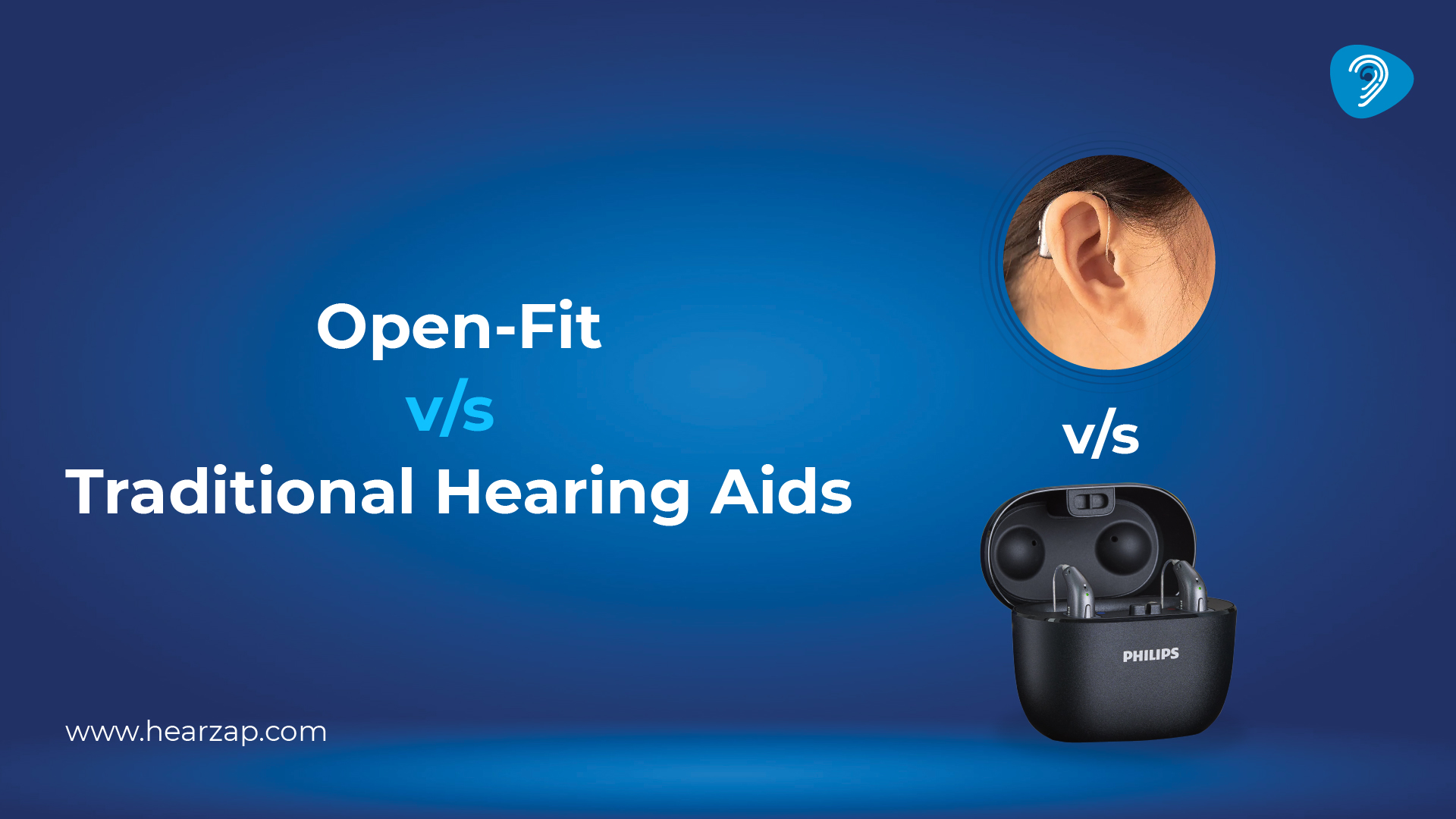
Open-fit and traditional hearing aids are both designed to improve hearing, but they do not work the same way for every user. Open-fit styles feel lighter and allow natural sound flow, while traditional hearing aids offer stronger amplification. Choosing the right option can improve comfort, speech clarity, and daily listening. With Hearzap’s hearing aid expertise, users can understand their hearing needs better before selecting a suitable device.
What Are Open-Fit Hearing Aids?
Open-fit hearing aids keep the ear canal partly open while sending amplified sound into the ear. They are often chosen when a person hears some sounds well but struggles with certain speech sounds.
How Open-Fit Hearing Aids Work
Open-fit hearing aids use a small device behind the ear and a soft open dome inside the ear canal. The dome does not fully seal the ear, so natural sound can still enter. This design can reduce the blocked ear feeling, also called the occlusion effect. It is commonly suitable for mild to moderate high-frequency hearing difficulty, where users need help with sharper speech sounds but not heavy amplification.
Key Features of Open-Fit Hearing Aids
Open-fit hearing aids are usually light, discreet, and easy to wear for long hours. Many users like them because their ears feel less closed. The sound can feel more natural because low-frequency sounds can enter normally. A RIC hearing aid can also offer an open style with comfortable sound delivery.
Who Can Benefit from Open-Fit Hearing Aids?
Open-fit hearing aids may help people who feel their own voice sounds too loud with closed designs. They may suit people who need support in conversations, meetings, phone calls, or family settings but still want comfort. People with active lifestyles may prefer the airy feel. A proper hearing test is important before selection.
What Are Traditional Hearing Aids?
Traditional hearing aids usually include designs that sit behind the ear or in the ear and use a more closed fitting. They are made for people who need fuller amplification and stronger sound support.
How Traditional Hearing Aids Work
Traditional hearing aids collect sound through a microphone, process it, amplify it, and send it into the ear through an earmould, tube, or closed fitting. A closed earmould helps direct more amplified sound into the ear canal and reduces sound leakage. This makes traditional designs useful for people with moderate to severe hearing difficulty, especially when steadier amplification is needed.
Key Features of Traditional Hearing Aids
Traditional hearing aids can offer higher power, a firm fit, and better control over amplified sound. Many designs are easier to handle, which can help seniors or first-time users. They may include noise control, speech focus, rechargeable options, and Bluetooth support. These devices need correct programming, cleaning, and adjustment.
Who Can Benefit from Traditional Hearing Aids?
Traditional hearing aids may benefit people who miss many speech sounds, need more volume, or struggle even in quiet spaces. They can also help users who need a stable earmould fit. When signs of hearing loss affect conversations, work, or television listening, an audiologist can check suitability.
Open-Fit vs Traditional Hearing Aids: Key Differences
Among these two types of hearing aids, the main difference is fit and sound control. Open-fit designs keep the ear canal partly open, while traditional designs often use a closed mould or stronger fitting.
Design and Comfort
Open-fit designs usually feel lighter, while traditional hearing aids offer a firmer and more secure fit.
Sound Quality
Open-fit hearing aids can make sound feel natural because the ear is not fully blocked. This may help users who still hear low sounds well. Traditional hearing aids can give a more controlled sound because the fitting keeps amplified sound inside the ear canal.
Amplification Levels
Open-fit designs are not meant for every level of support. They work best when only selected sounds need help. Traditional options can provide stronger amplification, which is useful when the hearing level needs consistent support.
Background Noise Management
Both styles may include background noise management, depending on technology. Open-fit devices can feel comfortable in daily surroundings, while traditional devices can provide stronger speech support when programmed well. The final experience depends on fitting and follow-up adjustment.
Hearing Loss Suitability
Open-fit hearing aids are often suited for mild to moderate high-frequency needs. Traditional hearing aids provide stronger sound support. Users should not choose only by appearance. The hearing report and the audiologist's advice matter more.
Benefits of Open-Fit Hearing Aids
Open-fit hearing aids are popular among people who want a lighter feel without losing access to natural environmental sounds.
More Natural Listening Experience
Because the ear canal remains partly open, everyday sounds may feel less artificial. This can be useful for users with mild hearing needs and active lifestyles. People who attend meetings or move outdoors often may find listening smoother when the device is fitted correctly.
Less Ear Canal Blockage
Open domes do not fully close the ear canal. This can reduce pressure and the feeling of sound being trapped inside the ear. It can also make the user’s own voice sound more normal than with some closed fittings.
Comfortable for Long-Term Use
A light, open-fit design can be easier to wear for many hours. Users who are new to hearing aids may adjust faster when the device feels less intrusive. Still, comfort depends on ear shape, fitting quality, and regular follow-up, so users can book an appointment for support before final selection.
Benefits of Traditional Hearing Aids
Traditional hearing aids are useful when a person needs more sound power and a firmer fitting.
Stronger Sound Amplification
Traditional hearing aids can support users who require greater hearing support. A closed earmould helps keep amplified sound directed into the ear. This can help when speech needs to be clearer in different listening situations.
Better Support for Severe Hearing Loss
People with severe hearing needs may require stronger amplification than an open-fit design can provide. Traditional options, especially behind-the-ear styles, can offer more power and a secure fit when daily communication is difficult without strong support.
Enhanced Speech Understanding
With correct fitting and programming, traditional hearing aids can help users follow speech more clearly at home, at work, and in social settings. The benefit is better with fine-tuning sessions and cleaning.
Which Hearing Aid is Right for You?
The right hearing aid should match your hearing level, comfort, lifestyle, and listening goals. A device that suits one person may not suit another.
Based on Hearing Loss Severity
A hearing evaluation shows the level of hearing loss, which sounds are difficult to hear, and how much amplification is needed. Open-fit hearing aids may suit people with milder high-frequency hearing needs, while traditional hearing aids may be better for those who need stronger and steadier sound support.
Lifestyle and Daily Activities
Daily routine should guide the hearing aid choice. People who attend meetings may need clearer speech in groups, while seniors may prefer easy handling and steady sound support. Those who travel or take calls often may value smart features. A hearing aid buying guide can help compare these needs before selection.
Audiologist Recommendations
An audiologist checks the hearing report, ear comfort, ear shape, handling ability, and daily listening needs before suggesting a device. This helps users choose a hearing aid based on actual hearing needs, not only on size, style, or popularity.
Hearzap's Hearing Aid Solutions
Hearzap supports users with hearing tests, expert audiologists, personalised recommendations, fitting services, and aftercare support. Users can compare different types of hearing aids, understand suitable designs, and get adjustment support after fitting. Those planning to buy hearing aids online can first book appointment support through Hearzap, so the selected device matches the hearing report, comfort, and listening needs.
FAQs
1. What are open-fit hearing aids?
Open-fit hearing aids keep the ear canal partly open while sending amplified sound into the ear. They may suit users who need help with higher speech sounds.
2. What are traditional hearing aids?
Traditional hearing aids use a closed fitting, such as an earmould or dome, to send stronger amplified sound into the ear.
3. What is the difference between open-fit and traditional hearing aids?
Open-fit hearing aids feel lighter and allow natural sound flow. Traditional hearing aids give stronger amplification and a firmer fit.
4. Are open-fit hearing aids suitable for severe hearing loss?
No, severe needs often require stronger amplification and a more secure fitting than open-fit styles usually provide.
5. Which hearing aid is more comfortable?
Open-fit hearing aids may feel more comfortable because the ear canal is not fully blocked. Still, comfort depends on the fit and ear shape.
6. How do I choose between open-fit and traditional hearing aids?
Start with a professional evaluation. Then consider hearing level, speech needs, comfort, handling, lifestyle, and audiologist advice.

Dattatreya M
Audiology Innovation Manager
Helping You Hear Life Again. At Hearzap, we believe hearing is the key to staying connected with family, friends, and the world around us. With over 48 years of trusted care & my 15 years in audiology, I’ve seen how improved hearing brings back confidence
Related Blogs
What Is a Telecoil (T-Coil) in Hearing Aids and How Does It Work?
Open vs Closed Hearing Aid Domes: Which One Is Best for You?
Hearing Amplifiers vs Hearing Aids: What’s the Difference?
Contact us
We are here for all your hearing needs, from hearing tests to hearing aids. Fill out the form below, and we will give you a call soon.
Recent Blogs
By None | July 18, 2026
By None | July 17, 2026
By None | July 16, 2026
By None | July 15, 2026
By None | July 13, 2026