HEARING AIDS
Which Hearing Aid Type Offers the Best Comfort for Daily Use?
By Team Hearzap | Aug. 10, 2026
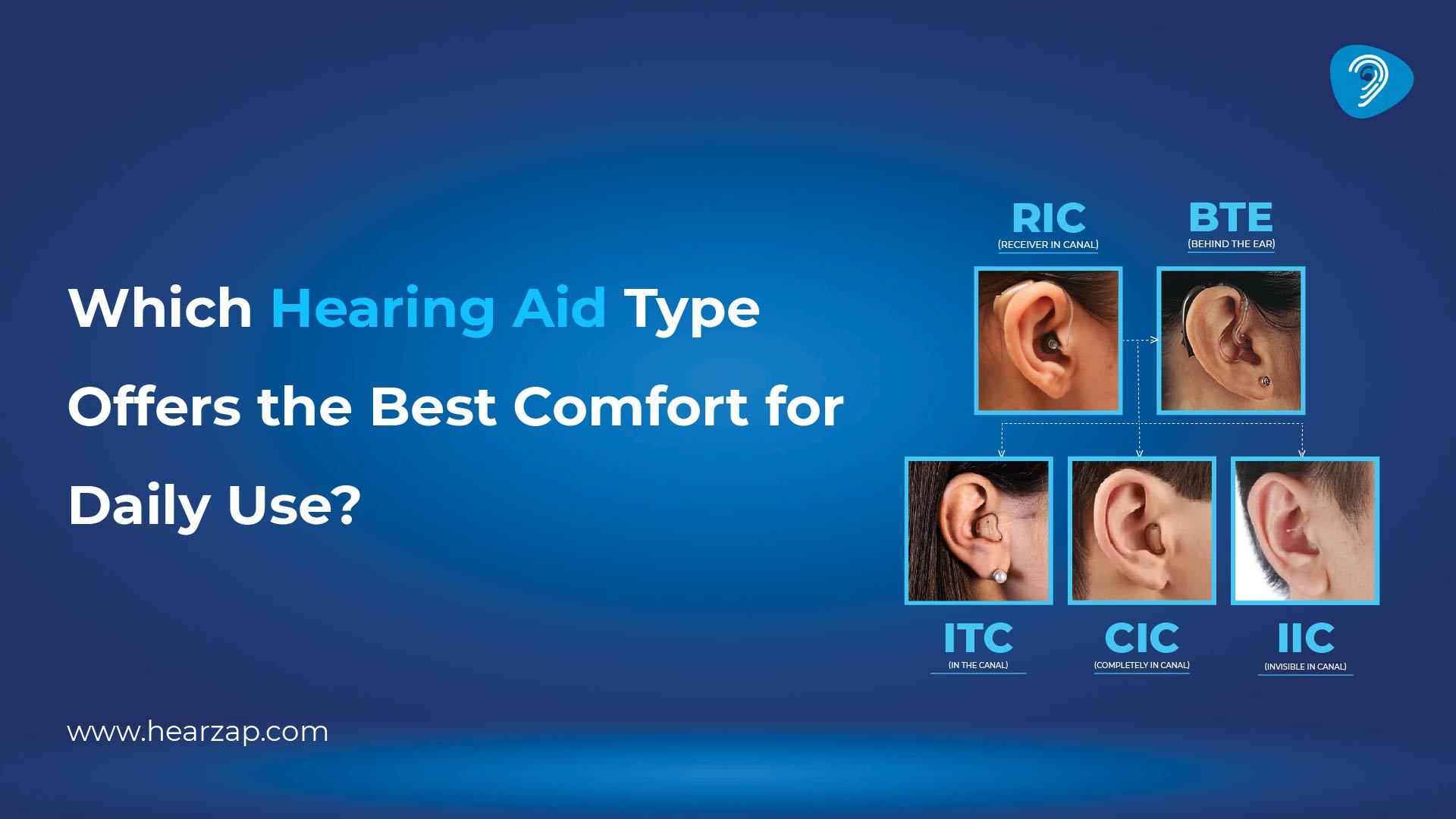
Comfort is one of the first things people notice after wearing a hearing aid. A model may look small, but it still needs to sit well and support clear listening throughout the day. The most comfortable hearing aid is not the same for everyone.
Hearing level, ear shape, skin sensitivity, routine and ease of handling all influence the choice. A hearing test gives the audiologist a clear starting point before different designs are considered.
Key Factors That Influence Hearing Aid Comfort
A comfortable fit begins with the ear and ear canal. Domes, tips and custom earmoulds come in different sizes, so a part that suits one person may press or slip for another. Weight also matters during long use.
Comfort is not only physical. Sharp, hollow or overly loud sound can make a well-fitted device difficult to wear. Programming should match the type and degree of hearing loss. Noise management and ventilation may also improve the experience.
Finger movement and eyesight matter too. Rechargeable models, larger buttons or app controls may be easier than tiny batteries. This is especially relevant when choosing comfortable hearing aids for seniors.
Receiver-in-Canal (RIC) Hearing Aids: Lightweight and Comfortable
RIC devices are widely chosen for daily wear. A small case rests behind the ear, while a thin wire connects it to a receiver inside the canal. Because the body is light and the ear may remain more open, many users find it less blocked than a traditional mould.
The open design can make the user’s own voice sound more natural. It may suit a hearing aid for mild hearing loss and can support higher levels, depending on the model. Rechargeable and wireless options are also available.
RIC is not ideal for every ear. Wax, moisture or a narrow canal can affect the receiver. Glasses wearers should check that the device and spectacle arm sit comfortably together.
Completely-in-Canal (CIC) Hearing Aids: Small and Nearly Invisible
CIC models sit mainly inside the ear canal. Their small size appeals to people who want a less visible option or dislike a case behind the ear. A custom shell may feel secure when made for the user’s ear.
Smaller does not always mean more comfortable. CIC devices can create a plugged sensation, and narrow canals may not provide enough room. Wax and moisture can also reach the microphone or receiver. Tiny batteries and controls may be difficult to manage.
When considering CIC vs RIC hearing aids, look beyond appearance. RIC models usually allow more features and easier repairs. CIC may suit users with suitable ear anatomy, good finger control and hearing needs within its fitting range.
ITC and ITE Hearing Aids: Comfort with Easy Handling
ITC devices sit partly in the canal, while ITE hearing aids fill more of the outer ear. Both are shaped for the individual ear. They suit people who want an in-ear design but find tiny CIC controls difficult.
ITE models have room for larger batteries, stronger receivers and easy controls. They may be simpler for older adults or anyone with reduced finger movement. ITC models are less visible, though their size may limit power and features.
In a hearing aid styles comparison, these options balance comfort with practical handling. A correct shell shape is essential. Pressure while chewing or a blocked feeling means the fit should be checked.
BTE Hearing Aids: Reliable Comfort for Greater Hearing Support
BTE hearing aids sit behind the ear and send sound through a tube to an ear tip or earmould. They cover a broad range of hearing needs. A powerful BTE is often considered when choosing a hearing aid for severe hearing loss.
The larger body allows stronger amplification, accessible controls and longer battery options. Custom earmoulds can provide a stable fit for children, active users and people needing dependable support. Their parts are also easier to handle and service than very small canal devices.
In RIC vs BTE hearing aids, RIC is often slimmer. BTE may provide more power and a secure mould. Comfort depends on tubing length, mould shape and placement.
Choosing the Right Hearing Aid for Your Daily Routine
Daily habits soon show which design is practical. Office workers may value speech support and phone connection. Travellers may prefer rechargeable batteries. For exercise, a secure fit and moisture care matter more.
People who wear glasses should try RIC and BTE devices with their usual frames. The same applies to helmets, head coverings or masks. A canal model avoids space behind the ear, but it must remain comfortable after several hours.
Consider how easily you can insert, remove, charge and clean the device. A small model is not useful when difficult controls keep it in its case. The right hearing aid should suit both the hearing prescription and daily routine.
Why a Custom Hearing Aid Fitting Matters
Even a well-designed device can feel uncomfortable when the dome, mould or tubing is wrong. During fitting, the audiologist checks placement and programs the hearing aid from the test results. Sound is adjusted so speech is useful without making everyday noise too harsh.
Custom fitting can reduce whistling, slipping, pressure and soreness. Small changes to the dome, vent, tube length or shell may make a clear difference. Explain where discomfort occurs and when it starts.
Follow-up visits are part of the process. Hearing aid comfort can change as the user wears the device for longer. Hearing support can also help with care and basic concerns between visits.
What to Expect During a Hearing Aid Trial
A hearing aid trial lets the user experience a device before deciding. A few minutes in a quiet room do not tell the full story. Comfort should be checked during conversation, television, travel and regular activities.
At first, forgotten sounds may seem unusually clear. The user’s own voice may feel different too. This does not always mean the device is unsuitable. The brain needs time to adjust, and the audiologist may refine the settings.
Keep notes during the trial. Record where speech was clear, when discomfort appeared and whether insertion or charging was difficult. These details support better adjustments and a more informed choice.
Simple Tips to Improve Hearing Aid Comfort
Daily care prevents many small problems from becoming reasons to stop wearing the device.
- Insert the hearing aid with clean, dry hands.
- Follow the correct left and right markings.
- Wipe the device after use and remove visible wax.
- Keep it away from water, steam, perfume and hair products.
- Use a drying box or dehumidifier when advised.
- Charge rechargeable devices as instructed.
- Replace damaged domes, tubing and wax filters on time.
- Store the device safely when it is not being worn.
Pain, redness or repeated slipping should not be ignored. Do not push the device deeper or alter an earmould at home. Arrange professional servicing when sound becomes weak, distorted or irregular. Regular cleaning and timely adjustments help comfortable hearing aids remain reliable.
Discover Comfortable Hearing Aid Solutions at Hearzap
Choosing hearing aid types starts with understanding how you hear and how you spend your day. Hearzap provides hearing assessments, audiologist consultations, device trials, personalised fitting and follow-up adjustments.
Visitors can book an appointment for professional guidance. Once a suitable model has been assessed and recommended, they may also buy hearing aids online. The aim is not simply to choose the smallest device. It is to find one that can be worn confidently, managed easily and used comfortably through everyday conversations.
Frequently Asked Questions
Which type of hearing aid is most comfortable?
Many people find RIC hearing aids light and comfortable because of their small case and open fitting. Others prefer a custom CIC, ITC or ITE shell. The best answer depends on ear shape, hearing level, skin sensitivity and handling ability.
Which hearing aid type is best for Tinnitus?
There is no single style made for every person with tinnitus. When tinnitus occurs with hearing loss, a properly programmed hearing aid may make outside sounds clearer and reduce awareness of the ringing. An audiologist should assess both concerns before recommending features.
What is the most highly recommended hearing aid?
No one model is suitable for everyone. A highly recommended option is one that matches the hearing test, ear shape, listening needs, budget and ability to manage the controls. Trial experience and aftercare matter as much as the brand name.
What is the best brand of hearing aid for severe hearing loss?
There is no universal best brand. Several manufacturers offer powerful BTE and selected RIC models. For severe or profound loss, the audiologist should check output, speech understanding, feedback control, earmould fit and service support before recommending a device.
What is the lifespan of a hearing aid?
Many hearing aids last around four to six years. Actual life depends on moisture, wax, daily use, cleaning, repairs and changes in hearing. A device may need replacement sooner when it no longer provides suitable power or reliable performance.
Related Blogs
Open-Fit vs Traditional Hearing Aids: Which One Should You Choose?
Hearing Amplifiers vs Hearing Aids: What’s the Difference?
Contact us
We are here for all your hearing needs, from hearing tests to hearing aids. Fill out the form below, and we will give you a call soon.
Recent Blogs
By None | Aug. 11, 2026
By None | Aug. 7, 2026
By None | Aug. 6, 2026
By None | Aug. 5, 2026
By None | Aug. 4, 2026