Generic
Stapedectomy and Stapedotomy
By Dattatreya M | June 25, 2026
Stapedectomy and Stapedotomy: What to Expect Before, During, and After Surgery
Hearing loss has a way of changing a person's world without much warning. At first, it is the odd missed word in a crowded room. Then it is asking colleagues to repeat themselves in meetings. Then it is quietly withdrawing from conversations that feel more exhausting than enjoyable. For patients whose hearing loss is caused by otosclerosis, the conductive component of hearing loss can often be improved when they are suitable for surgery. Sapedectomy surgery and its variant, stapedotomy, have a strong track record of returning people to the sounds they had been gradually losing. Here is what you need to know.
What Is Stapedectomy?
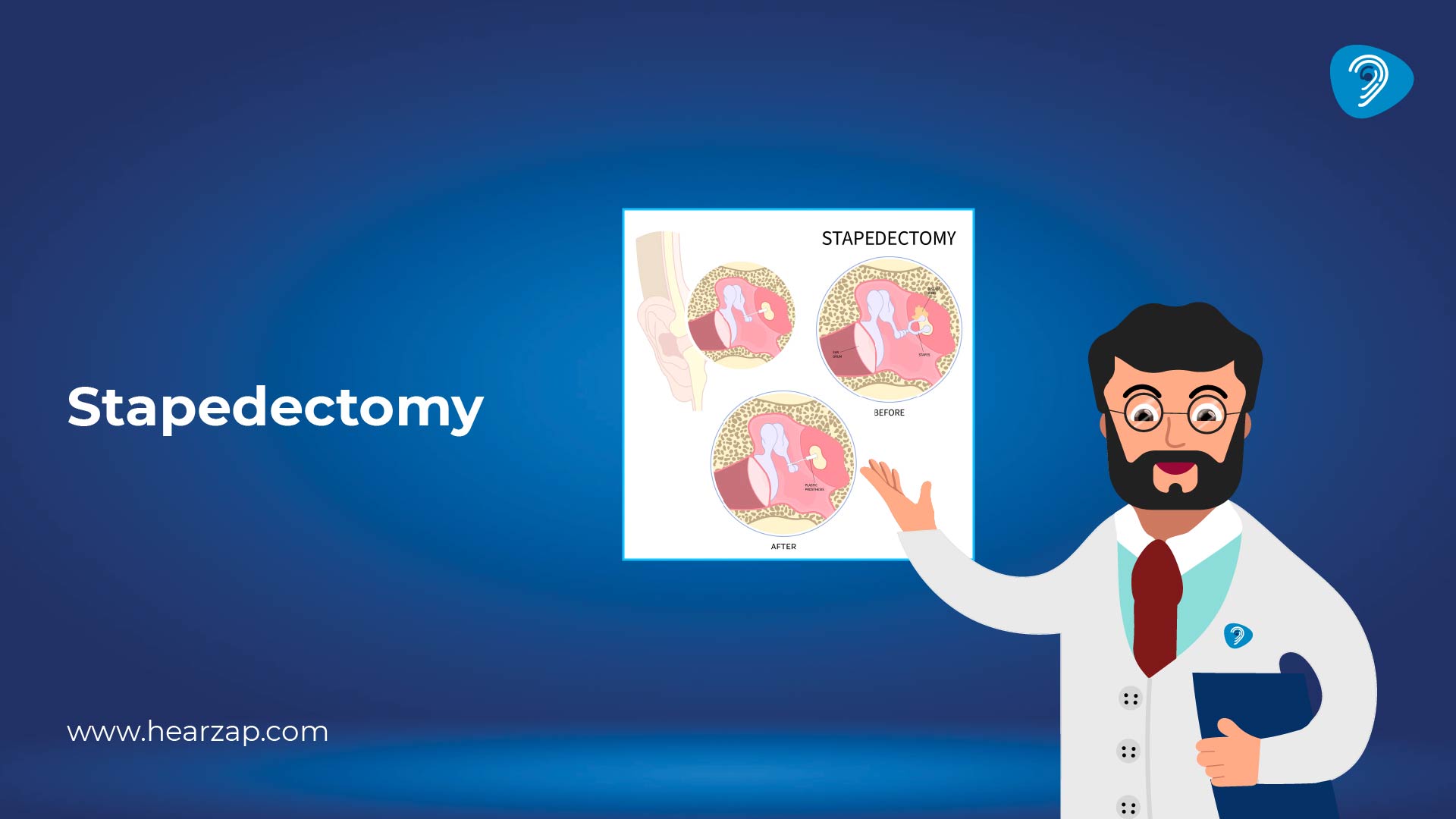
The stapedectomy meaning becomes clearer once you understand what goes wrong in the ear with otosclerosis. Think of the middle ear as a tiny percussion system. Sound waves make the eardrum vibrate, which nudges three small bones, the malleus, incus, and stapes, in sequence. The stapes, the smallest bone in the human body, then taps the fluid of the inner ear to trigger what we experience as sound.
Otosclerosis disrupts this by causing abnormal bone growth that fuses the stapes in place. It stops moving, the vibration chain breaks, and hearing deteriorates over years. Hearing aids are an effective non-surgical option for many patients with otosclerosis. Surgery may be considered when the conductive hearing loss is significant and the ENT surgeon confirms that the patient is suitable.
Ear stapedectomy is the surgical solution: the fixed stapes are removed and replaced with a precision prosthetic piston. Sound transmission is restored. Many experienced centres report meaningful hearing improvement in the majority of appropriately selected patients, placing ear stapedectomy among the most effective elective procedures in otolaryngology.
Stapedectomy vs Stapedotomy: Understanding the Distinction
When your surgeon raises stapedectomy vs stapedotomy, the question is how much of the stapes is removed.
In traditional stapedectomy, the stapes superstructure and all or part of the fixed footplate may be removed, and the opening is sealed before placing a prosthesis. The gap in the oval window is sealed with a small graft of the individual's own tissue, typically fat or perichondrium, and the prosthesis inserted over it.
In stapedotomy, the body of the stapes is removed but the footplate stays. A precisely sized hole of 0.6 to 0.8 mm is made in the footplate using a laser or micro-drill, and the prosthetic piston is passed through it.
Many surgeons now prefer stapedotomy because it is less invasive, though outcomes depend strongly on patient selection and surgical expertise. The smaller, controlled opening disturbs less inner ear fluid (perilymph), reduces the risk of sensorineural hearing loss, and allows more predictable prosthesis positioning. Surgeons make the final call intraoperatively, based on what they find when the middle ear is opened.
Who Qualifies for Surgery?
Individuals may be considered suitable candidates for surgery when they have findings such as:
- A significant conductive hearing loss with an air-bone gap, commonly around 20 dB or greater
- Audiological findings suggestive of stapes fixation
- Absent or reduced acoustic reflexes
- Useful speech discrimination and adequate cochlear reserve
- A healthy middle ear
- ENT confirmation that surgery is appropriate
Surgery is generally not appropriate for individuals with functional hearing in only one ear, predominantly sensorineural hearing loss, active suppurative otitis media, significant Eustachian tube dysfunction, or pregnancy.
Endoscopic Stapedectomy: What Has Changed
For decades, middle ear surgery stapedectomy was performed under a microscope inserted through the ear canal. The microscope delivers excellent magnification but sees in a straight line, creating blind spots in narrow or curved canals.
Endoscopic stapedectomy changed that. A slender angled endoscope passed into the ear canal gives the surgeon a panoramic view of the entire middle ear, reaching structures the microscope could not, without cutting behind the ear or removing additional bone.
The practical advantages of endoscopic stapedectomy are significant:
- Wider, well-illuminated view of the oval window and adjacent anatomy
- Better access in narrow or anatomically challenging ear canals
- No postauricular incision, reducing discomfort and recovery time
- Audiological outcomes equivalent to microscopic surgery, supported by prospective studies and systematic reviews
Endoscopic stapes surgery is increasingly used in experienced otologic centres because it can provide a wider view of middle-ear anatomy. However, microscopic stapes surgery remains widely practiced and can also produce excellent outcomes.
Stapedectomy Surgery Cost: A Practical Breakdown
Stapedectomy surgery cost varies considerably depending on geography, healthcare setting, and insurance:
- United States: Stapedectomy surgery cost typically ranges from $8,000 to $15,000 or more, covering surgeon and anesthesiology fees, facility charges, and audiological assessment. Insurance coverage is generally available when otosclerosis is properly documented.
- United Kingdom: Eligible individuals can access the procedure through the NHS at no direct personal cost.
- India: Stapedectomy surgery cost at accredited ENT centers falls between INR 60,000 and INR 1,50,000, varying by city and hospital.
Before committing, confirm insurance pre-authorization, obtain an itemized breakdown, and clarify whether postoperative audiometry is included.
Inside the Operating Room: Step by Step
Middle ear surgery stapedectomy follows a consistent sequence, though surgeons must remain adaptable throughout.
Anesthesia: Performed under general anesthesia or local anesthesia with sedation. Local anesthesia with sedation is often preferred, as it allows the surgeon to check the individual's hearing immediately after prosthesis placement.
Surgical access: A speculum is placed in the ear canal. The tympanomeatal flap, a thin skin layer, is elevated to reveal the middle ear and ossicular chain.
Nerve management: The chorda tympani nerve, a branch of the facial nerve running through the middle ear and carrying taste signals from the anterior tongue, is carefully mobilized. It is divided only when anatomy demands it, given the risk of taste disturbance.
Stapes removal: The stapedial tendon is transected and the stapes superstructure removed. In stapedotomy, a laser or drill then creates the fenestration in the footplate.
Prosthesis placement: A titanium, Teflon, or stainless steel piston, typically 4.0 to 4.5 mm long and 0.4 to 0.6 mm wide, is positioned from the incus into the oval window and crimped securely in place.
Closure: The flap is returned to position and the canal packed with absorbable gelatin sponge. Total operative time is 45 to 90 minutes.
Loss of Taste After Stapedectomy Surgery: What Nobody Warns You About
Ask most people what side effects they expected after ear surgery, and altered taste rarely comes to mind. Yet loss of taste after stapedectomy surgery is one of the more common and underreported postoperative experiences, and individuals deserve honest information about it before consenting.
Loss of taste after stapedectomy surgery results from intraoperative handling of the chorda tympani nerve. Even careful mobilization can bruise or stretch it enough to affect function. The presentation varies:
- Dysgeusia: Food tastes wrong, metallic, or simply different from usual
- Hypogeusia: Flavors are noticeably duller or harder to detect
- Ageusia: Taste is absent on one side of the anterior tongue (uncommon)
Transient dysfunction occurs in roughly 20 to 30 percent of cases. Permanent significant taste impairment is far less common, affecting fewer than 5 percent of individuals. Most people find loss of taste after stapedectomy surgery resolves within three to six months as the nerve recovers. This must be openly discussed during preoperative counseling.
Recovery: A Realistic Timeline
Recovery after ear stapedectomy does not demand much, but what it does demand genuinely matters.
First 48 hours
- Most individuals are discharged the same day or after a single overnight stay
- Vertigo, mild disequilibrium, and nausea are expected and typically settle within one to two days
- Anti-emetic and vestibular suppressant medications are prescribed where needed
First two weeks
- The ear should be kept dry during the early healing period to reduce the risk of infection.
- Forceful nose blowing, heavy lifting, straining, and sudden pressure changes should be avoided until cleared by the surgeon, as they may affect healing or prosthesis stability.
- Some temporary hearing reduction is expected while packing dissolves and swelling settles
Four to six weeks
- Formal audiometry assesses air-bone gap closure
- Most individuals report noticeable hearing improvement by this point
Three to six months
- Definitive hearing outcomes are established
- Surgical success is defined as air-bone gap closure to within 10 dB of bone conduction thresholds
- Swimming remains off-limits for at least six weeks
- Air travel should be resumed only after postoperative review and surgeon clearance.
Potential Complications: An Honest Assessment
Stapedectomy surgery is safe in experienced hands, but no procedure is without risk. Individuals should be counseled about:
- Sensorineural hearing loss in the operated ear (1 to 2 percent; severe loss is uncommon)
- Prosthesis displacement or extrusion
- Tympanic membrane perforation
- Facial nerve paresis (exceedingly rare)
- Perilymph fistula, a leak of inner ear fluid
- Persistent or worsening tinnitus
- Late otosclerotic re-fixation requiring revision stapedectomy surgery
Revision stapedectomy surgery is more demanding than the primary procedure, and success rates are lower given the altered anatomy and increased risk to cochlear structures.
Summary
Otosclerosis is not a life sentence on hearing loss. Stapedectomy and stapedotomy have a decades-long record of meaningfully restoring hearing in individuals who meet the criteria, and for many, the improvement is profound. Most surgeons today favor the stapedotomy technique, and endoscopic stapedectomy is gaining ground as the preferred approach at centers with the necessary expertise. An ENT surgeon decides surgical suitability, while the audiologist supports diagnosis through hearing tests, counselling, pre- and post-operative audiometry, and long-term hearing monitoring.
If you or someone you care for is being evaluated for ear stapedectomy, ensure a thorough preoperative workup is completed and seek a center with genuine, documented experience in both microscopic and endoscopic stapedectomy. The right surgical environment makes a measurable difference to outcomes.
FAQ’s
Q: What is a stapedotomy?
A: A stapedotomy is a surgery where a small opening is made in the fixed stapes footplate and a tiny prosthesis is placed to improve sound transmission.
Q: How much does stapedotomy cost?
A: Costs vary depending on the hospital, surgeon, and location.
Q: How long is the recovery for a stapedotomy?
A: Most people recover within 2–6 weeks.
Q: Which is better, stapedectomy or stapedotomy?
A: Stapedotomy is generally preferred due to fewer complications.
Q: Can I walk after a stapedectomy?
A: Yes, but avoid strenuous activity during recovery.

Dattatreya M
Audiology Innovation Manager
Helping You Hear Life Again. At Hearzap, we believe hearing is the key to staying connected with family, friends, and the world around us. With over 48 years of trusted care & my 15 years in audiology, I’ve seen how improved hearing brings back confidence
Related Blogs

White Noise Therapy for Tinnitus: Does It Really Work?
Contact us
We are here for all your hearing needs, from hearing tests to hearing aids. Fill out the form below, and we will give you a call soon.
Recent Blogs
By Team Hearzap | Aug. 21, 2026
By None | Aug. 19, 2026
By None | Aug. 14, 2026
By None | Aug. 12, 2026
By None | Aug. 11, 2026