Generic
What Is Immittance Audiometry? A Complete Beginner’s Guide
By Team Hearzap | June 19, 2026
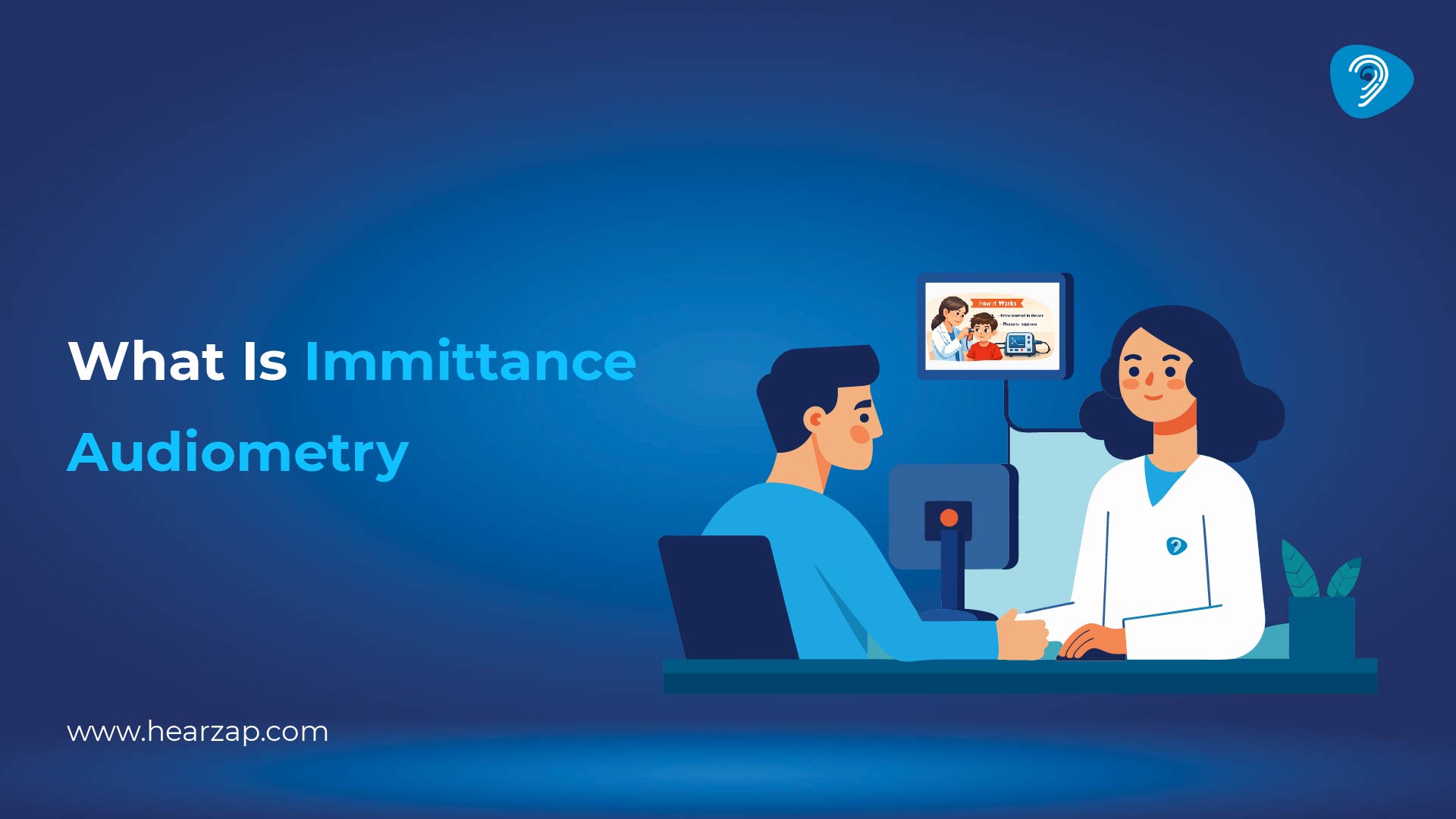
If you’ve ever had blocked ears after a cold, a child’s recurring ear infections, or that odd “echo” of your own voice, you’ll know how frustrating ear problems can be. The good news is that many middle-ear issues can be detected quickly with immittance audiometry, a simple test that assesses how well the eardrum and tiny middle-ear bones function. Unlike tests that ask you to raise your hand when you hear a beep, this one measures movement and pressure changes inside the ear, so it’s especially handy for children and anyone who can’t reliably respond.
This guide explains what is immittance audiometry, why it’s done, what happens during the appointment, and how to make sense of immittance audiometry results, without heavy jargon.
What Is Immittance Audiometry?
So, what is immittance audiometry in practical terms? It’s a set of quick, non-invasive checks that show how sound energy is transmitted through the middle ear. The focus is not on “how loud” you can hear, but on whether the pathway from the eardrum to the inner ear is moving the way it should.
In India, you’ll often see this test suggested by an ENT specialist or an audiologist when symptoms point to a middle-ear problem, such as pain, fullness, discharge, or fluctuating hearing. It’s also useful for children because it doesn’t depend on perfect co-operation.
Understanding the Immitance Audiometry Test
The immitance audiometry test usually refers to two closely related measures: tympanometry and acoustic reflex testing. Together, they help assess middle-ear function and provide clues about conditions such as fluid behind the eardrum, a blocked Eustachian tube, or a perforation.
Think of it like a “mechanical check-up” for the ear:
- Tympanometry looks at how the eardrum moves as air pressure changes.
- Acoustic reflex testing checks whether a tiny middle-ear muscle tightens in response to loud sounds.
These results add context to other hearing checks, including pure tone audiometry, which focuses more on hearing thresholds.
How Does Immittance Audiometry Work?
During the test, a soft probe tip is placed at the entrance of your ear canal to create a gentle seal. The device then:
- Sends a low tone into the ear
- Varies air pressure slightly (you may feel a mild “pop”)
- Measures how much sound bounces back and how the eardrum responds
If the eardrum moves freely, the system records good compliance. Reduced movement may suggest stiffness due to fluid or infection. If movement is unusually high, it may point towards a thinner, more flexible eardrum.
The test is short and objective, which also helps explain how hearing test works beyond the usual “beep test”.
Why Is Immittance Audiometry Performed?
Middle-ear problems are common across age groups in India, especially during the monsoon season, allergy season, and after upper respiratory infections. This test is performed to investigate symptoms and guide next steps, such as medication, observation, or further testing.
You may be advised to do it if you have:
- Ear pain, pressure, or a blocked sensation
- Recurrent ear infections or discharge
- Suspected fluid behind the eardrum (common in children)
- Sudden change in hearing after a cold
- A feeling of hearing your own voice too loudly, called autophony
It’s also helpful when the ear canal appears normal but hearing still feels “off,” which supports the next decision.
Types of Immittance Audiometry Tests
Most reports include two parts. Each offers a different angle on middle-ear health, and together they improve confidence in the overall picture.
Tympanometry Test
Tympanometry produces a graph (tympanogram) that reflects eardrum mobility at different air pressures. Your audiologist interprets the shape and peak position to understand the likely middle-ear status.
In everyday terms, it can indicate:
- Normal pressure and movement (often labelled Type A)
- Negative pressure suggesting Eustachian tube dysfunction (often Type C)
- A flat tracing that can suggest fluid or a perforation (often Type B)
The tympanogram doesn’t “diagnose” on its own, but it strongly supports a pattern, especially when combined with symptoms and ear examination.
Acoustic Reflex Testing
Acoustic reflex testing checks whether the stapedius muscle contracts in response to a loud sound. This reflex helps protect the inner ear and is part of normal hearing physiology.
A reflex may be:
- Present at expected levels (often reassuring)
- Elevated or absent (which may occur with fluid or significant stiffness)
Because it uses louder sounds, some people find it mildly startling, but it should not be painful.
What Happens During an Immittance Audiometry Test?
Knowing the steps makes the experience far less intimidating. Here’s a typical flow:
- Brief history: You’ll be asked about symptoms, allergies, and recent colds.
- Otoscopy: The ear canal and eardrum are checked for wax, swelling, or perforation.
- Probe placement: A small probe tip is inserted; it should feel snug, not uncomfortable.
- Tympanometry run: You’ll hear a soft tone while pressure changes for a few seconds.
- Acoustic reflexes (if planned): A series of tones are played; you stay still and silent.
- Explanation: The professional shares what the graphs suggest and whether more tests are needed.
Tip: Try not to talk, chew, or swallow during the measurement. Small movements can break the seal and affect readings.
Understanding Immittance Audiometry Results
A report typically includes a tympanogram for each ear, ear canal volume, compliance (mobility), and sometimes acoustic reflex thresholds. The key is to interpret these values as clues, not labels.
Many centres in India also compare today’s graphs with older reports, especially after medicines or allergy control. Tracking changes over time can show whether fluid is clearing, pressure is normalising, or a long-standing issue is building. Ask for a copy.
Good interpretation considers:
- Your symptoms and ear examination findings
- Other hearing tests (for example, an auditory acuity test or speech measures)
- Whether one ear or both ears are affected
If you’ve previously done tuning fork tests like the Weber test, these measures can help confirm whether the pattern is conductive (middle ear) or likely sensorineural (inner ear).
Normal Immittance Audiometry Results
Normal immittance audiometry results generally suggest:
- The eardrum is moving well
- Middle-ear pressure is within the expected range
- Ear canal volume is appropriate
With normal findings, persistent hearing concerns may need evaluation of the inner ear or processing skills such as auditory discrimination.
Abnormal Immittance Audiometry Results
Abnormal immittance audiometry results can point towards several possibilities, such as:
- Fluid behind the eardrum (often after infections)
- Eustachian tube blockage causing negative pressure
- A perforated eardrum (especially if the ear canal volume is larger than expected)
- Ossicular chain problems (tiny bones not moving normally)
These findings help your ENT specialist decide whether medicines, watchful waiting, or a procedure might be appropriate, particularly for children with persistent fluid and learning or speech concerns.
Benefits of Immittance Audiometry
The biggest advantage of this test is that it’s fast and objective. It doesn’t rely on you guessing whether you heard a beep, and it can be repeated to track improvement.
Key benefits include:
- Painless, non-invasive assessment
- Useful for infants and young children
- Quick insight into middle-ear status
- Helps detect problems early and supports follow-up plans
Are There Any Risks or Side Effects?
For most people, it is very safe. You might feel mild pressure changes (similar to being in a lift or aeroplane) or a brief tickle from the probe tip. During reflex testing, louder tones may surprise you, but they shouldn’t hurt.
If the ear is very sore or actively infected, the seal can feel uncomfortable. In such cases, the professional may postpone testing or skip certain parts until the ear settles.
Who Should Get an Immittance Audiometry Test?
This test is recommended across all ages, but it’s especially helpful when middle-ear problems are suspected.
Consider an assessment if:
- Your child has frequent colds with ear blockage or delayed speech
- You have ear fullness after travel, swimming, or allergies
- There’s recurrent ear pain, discharge, or reduced hearing
- You’re doing a broader hearing work-up alongside other tests
If symptoms persist, don’t self-treat for weeks. Early evaluation can prevent long-term complications and improve hearing clarity in daily life.
Conclusion
Middle-ear issues are common, but they’re often manageable when identified early. This assessment offers a quick window into how your eardrum and middle ear are functioning and complements other checks by providing objective evidence. If your report shows changes, it usually means your ear needs targeted care and monitoring.
If you or your child is dealing with recurring ear problems, schedule an evaluation with an ENT specialist or an experienced audiologist. With the right plan, you can get back to comfortable hearing and stop guessing what’s going on inside your ear.
FAQs
Is immittance audiometry painful?
No. The test is designed to be comfortable. You may notice mild pressure changes in the ear canal, but it should not hurt. If your ear is acutely painful, tell the professional before testing begins.
How long does an immittance audiometry test take?
Most appointments take about 5–10 minutes for both ears. If acoustic reflex testing is included, it may take a few minutes longer.
What do abnormal immittance audiometry results mean?
Abnormal findings often suggest that the eardrum is not moving normally or that middle-ear pressure is unbalanced. Common reasons include fluid, infection-related swelling, Eustachian tube dysfunction, or a perforation. Your ENT specialist will match the report with symptoms and examination to plan treatment.


Contact us
We are here for all your hearing needs, from hearing tests to hearing aids. Fill out the form below, and we will give you a call soon.
Recent Blogs
By None | Sept. 25, 2026
By None | Sept. 23, 2026
By None | Sept. 21, 2026
By None | Sept. 16, 2026
By None | Sept. 9, 2026