Generic
What Is Labyrinthectomy? When Is This Ear Surgery Recommended?
By Team Hearzap | June 17, 2026
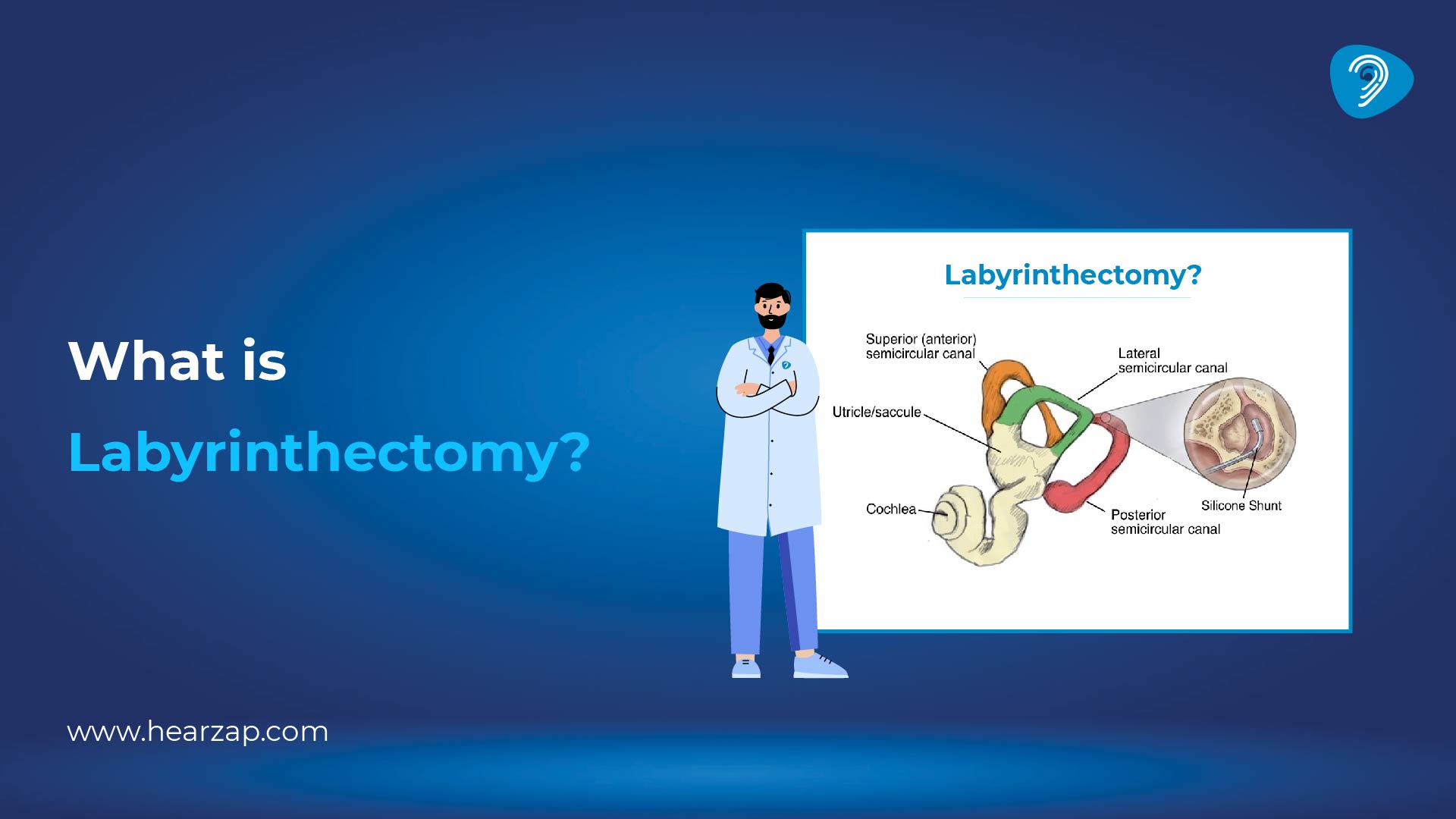
If you live with sudden spinning sensations, nausea, and a fear that the room will tilt without warning, you already know how disruptive inner-ear vertigo can be. For most people, medicines, diet changes, and vestibular rehabilitation are enough. But a small group keeps having severe attacks despite months of careful treatment. That is where labyrinthectomy can help, when one ear’s balance organ is clearly driving the problem.
In this guide, we’ll explain the labyrinthectomy, including its meaning, when ENT surgeons in India consider it, how it is performed, and what recovery usually looks like. We’ll also cover risks, alternatives, and practical expectations so you can speak to your specialist with confidence.
What Is Labyrinthectomy?
Simply put, what is labyrinthectomy? It is an operation in which the surgeon removes or disables the inner-ear labyrinth (the balance organs) of one ear. The goal is to stop abnormal balance signals from that ear from reaching the brain. Because the hearing structures are closely connected, this surgery usually causes permanent hearing loss in the operated ear.
A clear labyrinthectomy definition is: a destructive inner-ear surgery used to control vertigo by eliminating the affected ear’s vestibular function. It is considered only when vertigo is severe, and other treatments have failed.
Why Is a Labyrinthectomy Performed?
Doctors recommend labyrinthectomy to control vertigo that is frequent, intense, and resistant to conservative care. The key idea is “quality of life”: if attacks are unsafe (falls, inability to work, repeated emergency visits) and one ear is clearly the source, eliminating that ear’s balance input can provide lasting relief.
Common reasons include:
- Recurrent vertigo with vomiting or falls despite medication
- Poor response to dietary changes (salt restriction), vestibular suppressants, or injections
- A “non-serviceable” hearing ear, where preserving hearing is no longer realistic
- Clear evidence that one ear is the culprit on vestibular testing
Some people worry that their symptoms could be due to other ear problems, such as mastoiditis. That’s why a full ENT evaluation is essential before planning surgery.
Labyrinthectomy for Meniere's Disease
The most recognised indication is labyrinthectomy for Meniere's disease, especially when vertigo remains uncontrolled and hearing in the affected ear is already significantly reduced. In Labyrinthectomy Meniere's disease discussions, specialists focus on “intractable vertigo,” attacks that continue even after medical management, intratympanic injections, and structured lifestyle measures.
In severe Ménière’s, the ear can send unpredictable signals, causing spinning episodes lasting minutes to hours. A destructive surgery may sound drastic, but for some patients, it offers the chance to return to life without constant fear of the next attack.
Who Is a Suitable Candidate for Labyrinthectomy?
Not everyone with dizziness is a candidate. Eligibility depends on symptoms, hearing status, and test results.
You may be considered if:
- Vertigo is clearly from one ear and has not improved after months of treatment
- Hearing in the affected ear is already very poor, or you rely mainly on the other ear
- You are medically fit for anaesthesia and ear surgery
- Balance testing supports unilateral vestibular dysfunction
You are usually not considered if:
- Both ears have significant vestibular disease
- The better-hearing ear is the one affected
- Dizziness is primarily from migraine, low blood pressure, or anxiety-related causes
Because hearing status matters so much, your surgeon may suggest an audiogram and, at times, a quick online hearing test to track symptoms between appointments. People with long-standing congenital hearing loss may need extra counselling, because the “better ear” strategy after surgery becomes even more important.
Occasionally, patients describe odd sensations like fluttering or ear spasms affecting hearing. These can coexist with vertigo, but they don’t automatically mean the inner ear is the problem; another reason proper testing is crucial.
How Is Labyrinthectomy Surgery Performed?
The operation is performed under general anaesthesia by an ENT surgeon with expertise in ear surgery. The approach depends on anatomy, infection history, and surgeon preference, but the goal is the same: remove or destroy the vestibular labyrinth so it no longer sends balance signals.
A patient-friendly step-by-step overview:
- Pre-op work-up: hearing tests, vestibular evaluation, imaging if needed, and fitness clearance.
- Incision and access: a cut is made behind the ear, and the surgeon reaches the inner ear through the mastoid bone.
- Labyrinth removal: the balance canals and vestibule are carefully opened and removed/obliterated.
- Sealing and closure: the area is sealed to prevent fluid leak, and the incision is closed.
- Hospital monitoring: you are observed for dizziness, nausea control, and wound care.
If there is active eardrum inflammation, such as myringitis hearing loss, surgeons may treat that first, because healthier middle-ear conditions lower complication risk.
Labyrinthectomy Recovery and Healing Process
Labyrinthectomy recovery is less about the incision and more about your brain learning to rely on the remaining ear and vision/body cues. Immediately after surgery, vertigo from the diseased ear usually stops, but you can feel off-balance because one balance organ has been removed.
What most patients experience:
- First 24-72 hours: significant imbalance, nausea, and a “boat-like” sensation
- First 1-2 weeks: gradual improvement; walking becomes steadier with support
- Weeks 3-6: many return to light work if they avoid risky travel or heights
- After 6 weeks: balance continues to refine with exercises and daily activity
Helpful precautions:
- Keep the surgical area dry as advised
- Avoid sudden head movements early on
- Do not drive until your surgeon confirms it is safe
- Start vestibular exercises when recommended; these speed compensation
If you plan to travel back home by train or flight (common in India when surgery is in a metro city), discuss timing and motion sickness prevention in advance.
Labyrinthectomy Recovery Time
The phrase "labyrinthectomy recovery time" can refer to two things: wound healing and balance compensation. The wound usually heals within 2-3 weeks, but the balance can take longer.
A practical timeline:
- 2 weeks: incision comfort improves; dizziness is less intense
- 4-6 weeks: many manage daily tasks and desk work
- 3 months: steadier walking in crowds and on uneven ground
- 6-12 months: fine balance improvements, especially in the dark
Your recovery is faster if you do vestibular rehab consistently and avoid long-term reliance on sedative vertigo medicines.
Still Dizzy After Labyrinthectomy?
It is common to worry about being still dizzy after labyrinthectomy. Mild dizziness or unsteadiness early on is expected as your brain recalibrates. However, severe, ongoing spinning is uncommon and should be assessed.
Possible reasons include:
- Slow central compensation (often improves with therapy)
- Stopping rehab exercises too early
- Migraine-associated dizziness
- Rare issues such as fluid leak, infection, or medication side effects
Seek urgent care if you have a fever, worsening headache, sudden facial weakness, or persistent ear bleeding from the surgical ear.
Benefits and Risks of Labyrinthectomy
Benefits (when appropriately selected):
- High vertigo control rates in unilateral disease
- Reduced fear of unpredictable attacks
- Better ability to work, travel, and sleep
Risks and side effects to understand:
- Permanent hearing loss in the operated ear (expected)
- Temporary imbalance, nausea, and fatigue
- Taste disturbance or dry mouth (nerve proximity)
- Infection, cerebrospinal fluid leak, or facial nerve injury (uncommon but important)
- Tinnitus may persist, even if vertigo improves
Because hearing on one side is lost, many patients later explore hearing rehabilitation options. Depending on your audiologist’s advice, you may consider CROS/BiCROS systems or even buy hearing aids online from reputable providers that offer remote programming and follow-up in India.
Labyrinthotomy vs Labyrinthectomy
People often confuse labyrinthotomy vs labyrinthectomy. A labyrinthotomy generally means opening the labyrinth (often for drainage or to access the inner ear), while a labyrinthectomy is a destructive surgery aimed at eliminating vestibular function to treat vertigo.
In simple terms:
- Labyrinthotomy: “opening” the labyrinth for a specific purpose
- Labyrinthectomy: “removing/destroying” the labyrinth to stop vertigo
Your surgeon will explain which option fits your diagnosis, hearing status, and long-term goals.
Alternatives to Labyrinthectomy
Because labyrinthectomy is irreversible, doctors usually try safer options first. Alternatives depend on the cause and severity.
Common alternatives include:
- Diet and lifestyle changes (salt reduction, hydration, avoiding triggers)
- Vestibular rehabilitation therapy
- Medications for acute attacks and nausea
- Intratympanic injections (gentamicin or steroids)
- Endolymphatic sac surgery (in selected Ménière’s cases)
- Vestibular nerve section (vertigo control while attempting to preserve hearing in some cases)
Many hospitals also offer structured vestibular physiotherapy; doing it early can shorten unsteadiness and build confidence outdoors safely again quickly.
Conclusion
A labyrinthectomy is a powerful, carefully selected option for people with severe, one-sided inner-ear vertigo that has not responded to standard treatment. Understanding the trade-off, excellent vertigo control in exchange for hearing loss in the operated ear, helps set realistic expectations.
If your specialist suspects Ménière’s or another unilateral vestibular disorder, ask about your hearing status, vestibular test results, and the likely labyrinthectomy recovery pathway. With the right selection, good rehabilitation, and clear counselling, many patients regain confidence in daily life and stop planning around the next vertigo attack.
FAQs
Is labyrinthectomy a permanent procedure?
Yes. The surgery intentionally removes or disables the balance organs of the operated ear, so its vestibular function does not return.
Can hearing be restored after labyrinthectomy?
Hearing in the operated ear is generally not restorable because the inner ear structures are destroyed. Rehabilitation usually focuses on optimising the other ear and considering assistive devices if needed.
How successful is labyrinthectomy surgery?
In properly selected unilateral cases, vertigo control is often high. Success also depends on completing vestibular rehabilitation so the brain compensates well for the loss of balance input from one ear.
Related Blogs

Mastoidectomy: Procedure and Recovery
Ossiculoplasty: A Complete Guide to Middle Ear Reconstruction

What Is Selective Hearing? Myth or Medical Condition?
Cochlea Anatomy Explained: How This Tiny Spiral Powers Your Hearing
What is the Valsalva Maneuver? Benefits of Ear Pressure Relief
Contact us
We are here for all your hearing needs, from hearing tests to hearing aids. Fill out the form below, and we will give you a call soon.
Recent Blogs
By None | Oct. 3, 2026
By None | Oct. 1, 2026
By None | Sept. 30, 2026
By None | Sept. 29, 2026
By None | Sept. 28, 2026