Generic
What Does the Auditory Nerve Do? A Simple Guide to Hearing Signals
By Team Hearzap | June 3, 2026
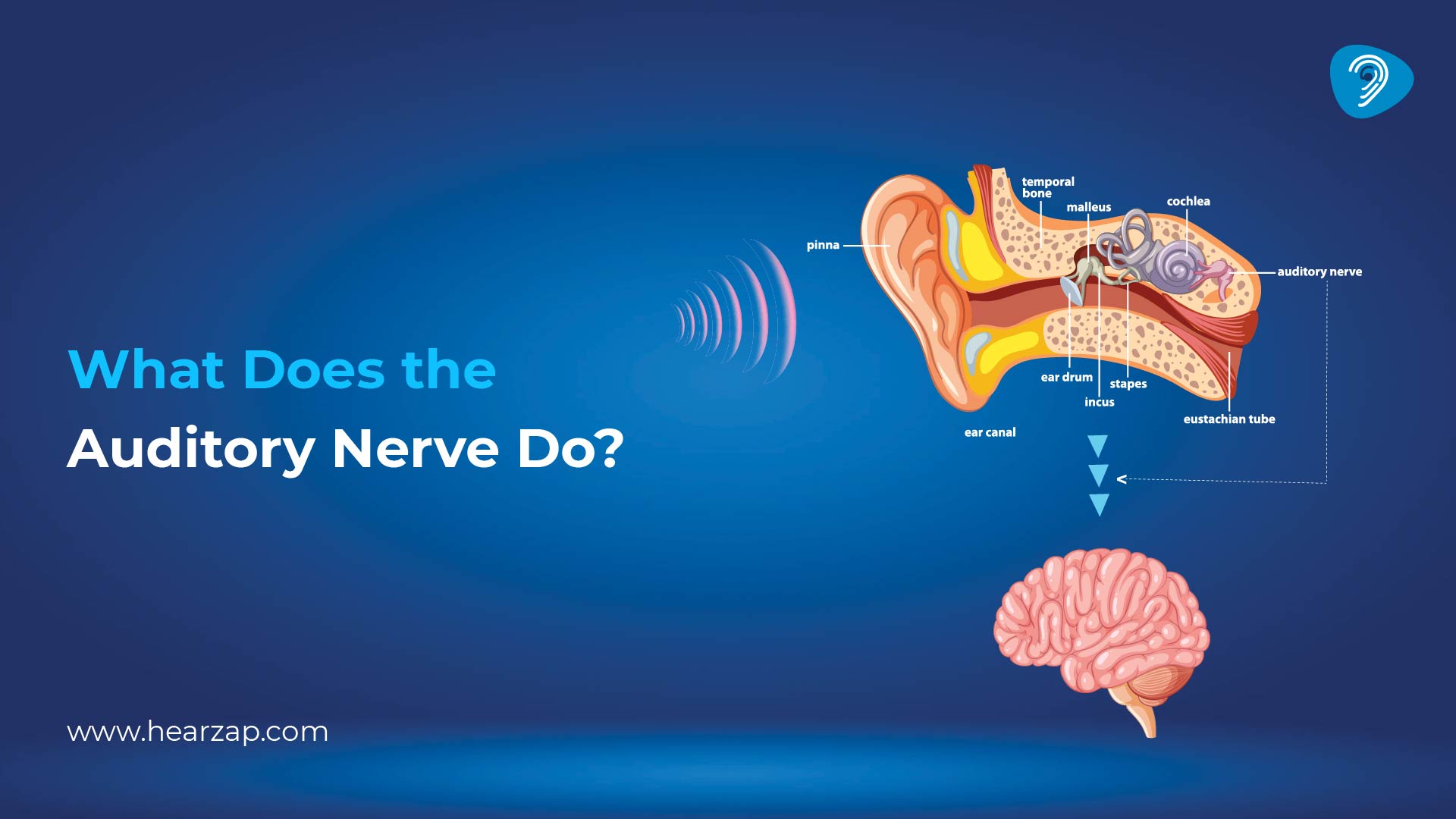
The auditory nerve is an important part of the hearing system that carries sound signals from the inner ear to the brain. When sound waves enter the ear, they are changed into electrical signals inside the cochlea. The auditory nerve then sends these signals to the brain, where they are understood as speech, music, or other sounds.
Without the auditory nerve, the brain would not be able to process hearing signals properly, making clear hearing and sound recognition difficult. This guide explains the auditory nerve, its function, and why it matters for hearing health.
What Is the Auditory Nerve?
The auditory nerve is also called the hearing nerve. It connects the cochlea, which is the hearing part of the inner ear, to the brain. Its main role is to carry electrical hearing signals after sound has been changed into nerve messages inside the cochlea.
Sound does not travel to the brain as normal noise. Sound first enters the ear as vibration. The cochlea changes this vibration into signals, and the auditory nerve sends those signals to the brain so they can be understood as speech, music or background sound.
Auditory Nerve Anatomy Explained
Auditory nerve anatomy is easier to understand when seen as part of overall ear anatomy. Sound information starts in the cochlea, moves through the hearing nerve and reaches the brain’s hearing centres.
Below, the main parts of the auditory nerve pathway are explained clearly to show how each part supports better hearing:
Connection between the Cochlea and the Brain
The auditory nerve starts from nerve cells linked to the cochlea. The cochlea is a small spiral-shaped structure inside the inner ear. It receives sound vibrations and starts the process of turning them into hearing signals.
From the cochlea, the nerve carries these signals towards the brain. The brain then reads the signal pattern and gives meaning to the sound. This is why the connection between the cochlea and the brain is important for everyday hearing.
Nerve Fibres and Hearing Signals
The hearing nerve has many tiny nerve fibres. These fibres carry sound information in an organised way. Each fibre helps pass details about the sound, such as pitch, loudness and timing.
Different nerve fibres respond to different sound frequencies. This helps the brain separate high and low sounds. This separation is important for understanding speech, listening to music and noticing changes in the sounds around you.
Relationship with Inner Ear Structures
The auditory nerve works closely with the cochlea and the hair cells inside it. Hair cells are small sensory cells that react when sound vibrations move through the inner ear. They help create the signals that the nerve carries.
This teamwork helps the ear process sound in a smooth way. If the cochlea or hair cells are affected, the nerve may receive weak or unclear signals. This can reduce hearing clarity.
Auditory Nerve Function
Auditory nerve function begins after sound enters the ear. Sound passes through the outer ear, reaches the eardrum and moves through the middle ear. These movements reach the cochlea, where sound vibrations are changed into electrical hearing signals.
The auditory nerve then sends these signals to the brain. The brain studies the pattern and understands it as speech, music, a warning sound or general noise. This process happens very quickly, which is why hearing feels natural and immediate.
Auditory Nerve Ear Function in Hearing
Auditory nerve ear function is important for clear hearing. The nerve carries sound details that help the brain understand what is being heard. These details include pitch, volume, timing and sound quality.
This role is especially important for speech understanding. A person may hear that someone is talking, but if the signals are unclear, the words may not sound clear. A timely hearing test can help check how well sound is being heard and understood.
What Happens if the Auditory Nerve Is Damaged?
If the auditory nerve is damaged, sound signals may not reach the brain properly. The ear may still detect sound, but the brain may receive incomplete, weak or mixed signals. This can affect how clearly a person understands speech and other sounds.
Common signs may include:
- Hearing loss in one or both ears
- Difficulty understanding speech
- Trouble following conversations in noisy places
- Tinnitus, such as ringing or buzzing sounds
- Sound that feels unclear or distorted
- Auditory neuropathy
In many cases, these hearing changes may appear gradually and can be mistaken for normal communication difficulty. Knowing the common signs of hearing loss may help people recognise when professional hearing support is needed.
Common Conditions Affecting the Hearing Nerve
Several conditions can affect the hearing nerve or the signal pathway between the inner ear and the brain. The effect may be mild or severe depending on the cause.
Common conditions include:
- Auditory Neuropathy: In this condition, sound may enter the inner ear, but the signal may not travel properly to the brain.
- Acoustic Neuroma: This is a non-cancerous growth linked to the nerve that supports hearing and balance. It may cause hearing changes, tinnitus or balance issues.
- Age-Related Nerve Changes: Ageing may affect the inner ear, hair cells and nerve pathway over time.
- Noise-Induced Hearing Problems: Long or sudden exposure to loud sound may affect inner ear structures and nerve fibres.
These conditions need professional assessment because symptoms can overlap. Hearing difficulty, ringing in the ear, and poor speech clarity may have different causes, so proper testing is important.
How Is Auditory Nerve Damage Diagnosed?
Auditory nerve concerns are checked through hearing and medical evaluations. The first step is usually a detailed discussion about symptoms, hearing difficulty, noise exposure, medical history and daily listening challenges.
Diagnosis may include hearing tests, speech recognition tests and an audiology evaluation. In some cases, MRI scans or special nerve response tests may be advised by a medical professional. These tests help understand whether the issue is linked to the cochlea, hearing nerve or another part of the ear and brain pathway.
Treatment Options for Auditory Nerve Problems
Treatment depends on the cause of the problem, the level of hearing difficulty and the test results. Not every hearing nerve issue is treated in the same way, so professional advice is important. Many people also search for hearing aids vs cochlear implant information to better understand different hearing support options.
Possible care options may include:
- Hearing Aids: These may support people who still have some level of hearing and need better access to sound. Many people also prefer to buy hearing aids online for added convenience and access to different hearing support options.
- Cochlear Implants: These may be considered in selected cases when hearing aids are not enough. Suitability depends on specialist evaluation.
- Auditory Therapy: Listening practice may support speech understanding and help the brain use sound signals more effectively.
- Medical Treatment: If the cause is related to infection, growth, injury or another medical concern, treatment depends on the diagnosis.
How to Protect Your Auditory Nerve
Protecting the auditory nerve starts with protecting the inner ear. Loud sound, poor ear care and delayed check-ups can affect hearing health over time.
Helpful steps include:
- Avoid long exposure to loud noise.
- Use ear protection in noisy places.
- Keep the earphone and headphone volume at a safe level.
- Take breaks during long listening periods.
- Maintain a healthy lifestyle with good sleep, balanced food and regular health care.
- Avoid putting objects inside the ear.
- Get regular hearing check-ups, especially if hearing changes are noticed.
Long-term exposure to loud sound can increase the risk of noise-induced hearing loss and may also affect the inner ear structures connected to hearing signals.
Why Choose Hearzap for Hearing Care?
Hearzap offers hearing care support for people who want clear testing, expert guidance and suitable hearing solutions. Its services include advanced hearing tests, audiologist consultation, hearing aid consultation and personalised hearing care solutions.
With multiple centres across India, Hearzap makes hearing care more accessible for people with different hearing needs. If someone notices changes in hearing clarity, speech understanding or tinnitus, they can book an appointment with a hearing care professional for the right guidance.
FAQs
1. What is the auditory nerve?
The auditory nerve is the hearing nerve that connects the cochlea in the inner ear to the brain. It carries electrical sound signals so the brain can understand sounds.
2. What is the function of the auditory nerve?
The function of the auditory nerve is to send hearing signals from the cochlea to the brain. The brain then understands these signals as speech, music or other sounds.
3. What happens if the auditory nerve is damaged?
If the auditory nerve is damaged, sound signals may not reach the brain clearly. This may cause hearing loss, poor speech understanding, tinnitus or auditory neuropathy.
4. Is the auditory nerve connected to the brain?
Yes, the auditory nerve is connected to the brain. It carries sound signals from the inner ear to the brain’s hearing centres.
5. Can hearing aids help auditory nerve problems?
Hearing aids may help some people, depending on the type and level of hearing difficulty. A hearing test and audiologist evaluation can help decide whether hearing aids are suitable.
6. What causes auditory nerve damage?
Possible causes include ageing, loud noise exposure, auditory neuropathy, acoustic neuroma, injury, infection or other medical conditions.



Contact us
We are here for all your hearing needs, from hearing tests to hearing aids. Fill out the form below, and we will give you a call soon.
Recent Blogs
By None | Sept. 9, 2026
By None | Sept. 7, 2026
By None | Sept. 5, 2026
By None | Sept. 4, 2026
By None | Sept. 2, 2026