Generic
Central Auditory Processing Disorder in Children: Signs Every Parent Should Know
By Team Hearzap | June 5, 2026
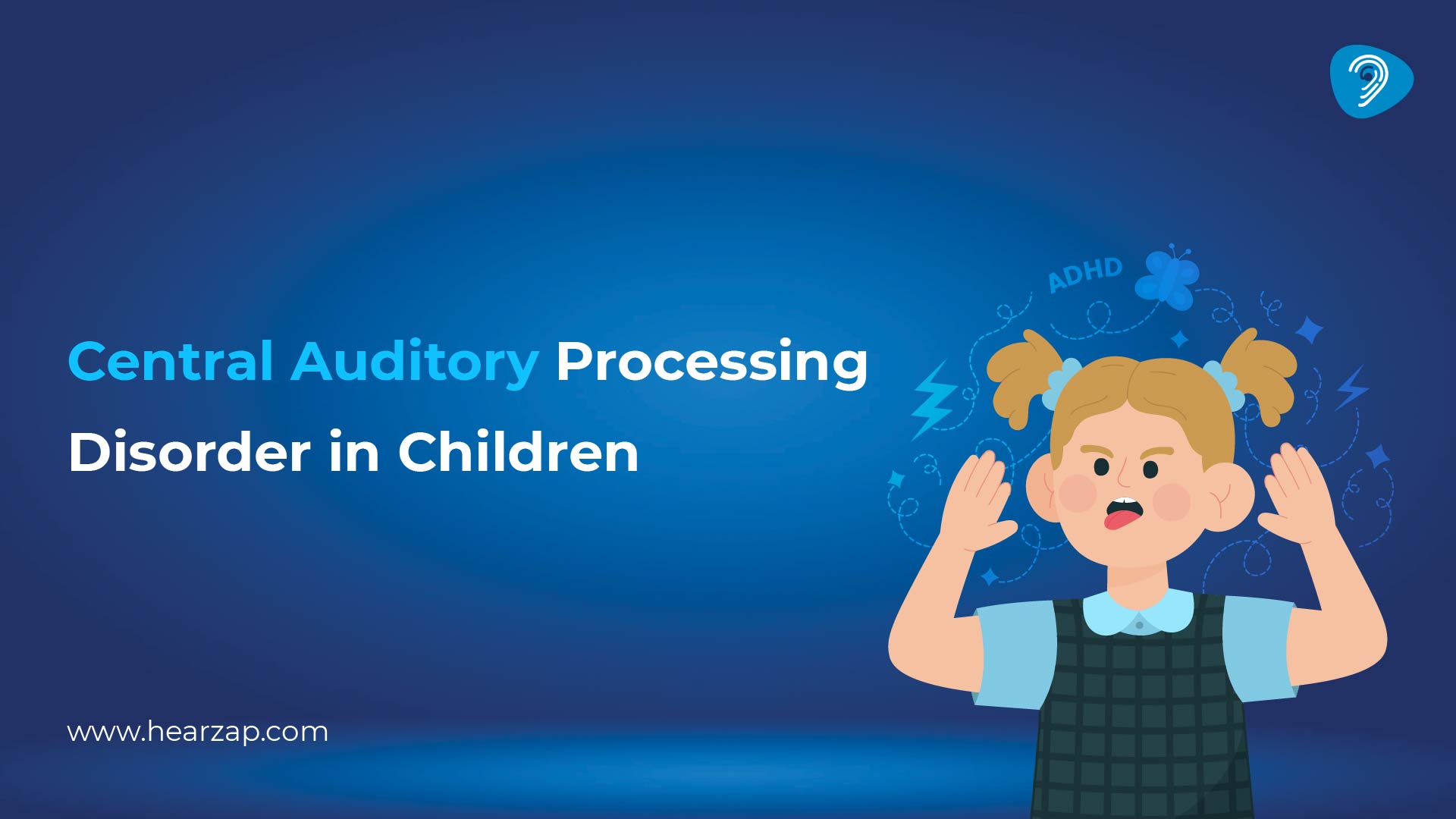
A child may hear sounds clearly but still struggle to understand spoken words. This can happen in central auditory processing disorder, where hearing ability may be normal, but the brain does not process sound clearly.
Children with CAPD may find it hard to follow instructions, listen in classrooms or answer questions quickly. A proper assessment can show whether the child has a hearing problem, a sound processing problem or another concern.
What Is Central Auditory Processing Disorder?
Central auditory processing disorder is a listening-related condition where the brain has difficulty processing auditory information correctly. The child may hear sounds, voices and words, but may not understand them clearly, especially when speech is fast, lengthy or surrounded by background noise.
This can affect how a child follows spoken instructions, understands speech in a classroom, responds during conversation and keeps up with language-based learning. CAPD may also be associated with attention, language or learning concerns, which is why a careful evaluation is important.
Central Auditory Processing Disorder in Children
Central auditory processing disorder in child development may become more noticeable during school years. A child has to listen to teachers, remember instructions, answer questions and follow group discussions. If the brain does not process speech clearly, these tasks can feel tiring and confusing.
CAPD may affect school performance in several ways:
- Difficulty understanding the teacher when the class is noisy.
- Trouble remembering instructions given verbally.
- Slow response when asked a question.
- Poor performance in spelling, reading or language-based tasks.
- Tiredness after long listening periods.
- Confusion when instructions have several steps.
A hearing test is often the first step because it can show whether the child has any hearing-related concerns before auditory processing is checked. Parents should also be aware that hearing loss in children can sometimes show similar classroom difficulties, so professional evaluation is essential.
Signs and Symptoms of Central Auditory Processing Disorder
Central auditory processing disorder symptoms can look different in each child. Some children mainly struggle in noise, while others may also have reading, spelling or language difficulties. The signs of central auditory processing disorder should be seen as warning signs, not as a confirmed diagnosis.
Common symptoms of central auditory processing disorder include asking for repetition, slow answers, poor listening in class, confusion with long sentences and difficulty remembering spoken information. Here are some common signs and symptoms parents may notice in a child with central auditory processing disorder:
Difficulty Following Verbal Instructions
A child with CAPD may need the same instruction repeated many times. Long sentences can be hard because the child has to listen, remember and organise information together. The child may hear the words, but may miss the order or meaning. This can affect schoolwork, homework and daily routines at home.
Poor Listening Skills in Noise
Background noise can make speech harder to understand for children with CAPD. The child may miss important words when the teacher speaks in a busy classroom. This difficulty may not be obvious at home if the home is quieter. That is why school feedback is often important during assessment.
Delayed Response to Questions
Some children with CAPD take longer to answer a question. They may need extra time to understand what was asked and plan their response. At times, the answer may seem incorrect or unrelated because the child did not process the full question clearly.
Reading and Learning Difficulties
CAPD can affect skills linked to language learning. A child may find it hard to connect sounds with letters, remember spoken words or understand sentence meaning. This can affect reading, spelling and classroom learning. Some children may also need more time to understand lessons that are mainly taught through spoken instructions.
Easily Distracted by Sounds
A child with CAPD may find it hard to focus on one voice when other sounds are present. Small background sounds may pull attention away from the conversation. This can make the child seem distracted, but the child may actually be trying harder to separate speech from noise.
These symptoms can vary from child to child, so parents should look for repeated listening difficulties rather than one-time behaviour.
Causes of Central Auditory Processing Disorder
The causes of central auditory processing disorder are not always clear. In many children, there may be more than one contributing factor. CAPD may be linked with the way the auditory pathways and brain networks develop, but each child needs individual evaluation.
Possible contributing factors may include:
- Developmental delays affecting listening and language skills.
- Frequent ear infections during early childhood.
- Brain injury or neurological conditions.
- Genetic influences in some cases.
- A history of listening, speech or learning difficulties.
How Is CAPD Diagnosed?
CAPD is diagnosed through a detailed assessment. The process usually starts with a hearing test to check whether the child can detect sounds. This helps separate CAPD from hearing loss in children.
A full evaluation may include:
- Evaluation by an audiologist and specialists.
- Standard hearing tests to check sound detection.
- Middle-ear checks, where needed.
- Auditory processing tests assess how the brain processes sound.
- Speech and language assessment.
During the hearing evaluation, an audiologist may also use the speech banana to explain how speech sounds are heard at different sound levels and pitches.
Central Auditory Processing Disorder Treatment
Central auditory processing disorder treatment depends on the child’s age, test results and daily listening difficulties. Treatment may include therapy, classroom changes and assistive listening tools. A child may need one type of support or a mix of different supports.
Below are some common treatment and support options that may be recommended for children with central auditory processing disorder:
Auditory Training Therapy
Auditory training therapy uses listening activities to improve how the child understands sound. These activities may focus on speech sounds, listening in noise and remembering spoken information.
Speech and Language Therapy
Speech and language therapy can support children who have difficulty understanding spoken language or expressing themselves clearly. It may also support vocabulary, sentence understanding and classroom communication.
Classroom Support Strategies
Classroom support can reduce listening strain. Helpful steps may include sitting closer to the teacher, reducing background noise and giving written or visual instructions. Teachers can also break instructions into smaller steps and check understanding. Visual learning support can make lessons easier to follow.
Hearing Devices and Assistive Technology
Some children may benefit from assistive listening tools, such as FM systems. These tools can make the teacher’s voice clearer in noisy areas and may support hearing enhancement in speech enhancement goals.
Hearing devices are not needed for every child with CAPD. So parents looking for the best hearing aids for children should first take advice from a qualified hearing care professional.
Tips for Parents Managing CAPD in Children
Parents can support a child with CAPD through simple daily habits. Speak clearly, keep sentences short and make sure the child is looking at you before giving instructions. It is better to give one instruction at a time than to give many steps together.
Helpful parent strategies include:
- Speak clearly and at a calm pace
- Gain the child’s attention before giving instructions
- Keep instructions short and direct
- Reduce background noise during study or conversation
- Use visual cues, written reminders and routine charts
- Ask the child to repeat key information in their own words
- Encourage reading and listening activities suited to the child’s level
- Share assessment findings with teachers when appropriate
If hearing support is also advised after evaluation, parents should consult an audiologist before they buy hearing aids online for their child.
Difference Between CAPD and Hearing Loss
CAPD and hearing loss are not the same. Hearing loss affects the ability to detect sounds. CAPD affects how the brain understands sounds after they are heard.
Why Choose Hearzap for Pediatric Hearing Care?
Children need hearing care that feels calm, clear and age-appropriate. Hearzap provides access to expert audiologists, child-friendly hearing evaluations and advanced hearing assessments for children with listening, speech and hearing concerns. For parents worried about central auditory processing disorder, hearing loss or speech understanding concerns, the first step is a proper evaluation.
A careful assessment can show whether the child’s difficulty is linked to hearing, sound processing or another related area. If a child struggles to follow instructions, understand speech in noise or keep up with classroom listening, book an appointment with Hearzap for a professional hearing evaluation and guidance on the next step.
FAQs
1. What is central auditory processing disorder?
Central auditory processing disorder is a condition in which the child can hear sounds, but the brain has difficulty understanding and processing those sounds clearly.
2. What are the symptoms of CAPD in children?
Common symptoms of CAPD in children include difficulty following verbal instructions, poor listening in noisy places, slow response to questions, reading or spelling difficulties and frequent need for repetition.
3. What causes central auditory processing disorder?
The causes of central auditory processing disorder may include developmental delays, frequent ear infections, brain injury, neurological conditions or genetic factors in some cases.
5. Can CAPD be treated?
CAPD can be managed with the right support. Treatment may include auditory training therapy, speech and language therapy, classroom support and assistive listening tools where needed.
6. Is CAPD the same as hearing loss?
No, CAPD is not the same as hearing loss. Hearing loss affects the ability to detect sounds, while CAPD affects how the brain understands sounds after they are heard.
7. How do audiologists test for CAPD?
Audiologists may begin with a hearing test and then use auditory processing tests to check how the brain processes sound. Speech and language assessment may also be recommended.
8. Are hearing aids useful for CAPD?
Hearing aids are not needed for every child with CAPD. They may be useful only if the child also has hearing loss or if an audiologist recommends hearing support tools.
Contact us
We are here for all your hearing needs, from hearing tests to hearing aids. Fill out the form below, and we will give you a call soon.
Recent Blogs
By None | Sept. 7, 2026
By None | Sept. 5, 2026
By None | Sept. 4, 2026
By None | Sept. 2, 2026
By None | Sept. 1, 2026