Generic
What Is Selective Hearing? Myth or Medical Condition?
By Team Hearzap | June 6, 2026
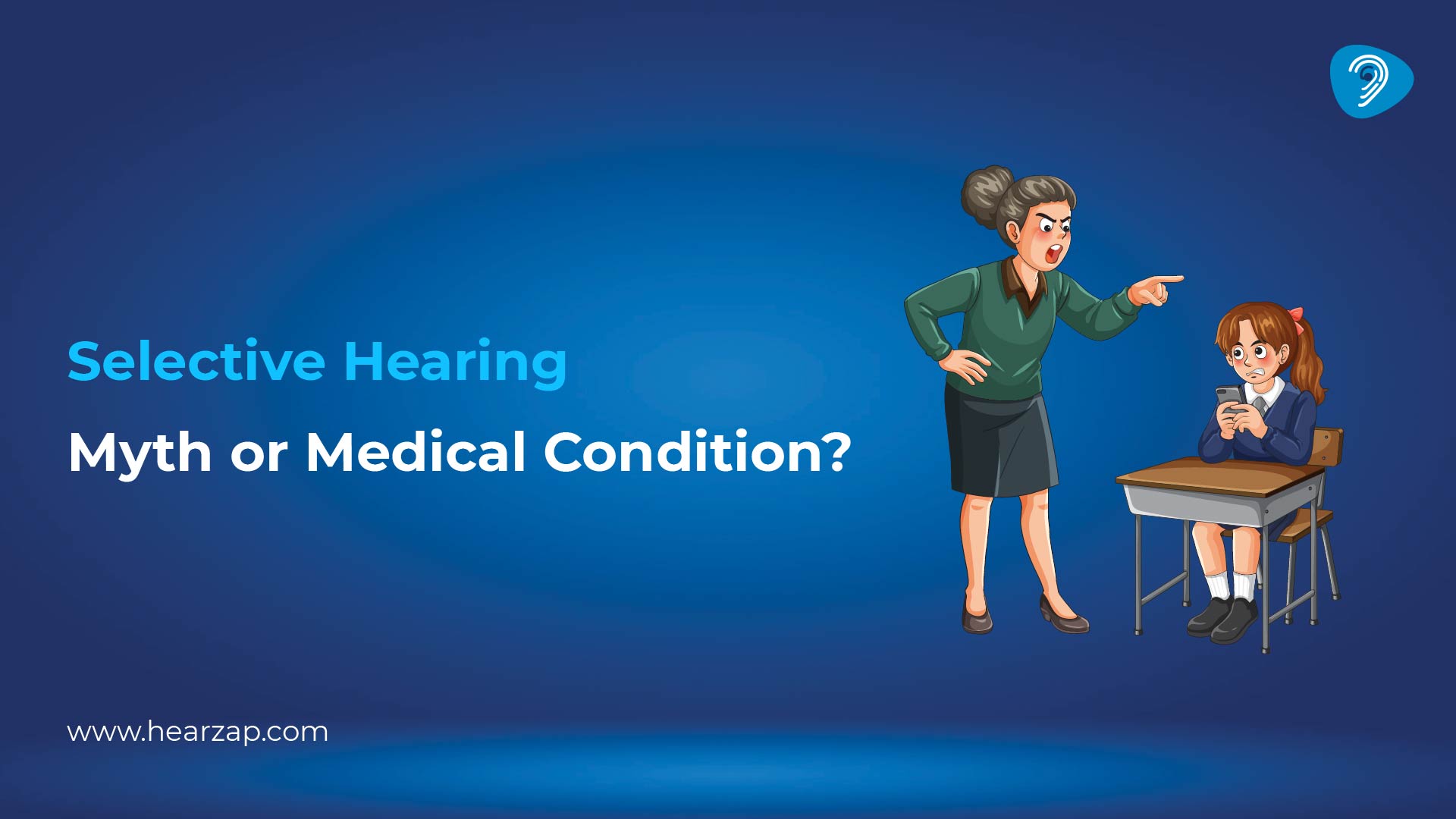
Many people think selective hearing means someone is not listening properly, but the reason can be more complex. Hearing is not only about the ears receiving sound. The brain also decides which sounds need attention and which sounds should move into the background.
This is why a person may hear some words clearly but miss others during a conversation. When this happens often, especially in noisy places or daily discussions, a hearing test at Hearzap can help understand the reason.
What Does Selective Hearing Mean?
Selective hearing means the brain focuses on some sounds and pays less attention to others. It is part of how people listen in daily life. The brain cannot treat every sound with the same level of importance, so it gives more focus to speech, sound or information that seems useful at that moment. This is why listening can change from one place to another, even when the ears are working normally.
This can happen when background noise fades while one conversation becomes easier to follow. It can also happen when a person is busy, tired or focused on another task. Occasional selective hearing is usually not a concern. It becomes important when it affects conversations, work, study, family communication or social confidence. If a person often hears sounds but misses words, the concern should be checked instead of being treated as a habit.
Is Selective Hearing a Myth or a Real Medical Condition?
Selective hearing is not always a medical condition, and it should not always be treated as such; someone is ignoring another person. In many situations, it happens because the brain is trying to focus on one sound while other sounds move into the background. This can happen during conversations, work, travel or busy home environments. When it happens once in a while, it may simply be part of normal listening and attention.
The concern starts when selective hearing becomes frequent and begins to affect daily conversations. If a person often misses words, struggles to follow speech in noisy places or needs repeated clarification, the issue may be linked to hearing loss, age-related hearing changes, ear health concerns or auditory processing difficulty. In such cases, selective hearing disorder or selective hearing syndrome may be used to describe the repeated listening problem, but the exact reason should be confirmed through a professional hearing assessment.
Selective Hearing Symptoms
Selective hearing symptoms can look like poor attention, but they may also show that speech is not being heard or understood clearly. These signs are more important when they happen often or when they make daily communication feel tiring, unclear, stressful or harder than it used to be.
Common signs may include:
- Difficulty focusing on conversations.
- Missing parts of speech during group discussions.
- Misunderstanding words even when the speaker is nearby.
- Trouble hearing clearly in noisy places.
- Asking people to repeat themselves often.
- Finding phone conversations harder than face-to-face conversations.
- Depending more on facial expressions while listening.
Causes of Selective Hearing
Selective hearing can happen due to attention, hearing ability or the way the brain understands sound. The cause may be temporary in some people, while others may need a hearing check or medical review.
Common causes may include:
- Stress and Distraction: When the mind is tired, busy or stressed, it may not focus fully on speech. This can make a person miss words even when they are trying to listen.
- Hearing Loss: Hearing loss can make speech sound unclear, especially in noisy places. A person may hear that someone is speaking but may not understand every word correctly.
- Auditory Processing Issues: In some people, the ears may detect sound, but the brain may find it difficult to process speech clearly. This can make listening harder during conversations.
- Age-Related Hearing Changes: Hearing may change gradually with age. Speech clarity can reduce over time, especially when there is background noise.
- Neurological Conditions: Some neurological concerns may affect attention, memory or sound understanding. In such cases, medical consultation may be needed along with a hearing assessment.
Selective Hearing Treatment Options
Selective hearing treatment depends on the reason behind the listening problem. The aim is to find whether the concern is linked to attention, ear health, hearing ability or sound processing. Once the cause is clearer, the care plan can be more useful and easier to follow.
Treatment and support options may include:
- A professional hearing test to check hearing ability.
- Speech understanding tests when words sound unclear.
- Ear health checks when blockage, pain or infection is suspected.
- Hearing aids, when hearing loss is diagnosed.
- Auditory training when sound-processing difficulty is suspected.
- Lifestyle changes to reduce background noise and listening strain.
- Medical consultation for sudden hearing change, dizziness, ear pain or tinnitus.
Hearing Tests and Diagnosis
A hearing test is often the first step in understanding selective hearing. It checks how well a person hears different sounds, tones and speech. It may also show whether speech clarity is affected, even if the person can still hear many everyday sounds.
An audiologist may ask about listening difficulty, ear history, noise exposure, work environment and medical background. The test results can guide the next step, such as hearing care, medical consultation, auditory training or hearing aid advice. This process keeps the treatment practical and avoids guesswork. It also helps decide whether the concern needs regular monitoring, hearing devices, medical review or changes in daily communication habits.
How Hearzap Can Support Hearing Issues
When selective hearing starts affecting daily conversations, the first step is to understand whether the difficulty is related to attention, hearing loss or sound processing. Hearzap helps with this through professional assessment and guided hearing care.
Hearzap can support users through:
- Professional Hearing Tests: A hearing test helps check how clearly sounds and speech are being heard.
- Certified Audiologists: Trained audiologists review the test results and explain the possible reason behind the listening concern.
- Modern Hearing Aid Solutions: If hearing loss is found, suitable hearing aid options may be suggested based on the test results and daily listening needs.
- Personalised Hearing Care: The care plan can be guided by comfort, communication needs and the level of hearing difficulty.
- Online Hearing Aid Support: Users can buy hearing aids online after a proper assessment and expert guidance.
- Easy Appointment Booking: Users can book an appointment at Hearzap to get their hearing checked and understand the next step clearly.
Tips to Improve Listening and Hearing Focus
Better listening depends on attention, hearing health and the listening environment. These steps may reduce strain and make conversations easier to follow.
Useful tips include:
- Reduce background noise during important conversations.
- Look towards the speaker while listening, as visual cues can make speech easier to follow.
- Avoid doing many tasks during conversations.
- Protect the ears from loud sounds.
- Avoid unsafe ear cleaning habits.
- Maintain regular hearing checkups.
- Seek professional advice if the problem continues.
- Use prescribed hearing devices as advised, if they have already been recommended.
Conclusion
Selective hearing can be a normal part of how the brain manages sound. It may happen when a person is tired, distracted or surrounded by many sounds. It may also become a concern when speech is missed often, or conversations start feeling difficult.
When selective hearing affects daily life, it may be linked to hearing loss, auditory processing difficulty or another health concern. A professional hearing test can make the cause clearer and guide the right care. Early support can improve communication, reduce listening strain and help people feel more confident in daily conversations.
FAQs
1. Is selective hearing a medical condition?
Selective hearing is not always a medical condition. It can be a normal attention process. When it happens often and affects communication, it may be linked to hearing loss, auditory processing difficulty or another health concern.
2. How do I fix my selective hearing?
The right step depends on the cause. Reducing background noise, focusing on the speaker, managing stress and taking a hearing test may support better listening. If the problem continues, an audiologist can guide the next step based on hearing test results and daily listening needs.
3. What are the common selective hearing symptoms?
Common selective hearing symptoms include difficulty focusing on conversations, misunderstanding speech, trouble hearing in noisy places and asking people to repeat themselves often. Some people may also feel tired after long conversations.
4. What causes selective hearing?
Selective hearing may be caused by distraction, stress, hearing loss, auditory processing issues, age-related hearing changes or neurological concerns. Earwax, ear infections and loud sound exposure may also affect hearing in some people.
5. What are the treatment options for selective hearing?
Selective hearing treatment may include hearing tests, hearing aids, auditory training, lifestyle changes and medical consultation. The most suitable option depends on the test results and the person’s listening needs.
6. How is selective hearing diagnosed?
Selective hearing is diagnosed through symptom review, hearing history and professional hearing tests. An audiologist may check tone hearing and speech understanding. Further assessment may be suggested if auditory processing difficulty is suspected or if symptoms do not match the basic hearing test results.
Related Blogs

Balloon Eustachian Tuboplasty
Ossiculoplasty: A Complete Guide to Middle Ear Reconstruction
What Is Immittance Audiometry? A Complete Beginner’s Guide
What Is Labyrinthectomy? When Is This Ear Surgery Recommended?
Feeling Dizzy? Here’s How Your Vestibular System Keeps You Steady
Central Auditory Processing Disorder in Children: Signs Every Parent Should Know

Meniere's Disease: Symptoms, Causes & Treatment

How to Unclog Ears: Easy Remedies & Expert Tips
Contact us
We are here for all your hearing needs, from hearing tests to hearing aids. Fill out the form below, and we will give you a call soon.
Recent Blogs
By None | Sept. 7, 2026
By None | Sept. 5, 2026
By None | Sept. 4, 2026
By None | Sept. 2, 2026
By None | Sept. 1, 2026