Generic
Cochlea Anatomy Explained: How This Tiny Spiral Powers Your Hearing
By Team Hearzap | June 2, 2026
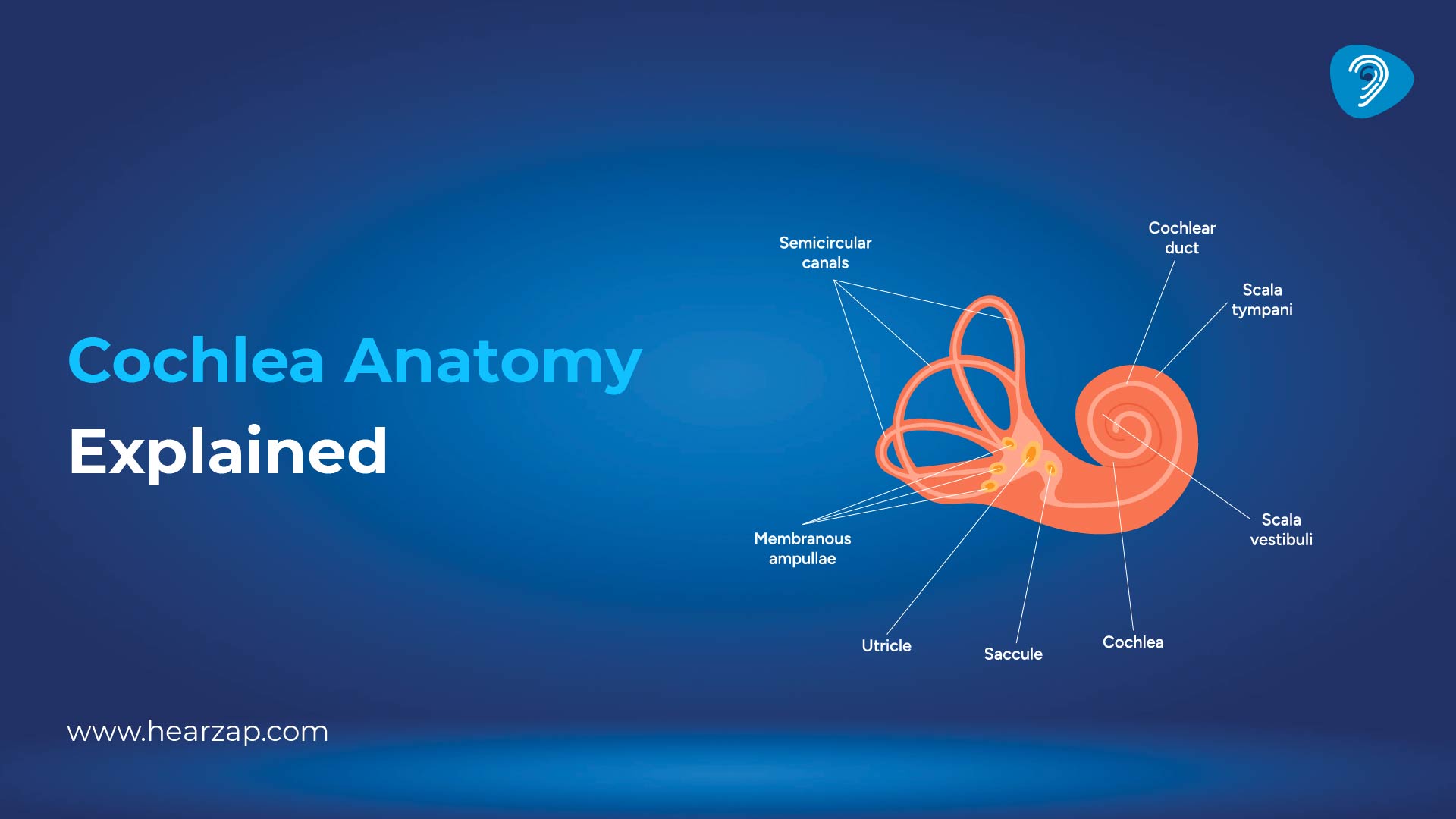
The cochlea is a tiny spiral-shaped structure located in the inner ear that plays a vital role in the hearing process. It works by converting sound vibrations into electrical nerve signals that the brain can understand as sound. Filled with fluid and lined with sensitive hair cells, the cochlea helps detect different sound frequencies and volumes.
As one of the most important parts of the inner ear, it allows humans to hear and recognise speech, music, and everyday sounds clearly.
What Is the Cochlea?
The cochlea is a spiral-shaped organ inside the inner ear. It is filled with fluid and has tiny sensory cells that respond when sound vibrations reach the inner ear. These cells help change sound movement into electrical signals for the brain.
The cochlea is one of the most important hearing structures because it helps the brain understand sound. The outer ear collects sound, the middle ear sends vibrations forward, and the cochlea turns those vibrations into signals that can be processed as speech, music, and everyday sounds.
Cochlea Anatomy Explained
In overall ear anatomy, the cochlea is one of the most important inner ear structures involved in hearing. Cochlear anatomy includes several small parts that work together in a smooth process. The spiral shape, hair cells, basilar membrane, cochlear nerve and fluids all support hearing in different ways.
Each part has a clear role. Some parts respond to sound vibrations, some detect movement inside the cochlea, and some carry signals to the brain. This is why even small changes inside the cochlea can affect how clearly a person hears.
Spiral Shape of the Cochlea
The cochlea has a snail-like shape and is placed deep inside the inner ear. It is commonly described as having around 2.5 turns, which allows a long hearing structure to fit into a very small space.
Hair Cells inside the Cochlea
Hair cells are tiny sensory cells inside the cochlea. They move when fluid inside the cochlea shifts, and this movement helps detect sound vibrations.
Basilar Membrane
The basilar membrane supports the hair cells. Different parts of this membrane respond to different sound frequencies, which helps the cochlea separate sounds before signals move towards the brain.
Cochlear Nerve
The cochlear nerve sends hearing signals from the cochlea to the brain. If this pathway is affected, sounds may be heard but may not be understood clearly.
Cochlear Fluids
Cochlear fluids help sound vibrations move through the cochlea. Their movement activates the hair cells and supports the process of changing vibration into nerve signals.
Inner Ear Cochlea Anatomy
Inner ear cochlea anatomy explains the position of the cochlea and its connection with nearby structures. The cochlea is located inside the inner ear, beyond the eardrum and the small bones of the middle ear. It connects with the auditory nerve, which sends hearing signals to the brain.
The inner ear also includes the vestibular system, which helps maintain balance, while the cochlea is responsible for hearing. These structures are close to each other, but their functions are different.
How Does the Cochlea Help You Hear?
Hearing starts when sound enters the outer ear and moves through the ear canal. The sound then reaches the eardrum, which begins to vibrate. These vibrations pass through the small bones in the middle ear. The middle ear then sends the vibration towards the inner ear. When the vibration reaches the cochlea, the fluid inside it starts to move. This movement creates waves inside the cochlea.
The waves move along the basilar membrane. As this happens, the tiny hair cells inside the cochlea become active. The hair cells change the movement into electrical signals. The cochlear nerve then picks up these signals. The cochlear nerve sends the signals to the brain. The brain reads these signals and understands them as sound. This process allows a person to hear speech, phone alerts, traffic sounds, music, and other daily sounds. It happens very quickly, but each step matters.
Ear Parts Cochlea Works With
The cochlea works with other parts of the ear to complete the hearing pathway. Sound must move through the outer ear, middle ear, and inner ear before the brain can understand it.
- The outer ear collects sound and sends it into the ear canal. The ear canal then carries the sound towards the eardrum.
- The eardrum vibrates when sound reaches it. These vibrations move through the tiny bones in the middle ear.
- The middle ear sends the vibration towards the cochlea. This is where the inner ear begins its main role in hearing.
- The cochlea changes the vibration into nerve signals. The auditory nerve then carries those signals to the brain.
This is why a complete hearing check is useful. Hearing evaluations also help specialists decide whether hearing support options like hearing aids or cochlear implants may be more suitable, which is why many people compare hearing aids vs cochlear implant treatments before making a decision.
Common Cochlea-Related Hearing Problems
Cochlear-related hearing problems can happen when the inner ear hair cells or the hearing nerve pathway are affected. These problems may reduce hearing clarity, make speech harder to understand, or affect how well a person hears in noisy places.
Common cochlea-related hearing problems include:
- Sensorineural Hearing Loss: This type of hearing loss may occur when the hair cells inside the cochlea or the auditory nerve are affected. It can make sounds seem unclear, even when they are loud enough.
- Noise-Induced Hearing Damage: Regular exposure to loud sounds can affect the delicate hair cells inside the cochlea. This may happen due to loud music, traffic noise, machinery, or unsafe sound levels over time.
- Ageing-Related Hearing Loss: Hearing can gradually reduce with age because of natural changes in the inner ear. The cochlea may become less sensitive to certain sounds, especially speech in noisy surroundings.
- Cochlear Damage from Infections or Trauma: Certain infections, injuries, sudden impact, or trauma may affect cochlear function. The effect can vary depending on the cause and how quickly the condition is checked.
Can Cochlear Damage Be Treated?
Early diagnosis is important. Treatment depends on the type and level of hearing loss. A hearing test is usually the first step because it shows how well a person hears different sounds and speech tones. The result helps the audiologist understand whether the concern may be linked to the cochlea or another part of the hearing pathway.
For mild to moderate sensorineural hearing loss, hearing aids may make speech and daily sounds easier to hear. People planning to buy hearing aids online should still use expert advice and hearing test results before selecting a device. For severe hearing loss, cochlear implants may be discussed after medical and audiology checks.
How to Protect Your Cochlea & Hearing Health
The cochlea is delicate, so daily hearing care matters. While every hearing concern cannot be prevented, safer habits may reduce avoidable risk.
- Avoid long exposure to loud sounds. Repeated exposure to high sound levels may affect the hair cells inside the cochlea and may increase the risk of noise-induced hearing loss over time.
- Use ear protection in noisy places. Earplugs or earmuffs can be useful in traffic-heavy areas, events, construction zones, and loud workplaces.
- Keep personal audio volume at a safer level. Listening at high volume for long hours may put pressure on the inner ear.
- Book regular hearing checks. A hearing test can identify changes early, especially when speech starts sounding unclear.
- Pay attention to sudden symptoms. Sudden hearing change, ringing, blocked feeling, dizziness, or ear pain should be checked by a qualified professional.
- Taking care of the cochlea can support better hearing comfort and help people respond earlier when hearing changes begin.
Why Choose Hearzap for Hearing Care?
At Hearzap, hearing care begins with a proper hearing evaluation. Advanced hearing tests can help identify the type and level of hearing loss, while expert audiologists explain the results in clear language and guide the next step based on the person’s hearing needs.
Hearzap also provides hearing aid consultation, cochlear implant guidance, and personalised hearing solutions. People who are unsure about hearing devices can book an appointment to understand suitable options, compare recommendations, and receive professional support before making a decision.
FAQs
1. What is the cochlea?
The cochlea is a spiral-shaped structure inside the inner ear. It contains fluid and tiny sensory hair cells that help change sound vibrations into nerve signals for the brain.
2. What is cochlea anatomy?
Cochlea anatomy means the structure of the cochlea. It includes the spiral shape, hair cells, basilar membrane, cochlear fluids, and cochlear nerve.
3. Where is the cochlea located?
The cochlea is located deep inside the inner ear. It is present beyond the eardrum and middle ear bones and connects with the auditory nerve.
4. Can cochlear damage cause hearing loss?
Yes, cochlear damage can cause hearing loss when sensory hair cells or the hearing nerve pathway are affected. The level of hearing loss can vary from person to person.
5. What is the inner ear cochlea anatomy?
Inner ear cochlea anatomy explains the cochlea’s position inside the inner ear and its connection with the auditory nerve and vestibular system. The cochlea supports hearing, while the vestibular system supports balance.
6. Can hearing aids help cochlear hearing loss?
Hearing aids may support people with mild to moderate cochlear hearing loss by making speech and daily sounds easier to hear. Suitability depends on hearing test results and professional advice.
Related Blogs
What Is Labyrinthectomy? When Is This Ear Surgery Recommended?
Feeling Dizzy? Here’s How Your Vestibular System Keeps You Steady
How to Unclog Ears: Easy Remedies & Expert Tips
Glomus Tympanicum: A Rare Ear Tumor You Should Know About
Tympanoplasty Surgery – Procedure, Symptoms, Recovery & Success Rate
Contact us
We are here for all your hearing needs, from hearing tests to hearing aids. Fill out the form below, and we will give you a call soon.
Recent Blogs
By None | Sept. 7, 2026
By None | Sept. 5, 2026
By None | Sept. 4, 2026
By None | Sept. 2, 2026
By None | Sept. 1, 2026