HEARING CARE
Tensor Tympani Syndrome
By Sharanya Krishnan - Audiologist | May 21, 2026
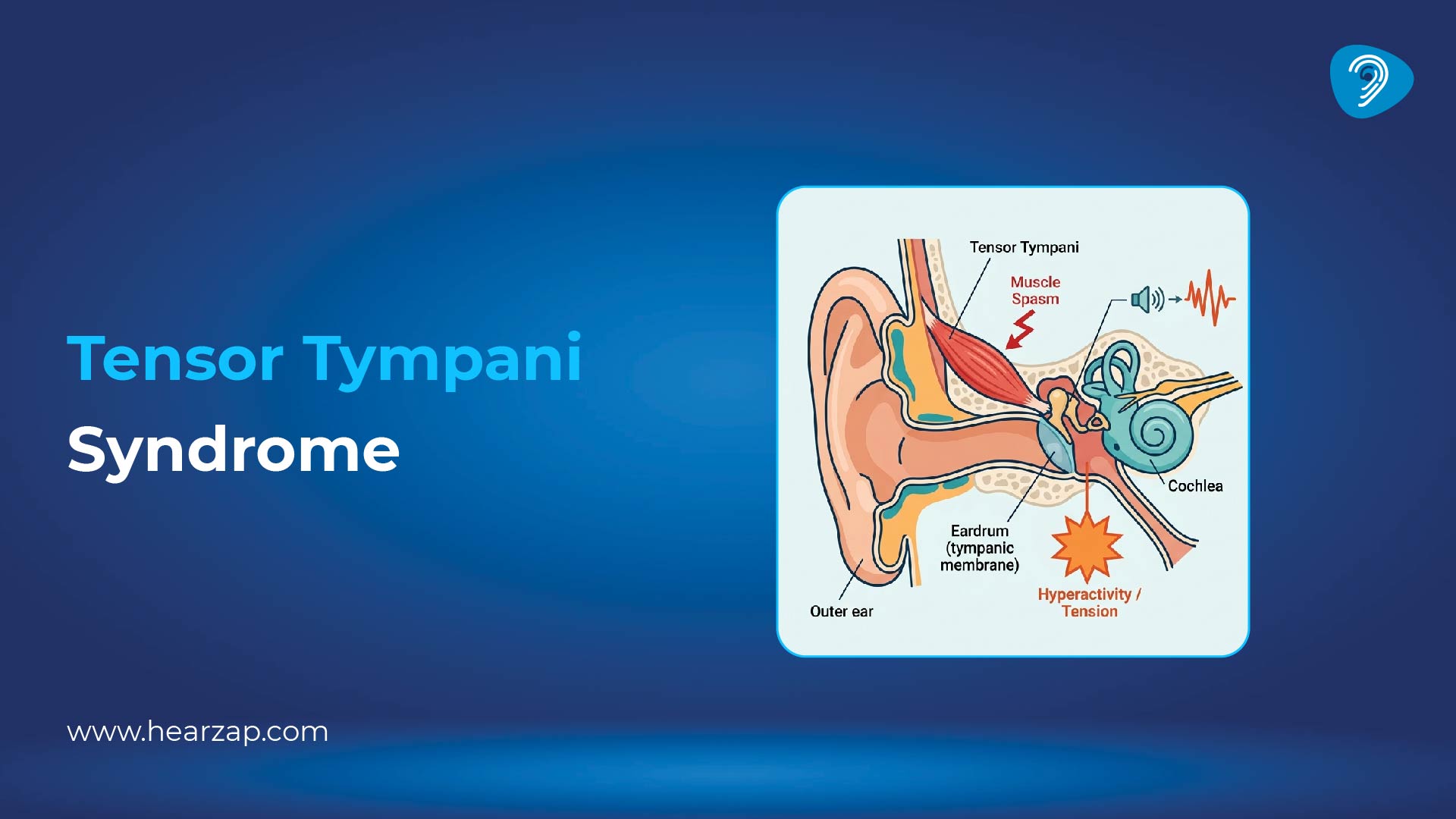
Most people have never heard of the tensor tympani muscle. It sits deep inside the middle ear, it's roughly the size of a staple, and under normal circumstances it works quietly in the background without ever drawing attention to itself.
But when this small muscle starts misfiring, the consequences are anything but small. Strange sounds, ear pain, a feeling of fullness, dizziness, and a collection of symptoms that can be remarkably difficult to explain, let alone diagnose. This is tensor tympani syndrome, a condition that remains under recognised despite causing real and significant distress to the people living with it.
What Does the Tensor Tympani Actually Do?
Before getting into what goes wrong, it helps to understand what this muscle is supposed to do.
The tensor tympani is one of two tiny muscles inside the middle ear, the other being the stapedius. Its job is to tighten the eardrum by pulling on the malleus, one of the three small hearing bones, when the ear is exposed to very loud sounds. This protective reflex stiffens the eardrum and reduces the amount of sound energy transmitted into the inner ear, essentially acting as a natural volume limiter. It also contracts in response to certain non-auditory triggers like swallowing, yawning, and in some people, sudden movement or startle.
Under normal circumstances, this contraction is brief, automatic, and completely unnoticed. The problem arises when the muscle begins contracting too frequently, too forcefully, or when it enters a state of sustained tension that it simply won't release.
What Is Tensor Tympani Syndrome?
Tonic tensor tympani syndrome is the term used when the tensor tympani muscle contracts in a chronic, sustained, or repetitive way that goes beyond its normal protective function. The word "tonic" here refers to sustained muscle contraction, rather than the occasional reflex it's supposed to be.
The condition is strongly associated with hyperacusis, which is an abnormal and often distressing sensitivity to everyday sounds. People with hyperacusis often develop a kind of anticipatory anxiety around noise, and this heightened state of alertness appears to keep the tensor tympani in a state of chronic readiness. Instead of contracting briefly and releasing, the muscle stays tensed or fires repeatedly in response to stimuli that wouldn't normally trigger it at all.
Anxiety and chronic stress are closely linked to this condition. The tensor tympani, unlike most other muscles involved in hearing, has connections to the trigeminal nerve and to pathways involved in the body's threat response system. In people who are in a prolonged state of stress or sensory overload, this muscle can essentially get caught up in the body's general state of high alert, contracting as though bracing for a threat that never quite arrives.
What Does It Feel Like?
This is where tensor tympani syndrome becomes genuinely difficult to pin down, because the symptoms vary considerably from person to person and overlap with a number of other ear conditions.
Common experiences include:
- A fluttering or thumping sensation inside the ear, often described as something vibrating or twitching behind the eardrum
- A low rumbling sound in the ear, sometimes constant, sometimes intermittent
- A sensation of fullness or pressure in the ear, similar to being underwater or having blocked ears on a plane
- Ear pain or discomfort without any visible sign of infection or inflammation
- Muffled hearing that comes and goes, particularly during or after episodes of muscle activity
- Dizziness or a sense of imbalance, since chronic middle ear muscle tension can affect the vestibular system indirectly
- Clicking or crackling sounds with swallowing or jaw movement
- Sensitivity to your own voice, which may sound oddly loud or distorted internally
Many patients describe the fluttering sensation as one of the most distressing elements, particularly because it tends to be unpredictable. It can start without warning, last for seconds or minutes, and then disappear completely, only to return at the most inconvenient times.
Why Is It So Difficult to Diagnose?
Chronic tensor tympani syndrome sits in a diagnostic grey zone that frustrates both patients and clinicians. Standard ear examinations look completely normal. The eardrum appears healthy. Hearing tests often come back within normal limits. There is no infection, no structural damage, no obvious cause. Patients are frequently reassured that nothing is wrong, which is deeply unhelpful when they're experiencing very real and disruptive symptoms.
Part of the difficulty is that there is no single definitive test for this condition. Diagnosis is largely clinical, meaning it's based on a careful and detailed history of symptoms, ruling out other possible causes, and considering the broader context of the patient's health, particularly stress levels, anxiety, and any history of sound sensitivity or hyperacusis.
Tympanometry can sometimes show subtle abnormalities in middle ear compliance during episodes, but results are often normal between episodes. Acoustic reflex testing may reveal abnormalities in how the middle ear muscles are functioning, providing a supporting clue. But neither test alone confirms the diagnosis.
What Drives It and Who Gets It?
A few consistent patterns emerge when looking at who develops this condition and what tends to trigger it.
- Noise trauma or sudden loud sound exposure is a common preceding event. Many patients trace the onset back to a period of intense noise exposure, after which their ears never quite settled.
- Anxiety disorders and heightened stress are strongly represented in this patient group. The connection between the nervous system's threat response and tensor tympani activity appears to be a significant driver.
- Hyperacusis and tinnitus frequently coexist with this condition, suggesting a shared underlying pattern of central auditory hypersensitivity.
- Jaw and TMJ problems can contribute, given the shared nerve pathways between the jaw muscles and the tensor tympani via the trigeminal nerve.
- Sudden onset following an illness, a period of extreme stress, or a traumatic event is reported by many patients.
What Helps?
Treatment is focused on addressing the underlying drivers rather than targeting the muscle directly, since there's no straightforward way to directly relax the tensor tympani from the outside.
- Sound therapy and desensitisation are central to management when hyperacusis is a contributing factor. Gradual, controlled reintroduction to everyday sound levels, guided by an audiologist, can reduce the hypersensitivity that keeps the muscle in a heightened state.
- Stress and anxiety management is not just a general wellness recommendation here. It's clinically relevant. Addressing the nervous system's state of chronic alertness through therapy, relaxation techniques, and where appropriate, medication, can directly reduce the frequency and severity of tensor tympani episodes.
- Cognitive behavioural therapy adapted for tinnitus and hyperacusis has shown benefit for many patients dealing with this cluster of symptoms, helping break the cycle of anticipatory anxiety that perpetuates muscle tension.
- Jaw and TMJ treatment can be helpful in cases where trigeminal nerve irritation from jaw dysfunction appears to be triggering muscle activity in the ear.
- Avoiding complete silence sounds counterintuitive but matters. In a completely silent environment, the brain becomes hypersensitive to internal sounds, which worsens awareness of tensor tympani activity. Low level background sound helps maintain a more balanced auditory baseline.
- Protecting ears appropriately but not excessively is a careful balance. Overuse of earplugs in everyday environments can actually worsen sound sensitivity over time rather than helping it.
The Bottom Line
Tensor tympani syndrome is one of those conditions that sits just outside mainstream awareness, despite causing very real problems for the people dealing with it. The symptoms are genuine. The distress is genuine. And the dismissal many patients experience when their ears look normal and tests come back clear is one of the most frustrating parts of the whole experience.
Understanding that a tiny muscle can cause such a wide range of symptoms, and that the nervous system, stress response, and sound environment all play a role, opens the door to a more coherent approach to treatment. If what's described here resonates with your experience, it's worth seeking out an audiologist or ENT specialist familiar with hyperacusis and middle ear muscle disorders. You don't have to keep being told nothing is wrong when something clearly is.
FAQs
How do you know if you have Tensor Tympani Syndrome?
Symptoms may include ear fluttering, clicking sounds, fullness, pain, or sound sensitivity.
What causes a swollen eardrum?
A swollen eardrum is usually caused by infection, inflammation, injury, or pressure changes.
How do I stop my tensor tympani from spasming?
Stress reduction, sound avoidance, relaxation techniques, and medical treatment may help reduce spasms.
How do you treat tensor tympani tinnitus?
Treatment may include sound therapy, stress management, medications, or treating the underlying trigger.

Sharanya Krishnan - Audiologist
Senior Manager – Training, Customer Experience & Business Development
With over 20 years of experience in hearing and speech healthcare. Passionate about client-centred care, I believe in a culture of empathy, trust, personalized support & focus on ensuring that every individual enjoys a seamless and fulfilling hearing care
Related Blogs
Vestibular Migraine: When Dizziness Is the Headache

Otosclerosis: When Your Ear's Own Bone Works Against You
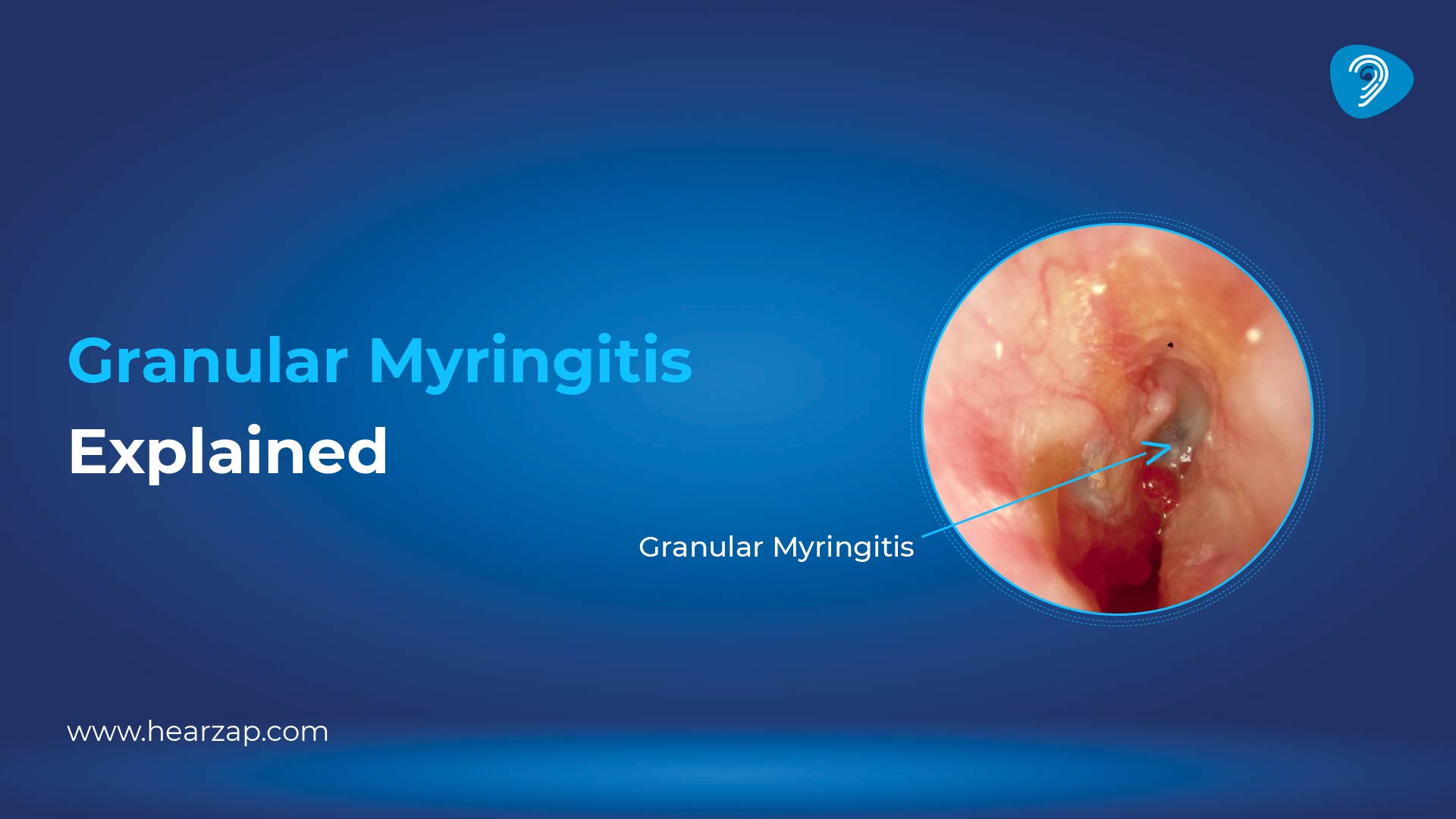
Granular Myringitis Explained: Symptoms, Causes & Treatment by Hearzap
Hyperacusis: Causes of Hearing Sensitivity and Treatment Options
Contact us
We are here for all your hearing needs, from hearing tests to hearing aids. Fill out the form below, and we will give you a call soon.
Recent Blogs
By None | Aug. 25, 2026
By Team Hearzap | Aug. 24, 2026
By Team Hearzap | Aug. 21, 2026
By None | Aug. 19, 2026
By None | Aug. 14, 2026