HEARING CARE
Auditory Neuropathy Spectrum Disorder
By Dattatreya M | June 10, 2026
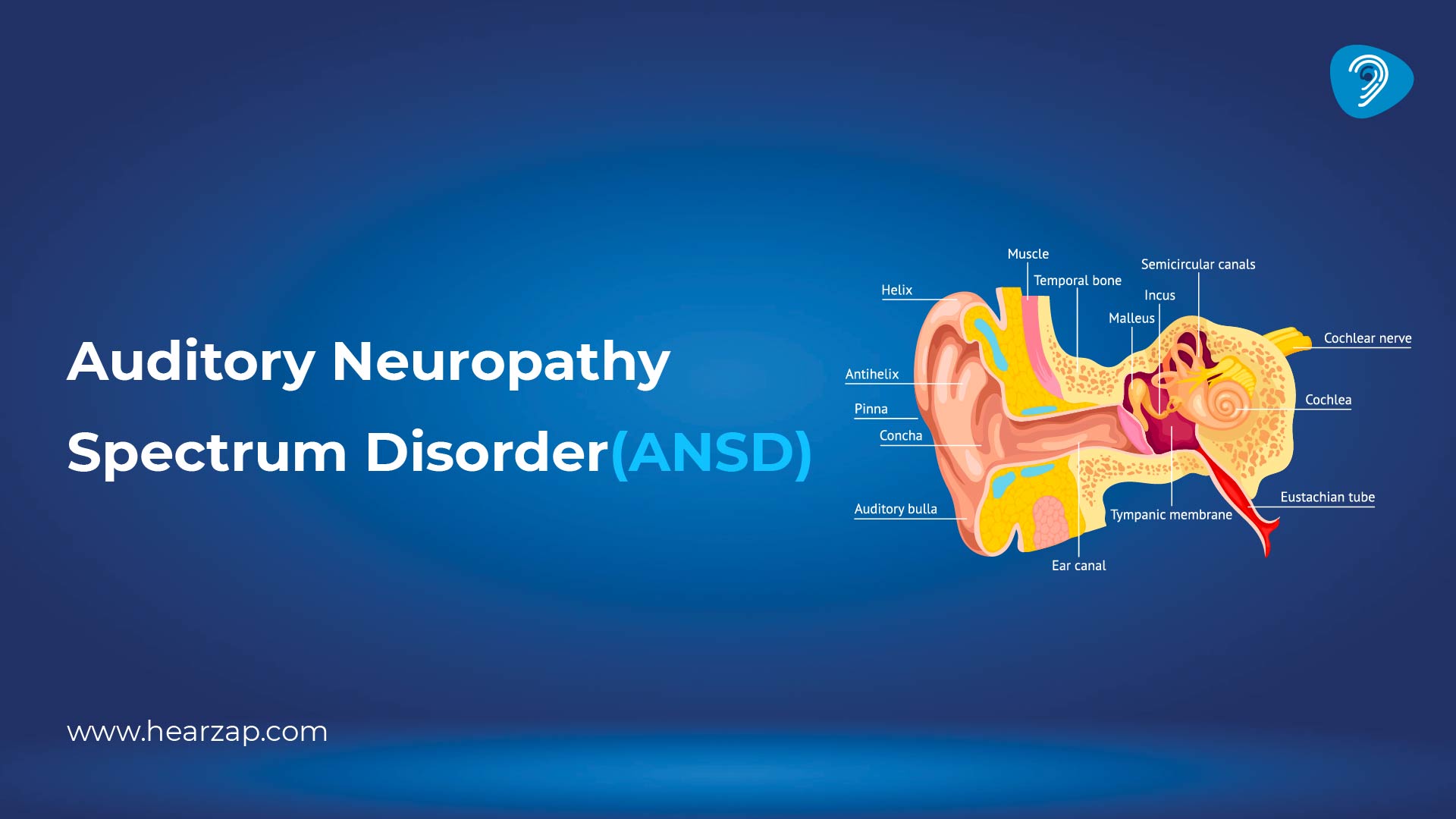
Auditory Neuropathy Spectrum Disorder: When the Ears Hear But the Brain Can't Decode
A child passes their newborn hearing screening. A teenager can detect soft sounds that most people their age would miss. An adult sits in a soundproofed booth and responds to tones at completely normal levels. By every basic measure, the ear appears to be working.
And yet none of them can understand speech properly. Words blur into noise. Conversations in quiet rooms are manageable one day and incomprehensible the next. Background noise renders everything unintelligible. Hearing aids that work brilliantly for most people with hearing loss sometimes make things worse rather than better.
This is auditory neuropathy spectrum disorder, and it sits in one of the most confusing corners of audiology because it breaks the rules that most hearing conditions follow.
What Is Auditory Neuropathy Spectrum Disorder?
To understand this condition, you need to know what normally happens between the ear and the brain.
When sound enters the ear, it travels through the outer and middle ear, reaches the cochlea in the inner ear, and causes tiny hair cells to vibrate. These hair cells convert the mechanical vibration into electrical signals. Those signals then travel along the auditory nerve to the brainstem and up into the auditory cortex, where the brain processes and interprets them as meaningful sound.
What is auditory neuropathy spectrum disorder in this context? It is a condition where the outer hair cells of the cochlea, the ones responsible for detecting and amplifying sound, are functioning normally. The problem lies further along the chain. The inner hair cells, the auditory nerve itself, or the synapses connecting them are damaged, absent, or functioning unreliably. Sound gets detected, but the signal transmitted to the brain is distorted, mistimed, or incomplete. The brain receives garbled information and cannot make sense of it.
The word "spectrum" in the name reflects the fact that this condition varies enormously from person to person in terms of severity, underlying cause, and how it affects daily functioning. Some individuals have mild difficulties that are manageable with the right support. Others face profound communication challenges despite apparently normal sound detection.
The auditory neuropathy spectrum disorder icd 10 code is H93.25, which sits within the category of other specified disorders of the ear. The relatively recent addition of this code to formal classification reflects how recently the condition gained proper clinical recognition, having only been clearly defined and named in the 1990s.
Auditory Neuropathy Spectrum Disorder Symptoms: What It Looks and Feels Like
Auditory neuropathy spectrum disorder symptoms are distinctive precisely because they don't fit the pattern most people associate with hearing loss.
The most consistent and clinically significant symptoms include:
- Normal or near-normal detection of sound on basic hearing tests, yet profound difficulty understanding speech, particularly in background noise
- Fluctuating hearing ability that can vary day to day or even hour to hour, which is unusual and particularly distressing because there's no predictability
- Disproportionate difficulty with speech clarity compared to the ability to detect sound. A person may hear that someone is speaking but cannot decode the words
- Particular struggle in noisy environments where background sound competes with speech. While most people with normal hearing filter background noise effectively, those with this condition find it overwhelms them entirely
- Difficulty with music perception, which often sounds distorted or unclear rather than melodic
- Delayed speech and language development in children, which is often how the condition first comes to clinical attention in younger patients
- Tinnitus in some individuals, sometimes described as a buzzing, humming, or distorted sound quality rather than a simple ringing
The fluctuation in symptoms is worth emphasising because it is both diagnostically important and personally exhausting. People with this condition often describe days where communication feels almost manageable followed by days where they feel almost completely cut off. This unpredictability makes planning and daily life genuinely difficult.
Auditory Neuropathy Spectrum Disorder ANSD: What the Tests Show
Auditory neuropathy spectrum disorder ANSD has a very specific and recognisable pattern on audiological testing, which is what ultimately distinguishes it from other types of hearing loss.
The key diagnostic findings are:
Otoacoustic emissions (OAEs) present: OAEs are tiny sounds produced by the outer hair cells of the cochlea in response to sound stimulation. In most types of sensorineural hearing loss, OAEs are absent because the outer hair cells are damaged. In auditory neuropathy, OAEs are typically present or normal, confirming that the outer hair cells are functioning. This is the finding that initially seems reassuring but is actually part of the diagnostic puzzle.
Absent or severely abnormal ABR: The auditory brainstem response is a test that measures the electrical activity travelling from the cochlea up the auditory nerve to the brainstem in response to sound. In auditory neuropathy, this response is absent or grossly abnormal, revealing that despite the ear detecting sound normally, the neural transmission of that information is severely disrupted.
This combination, present OAEs alongside absent or abnormal ABR, is the diagnostic hallmark of this condition. Without both tests being performed and interpreted together, the diagnosis is easily missed.
Pure tone audiometry results vary considerably. Some individuals show normal thresholds across all frequencies. Others show a mild to moderate hearing loss. The audiogram alone cannot diagnose this condition and can be actively misleading if viewed in isolation.
What Causes It?
The causes of auditory neuropathy spectrum disorder are varied, which is another reason the word spectrum is so appropriate.
Known causes and associated risk factors include:
- Premature birth and neonatal intensive care, particularly hypoxia (oxygen deprivation) around birth, which is one of the most commonly identified risk factors
- Neonatal jaundice (hyperbilirubinaemia) at severe levels, which can damage the auditory nerve and brainstem pathways
- Genetic mutations, including mutations in the OTOF gene which encodes otoferlin, a protein essential for the synapse between inner hair cells and the auditory nerve
- Neurological conditions including Charcot-Marie-Tooth disease and Friedreich's ataxia, which involve peripheral nerve damage that can include the auditory nerve
- Infectious causes such as mumps and certain other viral infections affecting the auditory nerve
- Immune-mediated damage in some cases
- Idiopathic causes, meaning no identifiable underlying reason is found in a proportion of patients
In many children diagnosed early through newborn hearing screening programmes, a genetic cause is ultimately identified, which has implications for prognosis and management planning.
Management: What Actually Helps
Treatment and management depends heavily on the underlying cause, the severity of neural disruption, and the individual's age at diagnosis.
- Cochlear implants have shown remarkable results in a significant subset of patients, particularly those with OTOF gene mutations, where the problem lies specifically at the inner hair cell synapse rather than in the auditory nerve itself. By bypassing the dysfunctional synapse and directly stimulating the auditory nerve, cochlear implants can provide dramatically improved speech understanding in carefully selected patients
- Conventional hearing aids produce inconsistent results. Some individuals benefit meaningfully, while others find amplification makes the distorted signal louder without making it clearer. Careful trial and audiological monitoring is essential before committing to amplification
- FM systems and remote microphone technology reduce the distance between speaker and listener and dramatically improve the signal-to-noise ratio, which addresses one of the core functional difficulties
- Visual communication support, including sign language or cued speech, is particularly valuable for children where spoken language development is affected
- Auditory training and speech therapy help individuals maximise the use of whatever auditory information they do receive
- Regular monitoring is essential given the fluctuating nature of the condition, as hearing status and the most effective interventions can change over time
The Bottom Line
Auditory neuropathy spectrum disorder is a condition that challenges the assumptions built into standard hearing care. Normal outer ear function does not mean normal hearing. A passed newborn screening does not rule out significant hearing difficulty. And a hearing aid is not automatically the right answer.
For families navigating a new diagnosis, and for adults who have spent years being told their hearing is fine while struggling profoundly with speech understanding, getting to the right diagnosis is the turning point. It reframes the entire picture and opens the door to interventions that are actually matched to what is going wrong, rather than what is assumed to be going wrong.
If the pattern described here sounds familiar, specifically the gap between detecting sound and understanding speech, it is worth requesting a full audiological evaluation that specifically includes OAE and ABR testing. That combination of results is where the real answer lives.
FAQs
What is auditory neuropathy spectrum disorder?
Auditory neuropathy spectrum disorder is a hearing condition where sound reaches the inner ear but is not properly transmitted to the brain.
Can auditory neuropathy spectrum disorder be cured?
There is no complete cure, but hearing aids, cochlear implants, and therapy can help manage the condition.
What is the cause of auditory neuropathy?
Auditory neuropathy can be caused by damage to the inner ear hair cells, auditory nerve, or nerve signal pathways.
What are two common symptoms of auditory nerve disorders?
Common symptoms include difficulty understanding speech and hearing sounds inconsistently.

Dattatreya M
Audiology Innovation Manager
Helping You Hear Life Again. At Hearzap, we believe hearing is the key to staying connected with family, friends, and the world around us. With over 48 years of trusted care & my 15 years in audiology, I’ve seen how improved hearing brings back confidence
Related Blogs
Middle Ear Implants: How They Work And Who Can Benefit
Otosclerosis: When Your Ear's Own Bone Works Against You
Ear Catarrh: Causes, Symptoms, Treatment & Home Remedies
TMJ Ear Pain: Why Your Jaw Might Be Behind That Earache
Contact us
We are here for all your hearing needs, from hearing tests to hearing aids. Fill out the form below, and we will give you a call soon.
Recent Blogs
By None | Sept. 9, 2026
By None | Sept. 7, 2026
By None | Sept. 5, 2026
By None | Sept. 4, 2026
By None | Sept. 2, 2026