Generic
Waardenburg Syndrome
By Sharanya Krishnan - Audiologist | Aug. 19, 2026
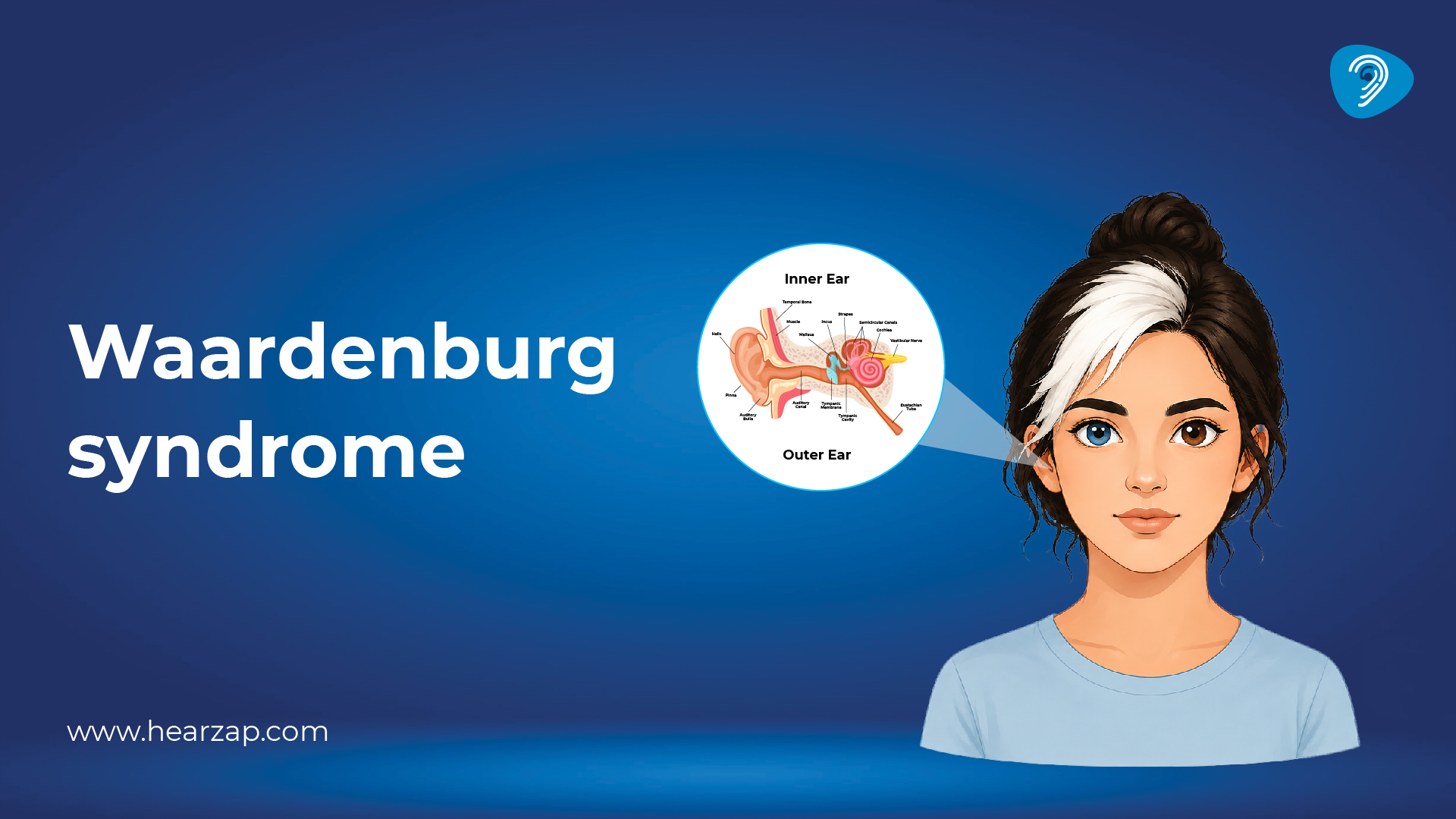
Most people have never heard of Waardenburg syndrome, and that's not surprising given how rare it is. Yet for the families who do encounter it, usually because a baby fails a newborn hearing screening or a child is born with a curious white patch of hair, it raises a lot of questions almost overnight. What follows is an attempt to answer those questions in plain, straightforward terms.
What is Waardenburg Syndrome?
Waardenburg syndrome is a genetic condition, first described by a Dutch eye doctor named Petrus Johannes Waardenburg back in 1951. He noticed a pattern: certain patients kept showing up with a strange mix of features involving their skin, hair, eyes, and hearing. It took decades of further research to understand why, but the short answer comes down to melanocytes, the pigment-producing cells found not just in skin and hair but also inside the inner ear.
When the genes controlling how these cells develop don't work properly, two very different parts of the body end up affected at once, which is part of what makes this condition so unusual. It shows up in roughly 1 in 40,000 births worldwide, which puts it firmly in rare disease territory, though it's actually one of the more frequent genetic causes behind inherited hearing loss.
Most cases follow an autosomal dominant inheritance pattern. In plain terms, that means a child only needs to inherit the altered gene from one parent to develop the condition. A smaller number of cases are recessive, requiring the gene from both parents. Researchers have pinned down several genes involved so far, among them PAX3, MITF, SOX10, EDNRB, and EDN3, and which gene is affected tends to determine which subtype a person has.
Core Clinical Features Associated with the Condition
Clinicians describe three features together when they talk about this condition, and this combination is often called the Waardenburg syndrome triad:
- Hearing loss caused by problems in the inner ear rather than the outer or middle ear, ranging anywhere from barely noticeable to profound
- Unusual pigmentation, which might mean a streak of white hair, patches of pale skin, or eyes that don't match in colour
- Eyes that appear spaced further apart than usual, a trait doctors call dystopia canthorum
Here's the thing though: not everyone ticks all three boxes. Some people have very mild versions with just one or two subtle signs, which is part of why the condition sometimes goes unnoticed for years, even within families where it's clearly being passed down.
Something People Often Notice First: The Eyes
If there's one feature that tends to catch people's attention, it's the eyes. Many individuals with this condition have heterochromia, meaning each eye is a different colour, or sometimes a single eye contains two colours at once, like a ring of blue surrounding a patch of brown. Others simply have very pale, almost icy blue eyes that stand out immediately.
Then there's the wide-set look caused by dystopia canthorum. It's worth clarifying that this isn't the eyes themselves sitting further apart. It's the inner corners near the nose that are positioned wider than usual, which creates that appearance without actually changing the distance between the eyeballs. It's a small distinction, but doctors rely on it heavily during diagnosis.
Signs and Symptoms
Because the condition varies so much from person to person, even siblings can look quite different despite carrying the same gene mutation. Some of the more common physical signs include:
- A patch of white hair, usually right above the forehead, sometimes called a white forelock
- Hair that turns grey unusually early, occasionally starting before someone turns thirty
- Light or completely depigmented patches of skin
- Eyes with mismatched or unusually pale colouring
- Hearing loss that's often present from birth
- The wider-set inner eye corners mentioned earlier
- A nose bridge that looks broader or higher than typical
- Eyebrows that grow together in the middle, a trait known as synophrys
In more severe forms, digestive problems can also show up, tied to nerve development issues in the intestines. That said, plenty of people carrying the gene show barely any outward signs at all and go through life without anyone suspecting a thing.
Subtypes of Waardenburg Syndrome
Doctors currently recognise four types of this condition, and they're distinguished mainly by which additional features show up alongside the core symptoms.
Type 1 It includes the wide-set eyes along with typical pigment and hearing changes.
Type 2 looks fairly similar but skips the eye-spacing feature entirely. Interestingly, hearing loss tends to hit harder and more frequently in this group compared to Type 1.
Type 3 goes by another name too: Klein Waardenburg syndrome. This version is rarer and considerably more involved, often bringing arm and hand abnormalities into the picture, things like underdeveloped muscles, stiff joints, or fingers that are fused together. The name comes from a researcher called Klein, who documented these additional limb findings in some of his patients.
Type 4, sometimes called Waardenburg Shah syndrome, pairs the usual features with something called Hirschsprung disease. This is a condition where certain nerves in the colon fail to develop properly, which can cause serious constipation or even intestinal blockages. Babies with this subtype need close monitoring right from birth, since bowel issues here can turn into medical emergencies quickly if missed.
Diagnosis
Diagnosis usually starts with a physical exam and a good look at family history, since the dominant forms tend to run through generations quite visibly. Newborn hearing screenings catch a lot of cases early too, sometimes before any pigment changes are even noticeable, since hearing loss can be the only obvious sign in a young infant.
From there, audiologists typically run more detailed testing, including auditory brainstem response exams, to get a clearer picture of how much hearing has been affected. Genetic testing can then confirm the diagnosis outright and pinpoint which subtype is involved, which matters a lot for families thinking about future children and wanting to understand how the condition might be passed on.
Managing The Syndrome
There's no cure, simply because this comes down with a person's DNA from birth. But that doesn't mean nothing can be done. Quite the opposite, actually, since most of the associated challenges respond well to the right kind of support.
For hearing issues, families usually have a few options depending on how much loss is involved:
- Hearing aids for mild to moderate loss
- Cochlear implants when loss is severe or profound
- Regular check-ins with an audiologist, since hearing can shift as a child grows
- Speech therapy, which works best when started early
Things look different for the rarer subtypes. Parents of children with Klein Waardenburg syndrome often build a relationship with an orthopaedic specialist and physical therapist to manage joint and limb concerns over time. With Waardenburg Shah syndrome, surgery is usually necessary to correct the bowel complications tied to Hirschsprung disease.
Eyes and skin need attention too. Regular eye exams are worth keeping up, and a dermatologist can help manage depigmented patches, particularly around sun protection, since those areas lack melanin's natural defence.
Life Expectancy
This is usually one of the first questions parents ask and the answer is reassuring. Life expectancy for people with this condition is essentially the same as anyone else's. Most individuals, even those with more visible features, go on to live perfectly ordinary lifespans.
The one real exception involves Type 4, where untreated Hirschsprung disease can become dangerous in infancy. But with early detection and proper surgical care, even this risk drops considerably, and long-term outcomes tend to be good.
In practice, this means most families end up focusing less on worries about lifespan and more on the everyday work of supporting a child's hearing development, speech progress, and whatever additional needs come with their particular subtype.
Conclusion
Waardenburg syndrome presents differently from one individual to the next, and it would be fair to say that no two cases look quite alike. Even so, the outlook for most families remains a positive one. With timely diagnosis, ongoing hearing support, and the right team of specialists involved, individuals living with this condition are generally able to lead full, active lives without significant disruption.
FAQ’s
1) Does Waardenburg syndrome always cause deafness?
A) No. Not everyone with Waardenburg syndrome experiences hearing loss.
2) What is the life expectancy with Waardenburg syndrome?
A) Waardenburg syndrome does not usually affect life expectancy.
3) What color are the eyes of Waardenburg syndrome?
A) People with Waardenburg syndrome may have blue, very pale blue, or differently colored eyes.
4) Can Waardenburg syndrome be detected during pregnancy?
A) Yes, genetic testing during pregnancy may detect Waardenburg syndrome in some cases.

Sharanya Krishnan - Audiologist
Senior Manager – Training, Customer Experience & Business Development
With over 20 years of experience in hearing and speech healthcare. Passionate about client-centred care, I believe in a culture of empathy, trust, personalized support & focus on ensuring that every individual enjoys a seamless and fulfilling hearing care


Contact us
We are here for all your hearing needs, from hearing tests to hearing aids. Fill out the form below, and we will give you a call soon.
Recent Blogs
By None | Oct. 3, 2026
By None | Oct. 1, 2026
By None | Sept. 30, 2026
By None | Sept. 29, 2026
By None | Sept. 28, 2026